• Skip to primary navigation
  • Skip to main content
CURIO SG

CURIO SG

Holistic Education

  • Home
  • Programmes
    • Secondary School Programmes
      • English Language ‘O’ Level Programme
      • English Literature ‘O’ Level Programme
    • Junior College Programmes
      • English Literature ‘A’ Level Programme
      • GCE ‘A’ Levels: General Paper
    • IP
      • IP Programme: English Language
      • IP Programme: English Literature
    • Crash Courses
      • O Levels English Language
  • Free Resources
  • About
  • Journal
  • Shop Assessment Books & Exam Papers
  • Show Search
Hide Search
You are here: Home / Archives for tuition

tuition

How to Score in AQ – ‘A’ Level GP Model Answers

Santhi Rebecca · June 21, 2023 · Leave a Comment

"Scoring well in the General Paper AQ requires relentless effort and adaptability, as the topics can vary widely, but with determination, conquering is within reach."

Scoring well for the AQ in the General Paper demands relentless effort, especially considering the substantial variations in each paper and question. Add to that, topics can range from the benefits of solitude to the perils of geopolitical turmoil. Conquering an English A Level application question may appear intimidating, but with a determined approach, it becomes conquerable. Read on for some tips and tricks, and download some model AQ answers.

Reading

Photo by Pixabay on Pexels

Reading widely, from newspapers and magazines to novels and biographies will get you a leg up in the application question. Furthermore, since the subject matter of GP comprehensions are so varied, it is important to know a little bit about almost everything. Since the AQ focuses on how you can link the subject matter to your society, and being well versed in local matters will be of great help.

PESTLE

Photo by cottonbro studio on Pexels

When in doubt, use the acronym PESTLE to break the topic down in order to understand the perspectives that can be discussed.

P = Political

E = Economic

S = Societal

T = Technological

L = Legal

E = Environmental | Educational

Highlight pivotal keywords and phrases that aid in formulating a response. Subsequently, unleash a flood of ideas through brainstorming. Leverage existing knowledge about the topic and explore external resources that can augment your answer.

Once a wealth of ideas has been generated, embark on a research expedition. Employ credible sources and meticulously record detailed notes. This meticulousness will enable you to track the accumulated information and facilitate the writing process.

Organisation

Photo by Steve Johnson on Pexels

The AQ is a mini essay and to ensure triumph, organisation and a strategic plan are paramount. Try and use the following structure:

1. Recommended Structure

  • Introduction + Stand
  • Argument (a)
  • Argument (b)
  • Argument (c) [optional]
  • Conclusion

2. Analysis

  • Highlight question’s demands
  • Focus on keywords
  • Balance: Write 1 paragraph in support and 1 paragraph against OR Agree to a certain extent to each author’s point, and then explain your counter

3. Introduction

  • Does not need to be more than 3 lines: State summary of passage | State summary of your argument | State your stand
  • Your stand: E.g. “Even though there are alternate possibilities in the scenario mentioned by *author* I largely agree with her views as I find them highly relevant in the context of Singapore.” 

4. Body Paragraphs

  • Start with a topic sentence:  An observation that the author has made. E.g. “The author posits that <quote>”
  • Explain the quote
  • State your stand e.g. “As this observation is highly relevant in Singapore’s context, I agree with the author that…”
  • State an example of what you have observed in Singapore in relation to the quote you have picked.
  • Evaluate: (a) Agree with the author by emphasising the point they have made by using a reason within the Singapore context OR (b) Disagree with the author by explaining that the viewpoint is limited/applicable to a small group of people/irrelevant to most people in Singapore
  • Balance: e.g. “There are still pockets of people in Singapore who will not find this applicable…” or “The author’s points are relevant when we consider the next two years, but they may be obsolete in twenty years because…” 
  • Link back to the question e.g. “Therefore, it is clear that the author’s views are highly relevant to my society as…”

When constructing your response, ensure that you directly address the question and employ compelling evidence from your research to fortify your arguments. Vigilantly proofread your answer to eliminate any errors in spelling or grammar.

Lastly, the indispensable component of success is practice. Undertake practice tests and meticulously evaluate your answers. This will cultivate familiarity with the material and enable you to identify areas necessitating improvement. Try out our GP programme to ace your AQ. https://curio.sg/programmes/gce-a-levels-general-paper-programme/

Download the following papers and start practicing today!

A-Level-Model-AQ_-GentrificationDownload
A-Level-Model-AQ_Arts-and-PoliticsDownload

Singapore’s Top 5 Tuition Centres Leading the Way in 2023

Nadya Sharfina · June 16, 2023 · 3 Comments

"Education is the passport to the future, and tuition serves as the guiding compass on that transformative journey."

Parents in Singapore are constantly looking for proven strategies, excellent tutors and structured learning material to propel their children towards academic success. In Singapore’s fast-paced and intensely competitive educational environment, many reputable tuition centres offer to aid students in their learning journeys.  With so many options, it can be difficult to select the best tuition option. In this article, we are going to explore the best 5 tuition options for kids in Singapore, whether children need assistance with difficult subjects, preparation for critical examinations, or just some extra support. 

1. The Learning Lab

Photo by The Learning Lab on Facebook

The Learning Lab is a popular tuition and enrichment centre in Singapore with over 20 years of experience to their name. From preschool to junior college, they provide a variety of exciting programs. They are well known for having an incredibly thorough curriculum and proven teaching techniques. The best part is here: It’s not only about grades in the Learning Lab. They want kids to have an all-rounded education. They place emphasis on developing critical thinking skills, effective communication skills, and moral character. They have an excellent track record of assisting learners to achieve academic success.

2. Curio.sg

Photo by Curio.sg

Curio is the result of the team’s extensive experience in teaching, mentoring, and tutoring students in Singapore for over 20 years. The teachers have taught in the top schools and are well-versed in the challenges that students face in school and the importance of metacognition. Curio utilises The Sapience Method, a unique learning framework with the aim of developing all-rounded students with a focus on both cognitive and socio-emotional growth. 

Some of Curio’s unique features include: 

  • Unlimited Marking & Feedback
  • Personalised Revision & Study Notes
  • Access to a Curio Tutor all Year
  • Complimentary Consultation before signing up

Curio is an online only school because they believe the future will consist more and more of people working and studying virtually.  Being fully online also helps Curio to reduce waste and be more eco-friendly. This forward-thinking approach is reflected not only in how they deliver education but also in the range of subjects they offer.

Curio currently offers English Language and English Literature for secondary students on the ‘O’ level and IP tracks. They also offer General Paper and Literature for students sitting for the ‘A’ levels.

3. Tien Hsia Language School

Photo by Tien Hsia Language School on Facebook

Tien Hsia Language School has been established since 1989—more than 30 years—and has numerous branches all across Singapore. Chinese listening, speaking, reading, and writing are all covered in Tien Hsia’s unique curriculum. They have programmes for all ages and academic levels, from preschool to secondary to . They make studying Chinese a blast! To help kids truly get into it, they include games, exercises, and fascinating content like videos. It’s not just about language learning, they also impart knowledge of Chinese culture. That’s why Tien Hsia is a popular choice for parents who want their kids to learn Chinese in Singapore.

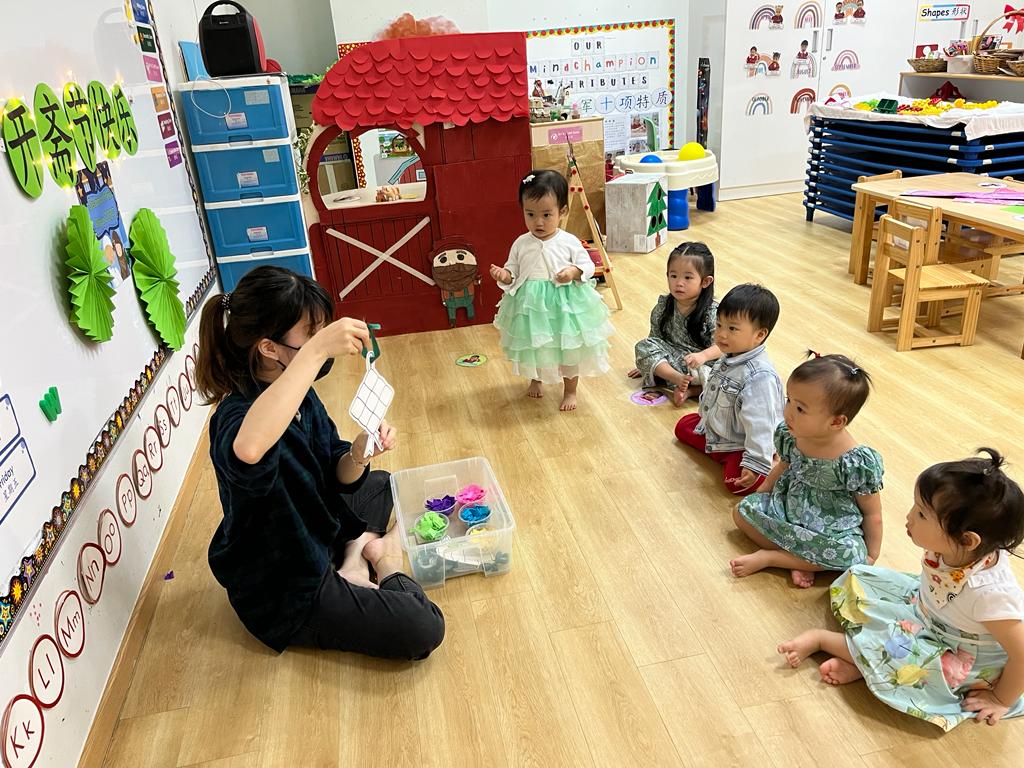
4. MindChamps

Photo by MindChamps on Facebook

MindChamps seek to support kids’ mental, social, and emotional development in every way. They have a thorough curriculum that covers everything from critical thinking to creativity and effective communication. MindChamps encourages kids to possess outstanding character qualities like strength, integrity, and compassion. They also instruct in a variety of areas, including Mandarin, English, Math, and Science. 

Additionally, it’s not just about the academic stuff. MindChamps has extra activities too, like public speaking, drama, and leadership training. They really want kids to feel confident and be all-around amazing individuals.

5. Academia

Photo by Academia on Facebook

Looking for a tutoring provider that makes learning fun and effective? Check out Academia! When kids learn at Academia, it’s not just about memorising stuff. They actually tap into kids’ natural ability to understand and use new knowledge. Parents also don’t need to worry because Academia’s curriculum is constantly improving. To ensure everything is of the highest calibre, they have teaching professionals with degrees from Ivy League Universities.

The exceptional accomplishments of its students serve as compelling evidence that Academia is a preferred choice for high-quality education. With over 60% of students achieving AL1 scores in the 2021 and 2022 PSLE, and a remarkable 70% earning Distinctions in the 2021 A-Level General Paper, Academia’s teaching philosophy is undeniably effective.

Nurturing Emotional Maturity as a Teenager

Nadya Sharfina · April 12, 2023 · Leave a Comment

"It is normal to feel overwhelmed at times, but if you are constantly feeling bad about yourself, it might be time to work on your emotional maturity."

Emotional maturity is the ability to have healthy relationships with others and manage your own emotions effectively. It is not always easy to become emotionally mature, but with practice, you can learn how to deal with your feelings more productively.

There are many benefits to becoming emotionally mature. You will be able to have healthier relationships with the people around you and be better equipped to handle difficult situations. You will also find that you are happier and more content with life when you are emotionally mature.

What Does an Emotionally Mature Teenager Mean, Exactly?

Photo by Tim Mossholder on Unsplash

Being emotionally mature means having the ability to take ownership and responsibility for your emotions, practice self-awareness, set healthy boundaries, observe others with curiosity and follow someone else’s lead to better understand how to manage your feelings. It also involves being able to recognize when you have made a mistake to learn from it and prevent similar mistakes in the future. 

Becoming emotionally mature allows us to lead happier, more fulfilling lives by developing meaningful relationships and taking charge of our behavior. With practice, we can all strive towards this goal and reap its many rewards.

The Importance of Taking Responsibility for Your Emotions

Photo by Nik on Unsplash

One of the most important aspects of emotional maturity is taking responsibility for your emotions. It is easy to blame others when we are feeling upset, but we must learn how to take ownership and navigate our feelings to reach a state of emotional maturity. This means being able to recognize our mistakes, admit when we need help, and apologize when appropriate. 

Self-awareness plays a vital role here as it allows us to understand ourselves so that we can better manage our emotions. Taking responsibility for our emotions is an essential part of becoming an emotionally mature teenager.

Self-Compassion and Understanding Your Emotions

Photo by Vijay Hu from Pixabay

Self-compassion is the key to becoming an emotionally mature teenager. Self-compassion means being understanding and kind towards yourself, even when you make mistakes or feel overwhelmed by certain emotions. This does not mean that you should hide from or ignore your feelings; instead, it involves accepting them with love and understanding. When we practice self-compassion, we allow ourselves the space to grow, learn, and become stronger in the face of challenges.

Self-compassion also involves forgiving yourself for any errors in judgment and allowing yourself to move on after making a mistake. Acknowledging our feelings without judgment will help us become more emotionally mature teenagers.

Setting Boundaries and Owning Your Reality

Photo by Keegan Houser on Unsplash

Setting healthy boundaries is also an essential part of becoming an emotionally mature teenager. This means understanding and respecting your limits, as well as those of others. It is important to be honest with yourself when it comes to setting boundaries so that you can take ownership of your reality and stay true to yourself. Setting boundaries can help us develop meaningful relationships and ensure that we are not taken advantage of by those around us. 

Self-awareness plays a major role here, as it helps us understand our feelings better and ensure that we do not cross any lines to maintain healthy relationships. By setting clear boundaries, we can strive toward emotional maturity.

Learning From Others and Observing Them with Curiosity

Photo by Andrew Neel on Unsplash

Emotional maturity is also learned from those around us. Paying attention to how other people respond to emotions can help us better understand our reactions and learn new strategies for managing them. It is also important to observe others with curiosity and without judgment so that we can gain insight into their behaviour and empathise with them. By following someone else’s lead maturely, we can learn valuable skills to become more emotionally mature teenagers.

Developing Emotional Maturity as A Teenager

Photo by Jackson David on Unsplash

It is a process that takes time and effort, but it is worth it in the end. Emotional maturity allows you to have healthier relationships with yourself and others, navigate difficult situations more effectively and feel more content in your skin.

If you are interested in developing these skills, there are plenty of ways to get started. Self-reflection and building self-awareness are essential, as well as seeking out support from friends or family members. There are also many books, articles, or online courses available that can guide on this topic.

The bottom line is that emotional maturity is something that anyone can learn – it does not require any special intelligence or aptitude. So, if you are ready to embark on the journey toward emotional maturity, then go for it! You won’t regret it.

The A-Levels: How to Ace it!

Santhi Rebecca · April 10, 2023 · Leave a Comment

"Achieving excellent results in the A-Levels is the key to getting into top universities both locally and abroad."

The A-Levels are a crucial milestone for students in Singapore who want to pursue tertiary education. Achieving excellent results in the A-Levels is the key to getting into top universities both locally and abroad. However, with so much pressure on students to excel, it can be difficult to know where to start when it comes to revision. Don’t worry! We are here to help. In this article, we will share some tips on how best to prepare for A-Level exams. So read on and ace your A-Levels!

1. Follow a Schedule and Make To-Do Lists to Stay on Track

Photo by Ekaterina Bolovtsova on Pexels

Formulating a study schedule is essential to cover all the topics and stay on track with your A-Level preparation. This will help you organize your days and structure revision plans efficiently so that you have enough time to go back to your notes or understand complex concepts. Avoid cramming information as it can lead to stress. Dividing tasks up into small chunks also helps reduce anxiety and prevent burnout at the end of the A-Level period. Plus, this technique helps with anything that needs memorizing more effectively since less content is being processed at once.

2. Focus On One Task at a Time

Photo by Kyle Gregory Devaras on Unsplash

When studying for A-Levels, it is important to stay focused on the task at hand. With so much information to digest and remember, it can be difficult not to get overwhelmed by all the topics you need to cover. It might seem counterintuitive but focusing on doing one thing well will save you more time than juggling multiple tasks simultaneously.

In other words, choose one subject or topic that you want to work on and stick with it until you finish the task. A single-minded focus allows you to retain more information and concentrate on each concept in greater detail.

3. Use Past Exam Papers to Your Advantage

Photo by Annie Spratt on Unsplash

Past A-Level papers are your best friend when it comes to A-Level revision. Familiarizing yourself with the types of questions and answers that come up during exams can help you anticipate what kind of topics or questions might appear in real A-Level exams. This way, you can save time and effort since you already have an idea of what to expect on the day itself.

Moreover, revising past A-Level papers allow for better time management during the actual A-Level assessment. Going through previous A-Level papers trains your brain to think accurately under pressure and not be flustered by tricky questions or unfamiliar topics.

4. Break Down Your Notes into Manageable Chunks

Photo by Kelly Sikkema on Unsplash

Breaking down A-Level notes into smaller chunks makes it easier to digest what you are reading. This way, you can focus on the main points and not get overwhelmed by too much information at once.

There are several ways to break down your A-Level notes. Divide each topic according to its relevance or complexity and then use symbols, colors, or headings to separate one from the other. You can also highlight important keywords that might come in handy when exam time rolls around. All these techniques will help you organize A-Level material efficiently and make revision a simpler process overall.

5. Take Breaks and Have Fun While You Are Revising

Photo by Tima Miroshnichenko on Pexels

While studying for the A-Levels are important, it is also essential to give your mind a break and enjoy yourself. Having fun while revising will help you stay motivated and energized throughout the A-Level period. A few simple activities can be incorporated into revision time like listening to music, watching an episode of your favorite show, playing video games, or even enjoying a snack after studying for a certain amount of time.

Taking breaks allows for better concentration when it comes to A-Level content so that you can handle all the information at once. Plus, having fun helps relieve any stress associated with A-Levels.

6. Get Help if You Need It! Tutors or Classmates Can Be a Great Resource

Photo by Alexis Brown on Unsplash

It is perfectly normal to feel intimidated by A-Levels and need a bit of extra help and support. Most A-Level students can benefit from the assistance of tutors or peers. A tutor can provide additional guidance on topics you may struggle with, while classmates can offer peer support when it comes to revision techniques.

No matter who you turn to for your A-Level journey, do not be afraid to ask for help when needed. A little bit of extra assistance could make all the difference in helping you ace your A-Level exams! Try Curio’s General Paper Programme.

So there you have it – our top tips on how best to prepare for the A-Level exams.

Should Your Child have Private or Group Tuition?

Santhi Rebecca · April 9, 2023 · Leave a Comment

"The best tuition style isn’t one-size-fits-all—it’s the one that fits your child."

Some parents insist on private one to one tutoring being the best for their child, while others sing praises of tuition centres or private group settings. The truth is, there is no one size fits all and it all depends on your child’s unique learning needs. We have tried to make the decision easier for you by breaking down the pros and cons.

CriteriaPrivate TuitionGroup Tuition
Learning Pace If the student is slower in the subject or struggling to catch up, a good tutor will be able to adjust the pace according to the student’s learning speed.Unless there are personalised learning plans and individual attention, slower students may fall behind – especially if they tend not to ask questions during lessons.
Travel TimeTravel time to a tuition centre can be both time consuming and tiring, especially if it happens to be a school day. Having a tutor come to the comfort of your home is ideal in this case.Unless the lessons are online, or a stone’s throw away from home, travel or waiting time does take up a significant amount of one’s day.
The Power of Collaborative LearningA good private tutor would be able to facilitate learning, but be limited by the interaction that they can bring to the session, with only 2 parties involved, the tutor and the student.During self-study, we remember about 28% of what we learn. When studying is used however, by answering questions about it and interacting with peers, we remember 69%. Conceptualizing, recalling, and using information creates “memory pathways” that stick in one’s mind. Group tuition is invaluable in this regard, as the wealth of the interaction in the classroom will not replace a one to one session with a tutor.
ExpertiseThe expertise, skills and knowledge the tutor brings to the student is limited to the tutor.A tuition centre would have curriculum experts and teachers who will collaborate to create better learning material and they may even discuss how to help students. More eyes on the curriculum as well as teacher evaluations will ensure that students are always getting taught in schools which are consistently improving.
Personality & Fun FactorSome tutors do know how to make lessons fun, but when it’s not the case, kids dread meeting a strict adult and having to interact with just them for hours. Other times, issues may crop up if they just don’t ‘click’. A group setting may allow for more fun leaning as kids do enjoy studying together when the class is well facilitated. Fun activities that promote learning and retention are definitely better carried out in a group setting.
Private vs Group Tuition: Comparison Table

Which Type of Tuition Is Better for My Child?

Photo by Julia M Cameron on Pexels

You could start by talking to your child or even their teachers in school to understand their unique learning needs. A child may be stressed out at first about having to interact with an adult one on one, and it might be better to ease them into tuition in a group setting. Check out Curio’s group learning plans here.

Check out Curio’s Independent Learning Plan for a unique offering: Students who just need marking & feedback without weekly tutoring sessions can try it out!

How Online Learning is Reshaping Education

curiosg · April 9, 2023 · Leave a Comment

"When you choose online education, you will have more freedom to balance your career, education, and personal life without the constraints of a set schedule."

Nowadays, students have a lot of options when it comes to their education. They can choose to attend a traditional school or they can study online. While there are many benefits of attending a physical school, online education has become a more popular and viable option in recent years. 

Here are some reasons why online education is becoming a better choice for students:

1. It Is More Affordable Than Traditional Education

Photo by Yan Krukau on Pexels

The cost of education has skyrocketed over the past few years. Online education, however, is more affordable and accessible to a larger group of people. It eliminates many of the traditional costs associated with education, such as commuting and textbooks. 

In addition to this, there are usually discounts available for those who choose online education. This makes it a great option for those who are looking for an education that won’t break the bank.

2. It Offers More Flexibility

Photo by Katerina Holmes on Pexels

Online education allows students to work at their own pace and pursue an education that best suits their learning styles. This is great for students who may struggle with traditional education, as they can choose a format of education that helps them learn more effectively. It also gives students more time to pursue other interests outside of school, such as sports and other hobbies.

3. It Allows for More International Opportunities

Photo by Max Fischer on Pexels

Online education allows students to explore different cultures without having to leave their homes. This is especially beneficial for students who are looking for a way to experience the world without spending extensive amounts of money on travel expenses. 

With online education, students can easily connect with others from different countries and learn about their cultures. They can even take classes taught by instructors located in other parts of the world.

4. It Offers More Content Than Traditional Education

Photo by Ketut Subiyanto on Pexels

Online education provides access to plenty of educational content that is not available in physical classrooms. This includes videos, tutorials, quizzes, exercises, and interactive learning materials like simulations or virtual reality-based lessons. This extra content is available at any moment from anywhere, which will offer you a more dynamic and tailor-made education.

5. It Eliminates Geographical Constraints

Photo by Antoni Shkraba Studio on Pexels

Traditional education often limits young people from studying in the exact physical location for extended periods. With online education, students can study anywhere and anytime with just an internet connection and a device such as a laptop or a tablet. This makes it easier for them to move around without having to worry about finding a new school or enrolling in a new program.

6. It Allows for a Customized Learning Experience

Photo by Annushka Ahuja on Pexels

We have mentioned how flexibility can help with education, but the even bigger benefit of online education is the ability to customise your learning experience. With most traditional education systems, students are required to follow a particular curriculum that may not be able to meet their specific needs. 

On the other hand, with online education, you can choose courses and resources that cater specifically to your own goals and interests. This allows you to focus on what matters most and spend more time studying topics that are relevant to your career or personal development.

7. It Promotes Independent Learning

Photo by Julia M Cameron on Pexels

Online education encourages independent learning by offering plenty of self-directed activities like researching material online or engaging in discussion forums with peers from around the world. For students who are used to having someone telling them what to do in a traditional education setting, this can be a refreshing change and a great way to develop self-discipline.

8. It Helps Students Stay Connected With the Digital World

Photo by Zen Chung on Pexels

With online education, students don’t have to worry about being left behind in the digital age. Through online education, they can learn how to use technology properly and get comfortable with new tools such as video conferencing or virtual learning environments that are used in many workplaces today. This not only keeps them up-to-date but also gives them an edge when looking for jobs after graduation.

In sum, online education is an excellent choice for students who are looking for a more modern and flexible way of pursuing their education.

How to Get Your Kids Excited About the New School Year

Nadya Sharfina · April 6, 2023 · Leave a Comment

"The new school year is a great time for parents to help their children get off on the right foot."

The start of the school year brings mixed emotions for children and parents alike. For kids, it means saying goodbye to holidays spent playing with friends and embracing the structure that comes with returning to class. They are eager to return, but also concerned about their health and school safety and the outbreak’s impact on their academic progress. For parents, it is a time to prepare their children for success in the coming months, from organising study schedules to arranging for tuition and enrichment classes.

Parents want to give their children the best start possible in school. They want their children to be excited and ready to learn and grow. Here are some tips on ensuring your child has a positive outlook about starting their new school year and being motivated to succeed!

Get Your Child on a Sleep Schedule

Photo by Mostafa Mahmoudi on Unsplash

Holiday season often means later bedtimes and unstructured days with plenty of opportunities to form unhealthy habits. All that has to change when school is starting. Sleep is important for concentration and memory, it can also help your child’s mood. Your child should get at least 7-9 hours of sleep if they are between 13 and 18 years old and 8-11 hours of sleep if they are younger. Begin their new sleep routine a week or two before school starts to adjust not only their sleep schedule mentally but physically as well. Their body’s internal clock needs to be reset so that they can wake up early for school feeling refreshed.

Create a Morning Routine

Photo by Brooke Lark on Unsplash

Establishing a routine takes time, but it can help your child adjust back to the school year. Help them set an alarm clock, practice getting dressed on their own, and make sure they eat breakfast. Doing this every day will eventually become second nature for your children and help them transition into their new school schedule.

Pack Necessary School Supplies

Photo by Savannah Wakefield on Unsplash

A few days before school starts, make a list of items your child will need to bring with them. Stock up on pencils and notebooks that they will use throughout the year. If there are any special items that their primary school or secondary school requires, make sure to add them to the list too. Items like calculators for older children, protractors, and rulers are essential for an efficient school year.

Talk About Exciting Aspects of School

Photo by RDNE Stock project on Pexels

With the right attitude, a school can be an exciting place to learn and grow. Help your child focus on the positive aspects of going back to school such as seeing their friends, making new ones, and learning new things. You can also talk about expectations for the upcoming year, like academic goals or extra-curricular activities they would like to join.

Discuss What Your Child Will Be Learning

Photo by Johnny McClung on Unsplash

Talking about exciting topics and activities that can be explored in school can get your child excited about the new school year. Make sure they know their upcoming syllabus, what is being taught in each subject, and how it relates to the real world. Even discussing the career paths associated with specific subjects can get your child interested and motivated to learn.

Set Goals Together for the Upcoming Year

Photo by Ann H on Pexels

Goals can be a great motivation for your child, so sit down and talk about what they would like to accomplish in the upcoming school year. These could include academic goals such as improving their grades, joining clubs, and volunteering. You can also set goals with them that have nothing to do with school, such as spending more quality time together.

Find Time to Bond with Your Child

Photo by Alex Green on Pexels

School can be a stressful and busy time, so make sure you find the time to bond with your child even if it is just 20 minutes after school. Talk about their day and what they learned, ask them how they are feeling, or engage in fun activities with them. This is a great way to keep your child engaged and motivated to learn new things.

Celebrate Their Successes Throughout the Year

Photo by Pavel Danilyuk on Pexels

Make sure to celebrate your child’s successes throughout the school year. Whether it is getting 100% on a spelling test or acing their science project, praise your child and let them know they are doing great. A positive attitude will go a long way in helping your child stay motivated and excited about learning.

Check-in with Your Kids Regularly

Photo by RDNE Stock project on Pexels

Keep in touch with your child’s teacher to ensure that your child is on track and making progress. This also helps you to stay updated on any changes or updates involving their classes and/or school life. Check-in with your children regularly and ask them how they are doing, what they are learning, and if there is anything you can do to help.

Encourage Healthy Habits

Photo by cottonbro studio on Pexels

Healthy habits such as getting regular exercise, eating a balanced diet, and getting enough sleep will help your child focus in school. Encourage them to stay organised and take study breaks when needed. Helping them learn good time management skills can also be beneficial, especially in high school where they may have multiple assignments due on the same day.

By following these tips, you can make sure your child is set up for success in the upcoming school year. With a positive attitude and plenty of support from parents, children can get excited and motivated to start their school year!

  • « Go to Previous Page
  • Page 1
  • Page 2
  • Page 3
  • Page 4

CURIO SG

Copyright © 2026 Curio Singapore · Log in

  • Home
  • Journal
  • Frequently Asked Questions
  • Contact
  • Careers
  • Free Resources