• Skip to primary navigation
  • Skip to main content
CURIO SG

CURIO SG

Holistic Education

  • Home
  • Programmes
    • Secondary School Programmes
      • English Language ‘O’ Level Programme
      • English Literature ‘O’ Level Programme
    • Junior College Programmes
      • English Literature ‘A’ Level Programme
      • GCE ‘A’ Levels: General Paper
    • IP
      • IP Programme: English Language
      • IP Programme: English Literature
    • Crash Courses
      • O Levels English Language
  • Free Resources
  • About
  • Journal
  • Show Search
Hide Search
You are here: Home / Archives for tuition

tuition

The Biggest Study Mistakes Students Don’t Realise They’re Making

curiosg · March 2, 2026 · 9 Comments

“Real progress doesn’t come from more time; it comes from better strategy.”

Most students think better grades come from studying longer hours, but the truth is, it’s not just about how much you study, it’s about how you study. You can spend an entire day at your desk and still not make real progress if your methods aren’t working. That’s why this article isn’t about pushing you to grind harder; it’s about helping you study smarter. We’re going to look at study habits you might need to quit so you can avoid common mistakes and move closer to the grades you’re aiming for. 

Are You Memorising or Actually Learning?

A lot of students fall into the trap of trying to memorise every line in the textbook. Every definition, every bullet point, every sentence the teacher highlights. It feels productive because you’re “covering” everything. But when exams are over, most of that information disappears within days or weeks. That’s because memorising without understanding doesn’t give your brain anything meaningful to hold on to. You might recognise the words, but if the question is slightly different from what you memorised, you’re stuck.

Understanding concepts takes more time, and honestly, it can feel slower at the beginning. You have to ask questions, connect ideas, and sometimes struggle a bit before it clicks. But once it does, it stays with you much longer than rote learning ever will. When you understand the idea behind a formula, a theory, or an event, you can apply it in different situations, not just repeat it word for word. That’s why it’s important to balance both: know the key terms and definitions, but make sure you truly understand what they mean and how they work.

Writing Way Too Many Notes

Some students write down everything during lectures and basically transcribe entire chapters from textbooks. Every sentence feels important, so nothing gets left out. Loads of people do this but the problem is, this approach eats up huge amounts of time and energy. After hours of writing, you’re left with beautiful notes… that you still have to actually study. Copying information isn’t the same as processing it, and it’s definitely not the most efficient way to learn.

Instead of trying to record every word, shift your focus to what actually helps you prepare for exams. Start with past papers and practise questions, then work backwards. When you attempt questions, you quickly see which topics come up often and what kind of answers are expected. From there, you can identify what information is actually useful and what’s just extra detail. Your notes don’t need to look like a textbook, they need to help you answer questions. Keep them shorter, focused, and built around understanding how to apply the material, not just rewriting it.

The Group Study Trap

Studying with others can actually be one of the most effective ways to learn. When you check your problem-solving with friends or quiz each other on key topics, you spot gaps in your understanding and strengthen what you already know. It also makes the whole process more engaging. But here’s the problem: if your study sessions turn into chat sessions before the work is done, you’re not really studying. It’s an easy habit to fall into. You start with good intentions, then suddenly you’re talking about everything except the subject. When that keeps happening, you’re wasting time, and it might be a sign you need to reset the way your group works (or even rethink the group itself).

If you’re going to study together, make it structured. Start testing each other right away instead of “warming up” with small talk. Set a clear goal for the session. For example, finishing a set of practice questions or reviewing one full topic. Then block out a specific time to catch up and talk during breaks, so it doesn’t spill into your work time. Hold each other accountable. If someone gets distracted, gently bring the focus back. Group study works best when everyone treats it like real study time first, social time second. Check out: The Benefits of Small Group Tuition Over One-on-One Tuition.

The Procrastination Loop

Photo by Kampus Production on Pexels

Procrastinating usually doesn’t look dramatic. It starts small. You tell yourself you’ll study after one episode of your favourite series. But when that episode ends, the next one auto-plays and you think, “Just one more.” Or you decide to finish one game first, but when you lose, the urge to try again pulls you right back in. Five minutes turns into fifteen, then thirty, then suddenly an hour is gone. You end up looking for any excuse or distraction other than actually getting started. The longer you delay, the heavier the task feels, which makes it even harder to begin.

Instead of letting distractions control your time, flip the script and turn them into rewards. Study first, then earn your break. For example, tell yourself that after finishing a full study session or completing 50 quiz questions, you get to watch an episode or play a game. This way, entertainment becomes something you look forward to, not something that steals your time. Keep your priorities clear, handle what matters most first, then relax without guilt. 

The Comfort Zone Problem

A study habit that seems effective but isn’t very helpful in the long run is repeatedly solving the same type of problems. You sit there doing question after question that looks almost identical to the previous one. It feels comfortable because you already know the method, and you keep getting the answers right. But if you’re only practising what you’re familiar with, you’re not really challenging your brain. 

If you want to truly master a topic, you need to mix things up. Instead of sticking to one familiar format, try different types of questions, especially the ones that are slightly harder or less straightforward. Combine topics in one practice session so your brain has to switch strategies. Push yourself with questions that require deeper thinking, not just applying the same steps again and again. When you vary your practice and raise the level of challenge, you prepare yourself to handle unexpected exam questions more effectively.

Assuming You’ve Mastered It

This one is even worse than staying in your comfort zone with familiar questions. At least you’re practising in that situation. Here, you’re not even trying. You look at a question and think, “I already know this,” so you skip it. It seems easy, so you assume you’ll handle it during the exam. Quite a few students think that because they use certain skills every day, there’s no need to practise them. But exam conditions are different. On the actual day, pressure builds up, your mind freezes, and suddenly the “easy” things don’t come as smoothly as you expected.

For example, you might think English grammar and essay writing are simple because you read and write all the time, but in the exam you could end up writing something like, “Despite the students were aware of the rules, they don’t realised that their arguments lacks evidence and is not organised properly,” mixing up sentence structure, subject-verb agreement, and verb tenses all in one go. The correct version should be: “Although the students were aware of the rules, they did not realise that their arguments lacked evidence and were not organised properly.” These are foundational skills, yet they’re often the ones that fall apart under pressure. The solution is simple: practise anyway. Even if something seems easy, train it until it becomes automatic. Review key formats, do editing drills, and plan essays under timed conditions. The more you practise, the more prepared you’ll be when it counts. 

The Last-Minute Exam Study Habit

Photo by Enikő Tóth on Pexels

A lot of students only start studying seriously when exams are just around the corner. At first, it feels manageable, there’s still time, right? But as the exam date gets closer, that delay turns into stress, panic, and a few sleepless nights trying to cram everything at once. You’re not just learning the material; you’re racing against the clock. Last-minute pressure might push you to focus for a short time, but it’s exhausting and overwhelming.

What works better is steady, consistent study, even if it feels a bit boring compared to the rush of cramming. Reviewing topics early and in small chunks gives you more time to actually understand what you’re learning instead of memorising it in a hurry. Try setting a simple weekly review schedule, even if it’s just 30–45 minutes per subject. Go over class notes, attempt a few practice questions, and clear up confusion while the topic is still fresh. When exam season arrives, you’re revising instead of relearning everything from scratch and that changes the entire experience.

The Fear of Asking Questions

Photo by Annushka Ahuja on Pexels

We’ve all been there. The teacher explains something, everyone around you is nodding, and you’re just sitting there thinking, “Wait… what?” But instead of raising your hand, you stay quiet. Maybe you feel shy. Maybe you think your question is too simple. Maybe you’re worried your friends will laugh. So you tell yourself you’ll figure it out later. The problem is, “later” doesn’t always come and that small confusion slowly turns into a bigger gap in understanding.

Asking questions doesn’t make you look weak. In fact, teachers usually appreciate students who are active in class because it shows you’re trying. And most of the time, if you’re confused, a few of your classmates probably are too, they’re just hoping someone else will ask first. Learning is recursive, which means you often need to revisit ideas and approach them in different ways before they fully click. That’s normal. If speaking up during class feels uncomfortable, ask your teacher after the lesson ends or send a message online. 

At Curio, our new Independent Programme is designed to support what students are currently covering in school. Parents can inform us of the topics being taught, and our teachers will upload personalised materials through Google Classroom. Your completed work is marked carefully and returned with detailed feedback so you know exactly where to improve.

Independent Lite includes one personalised worksheet uploaded every Friday, marked and returned within a week of completion — $200 nett per month.

Independent Unlimited allows you to request any number of worksheets throughout the week, all marked once completed — $320 nett per month.

We also offer Video Consultation at $40 per half hour, which is especially helpful before major tests or project deadlines.

Why Some Students Study for Hours but Still Do Poorly

curiosg · February 19, 2026 · 1 Comment

“If your grades don’t match your effort, the problem may not be effort.”

Ever wonder why your grades don’t reflect how hard you study? You spend hours reviewing notes, reading textbooks, and preparing for exams, yet the results still feel disappointing. It’s a frustrating situation many students face, and it often leads to feeling stuck or confused about what’s going wrong. That’s where the idea of “study smarter, not harder” comes in. The issue usually isn’t effort, it’s the approach. 

When Studying Starts Too Late

A lot of students don’t struggle because they’re lazy or not smart enough, they struggle because they start too late. When studying is pushed off until the last minute, the brain doesn’t get enough time to really take in the material. Cramming the night before might feel productive, but it usually turns into stress, confusion, and forgetting things quickly. You might spend hours staring at notes, rereading the same pages, and still feel lost on test day.

Starting late also means you’re trying to learn and memorise everything at once. That’s exhausting. Instead of understanding how ideas connect, you’re just trying to survive the exam. When there’s no space to review, make mistakes, or ask questions, studying becomes overwhelming and the results often don’t match the effort you put in.

The fix isn’t studying longer, it’s studying earlier and smarter. Try building a simple routine where you review your notes regularly instead of waiting until exams are close. Each night, spend a few minutes looking over what you covered in class that day. This keeps the material fresh and helps your brain hold onto it over time. Small, consistent reviews make studying feel lighter, reduce last-minute panic, and help you walk into exams actually knowing what you studied.

You’re Studying, Just Not the Right Stuff

Sometimes studying feels productive, but the exam tells a different story. You review your notes, go through slides, and feel prepared until you open the test and see questions you barely recognise. This usually means your study time wasn’t focused on the right material. Instead of reviewing what actually mattered, you may have spent too much time on small details while missing key ideas your teacher expected you to know.

This often happens when notes are messy or incomplete. If everything in your notebook looks the same, it’s hard to tell what’s important and what’s just extra information. Without clear signals of what to focus on, studying turns into guessing, and that makes tests feel unfair even when you put in the hours.

A better approach is to make your notes work for you. Start creating more organised study notes that clearly show what matters most. During class, listen closely when your teacher emphasises something, especially if they repeat it or spend extra time explaining it. Highlight or mark those points in your notes so they stand out later. When you sit down to study, you’ll know exactly what to review instead of trying to cover everything at once.

Why Rereading Your Notes Isn’t Enough

A lot of students think studying means reading something over and over again. You open your notes, reread the textbook, and maybe highlight a few lines. The problem is that this doesn’t really push your brain to work. It feels productive because you’re spending time with the material, but you’re not actually using it. The same goes for class readings, just completing the reading assignment isn’t the same as studying for an exam.

When studying is limited to rereading, the information fades quickly. You might recognise ideas while looking at the page, but that recognition disappears once the notes are gone. Simply reading something doesn’t guarantee you’ll remember it later, especially under test conditions where you have to recall information without help.

What really helps is active recall. Pulling information out of your own memory instead of looking at it. This means closing your notes and asking yourself questions, explaining ideas in your own words, or practising with sample questions and applying what you learn, which forces you to understand the material instead of just memorising it for a short time.

Take an English class as an example. Is simply reading a novel or poem enough? Not really. You also need to think about how and why things happen. Can you explain a character’s motivation without looking at the book? Can you connect a theme to a specific quote? Can you write a short paragraph analysing a scene from memory? Doing things like answering practice questions, outlining essays, or discussing ideas out loud helps you prepare for what exams actually ask you to do, not just what you read.

The solution is to shift how you study. After reading, close the book and test yourself. Write down key points from memory, practice explaining concepts, and work through questions that apply what you learned. Studying this way may feel harder at first, but it helps the material stick and prepares you for real exam tasks, not just familiar pages.

Lack of Strategic Planning

Studying for hours doesn’t always mean studying well, especially when there’s no clear direction. When you sit down without knowing what you want to get done, it’s easy to drift between topics, reread random notes, or spend too much time on things you already understand. Without clear goals, study time can feel busy but not very productive.

Missing a study plan makes this even harder. If you don’t have a basic idea of what to focus on, your sessions turn into guessing games. You might jump from one chapter to another or avoid topics that feel confusing, which leaves gaps in your understanding. 


The solution is to give your study sessions some structure. Before you start, set simple goals for what you want to accomplish, like reviewing one chapter, practising a set of problems, or summarising key concepts from a lecture. Writing these goals down helps you stay focused and see what you’ve already covered. It also makes it easier to spot which areas still need more review, so your study time goes where it’s actually needed.

You’re Trying To Do Too Much

Some students attempt to study for long, uninterrupted stretches. While this may look productive, extended sessions without breaks can leave the brain tired and unfocused. After a while, everything begins to blur together. Spending more time does not automatically lead to better understanding.

Long, nonstop study periods often result in zoning out or rereading the same pages without truly processing them. The brain needs time to reset and organise new information. Without breaks, content piles up instead of settling in, making it harder to recall during tests.

A more effective approach is spaced study. Shorter, focused sessions. For example, 25 to 45 minutes, followed by brief breaks allow the brain to absorb and retain information more effectively. Structured study routines reduce mental fatigue and improve clarity over time.

Beyond study techniques, students also benefit from clear guidance and targeted practice. When work is broken into manageable tasks with specific feedback, learning becomes more focused and purposeful.

Curio’s new Independent Programme is designed to support what students are covering in school. Parents can inform us of current topics, and our teachers will upload personalised materials onto Google Classroom. Completed work is marked in detail and returned with feedback to help students understand where they need improvement.

Independent Lite: One personalised worksheet uploaded every Friday, marked and returned within a week of completion: $200 nett per month.

Independent Unlimited: Request any number of worksheets, uploaded throughout the week and marked once completed: $320 nett per month.

Video Consultation: $40 per half hour (suitable before major tests or projects).

With structured practice, detailed feedback, and the option for consultation when needed, students can study more effectively, not just longer.

Why Students Struggle with Literature

curiosg · February 18, 2026 · 4 Comments

“Sometimes the challenge in literature isn’t the text, but how it’s taught.”

Literature can feel challenging for many students. You might struggle to stay focused, find the language difficult, or wonder why certain texts are even studied in the first place. Many students experience similar challenges when working with stories, poems, and novels in school.

These struggles do not mean you are bad at literature. Often, they come from how texts are taught, how much support is available, or how connected the material feels to your own life. Understanding why literature feels difficult is a first step toward making it feel more manageable and meaningful.

Struggling to Stay Focused on Long Texts

Photo by www.kaboompics.com on Pexels

One common reason students struggle with literature is a lack of reading stamina. If you are used to working with short passages, worksheets, or excerpts, staying focused on a longer and more complex text can feel difficult. When reading stretches across many pages, the sustained mental effort required can be tiring, especially if you have not had much practice with extended reading.

As texts become more challenging, you may notice unfamiliar vocabulary and more complex sentence structures. This can slow your reading and interrupt your understanding, making the experience feel more exhausting than engaging. When a lot of effort goes into figuring out individual words and sentences, it becomes harder to follow ideas, characters, and themes across the text.

Finishing an entire book requires endurance. You need time and repeated opportunities to practice maintaining focus and tracking meaning over longer stretches of reading. When literature is treated simply as something to get through, it can start to feel like a necessary step rather than something worth engaging with.

A student-centred approach recognises this and supports you in building reading stamina gradually. Instead of being expected to manage long texts all at once, reading is broken into manageable sections that increase over time. This allows you to develop endurance at a pace that feels achievable.

You are also supported with strategies that make reading less demanding, such as learning key vocabulary before you begin or understanding how a text is structured. When fewer obstacles get in the way, you can focus more on meaning and less on getting through the pages. Over time, this approach helps reading feel more manageable and purposeful.

When Literature Feels Boring or Irrelevant

Photo by Clem Onojeghuo on Pexels


Literature can feel boring or uninteresting when the topics seem distant from your own life. Stories set in unfamiliar times or written in older languages can be hard to relate to, especially if it is not clear why they matter today. When you cannot see a connection between the text and your own experiences, staying motivated to read becomes difficult.

Interest can also fade when literature feels like something you are reading only because you have to. If lessons focus mainly on finishing chapters or finding “right answers,” reading can start to feel like a task rather than something worth engaging with. Over time, this can lead to putting in the minimum effort needed, rather than reading with curiosity or purpose.

A student-centred approach addresses this by giving you more ownership over your reading. This might include having a say in what texts you read, exploring themes that connect to real-world issues, or discussing how stories relate to modern life. When you are invited to share your thoughts and interpretations, literature becomes less about memorising information and more about making meaning.

When reading feels relevant, and your perspective is valued, motivation is more likely to grow. Instead of seeing literature as distant or outdated, it becomes something you can engage with, question, and reflect on in ways that feel more personal and meaningful.

Why Context Matters in Literature

Photo by Alexa Kei on Pexels


Literature can be hard to understand when you do not have enough background knowledge about the time, place, or culture it comes from. Many texts are shaped by historical events, social rules, or traditions that are unfamiliar, which can make the story or ideas feel confusing on the surface. When these details are missing, it becomes difficult to fully understand what characters are doing or why certain moments matter.

Without this context, deeper meanings can be easy to miss. Symbols, themes, and conflicts often connect to beliefs or situations from a specific period, and if those connections are unclear, the text may feel flat or frustrating. You might be reading the words, but the message behind them does not always come through.

A student-centred approach helps by building background knowledge before and during reading. This might include short discussions, visuals, videos, or real-world comparisons that explain key historical or cultural details. When you are given this support, the text starts to make more sense, and you can focus more on understanding ideas rather than feeling lost.

By connecting new texts to what you already know and giving you space to ask questions, literature becomes easier to engage with. Instead of feeling distant or confusing, stories and poems begin to feel more meaningful and worth exploring.

Challenges with How Literature Is Taught

Photo by Min An on Pexels

Many students find literature challenging not because they lack ability, but because of how it is taught. Lessons can feel passive when they rely heavily on explanations, repetitive worksheets, or fixed answers. When students are not encouraged to share their interpretations, reading becomes something to get through rather than engage with.

In busy classrooms, there is also limited time for individual questions. Small misunderstandings about a scene or theme can quickly build into larger confusion. When this happens, students may lose confidence and motivation.

A more personalised approach can help. When guidance is clear, feedback is detailed, and students can ask questions freely, literature becomes easier to follow and understand.

Curio’s new Independent Programme is designed to support what students are already learning in school. Parents can inform us of the texts being covered, and our teachers will upload personalised materials onto Google Classroom. Completed work is marked carefully and returned with feedback.

Independent Lite: One personalised worksheet every Friday, marked and returned within a week — $200 nett per month.

Independent Unlimited: Request any number of worksheets, uploaded throughout the week and marked upon completion — $320 nett per month.

Video Consultation: $40 per half hour (bookable before major tests or projects).

With structured practice and clear guidance, students can approach literature with greater clarity and confidence.

Do Students Need to Like a Subject to Do Well in It?

curiosg · February 12, 2026 · 1 Comment

“What drives achievement isn’t enjoyment, it’s mindset and method.”

Many parents feel a little uneasy when their child says, “I hate this subject.” It’s easy to assume that dislike will automatically lead to poor results. Actually, students can (and often do) succeed in subjects they don’t enjoy by leaning on practical motivations, such as aiming for good grades, keeping future options open, or meeting course requirements. These reasons don’t have to be exciting. They just have to matter. What truly drives success isn’t enjoyment, but the way students approach their learning.

Why Goals Matter More Than Enjoyment

Let’s be honest, most students won’t enjoy every subject they study, and that’s completely normal. What often matters more is knowing why the subject is important. When students understand that a class contributes to university entry, graduation, or future opportunities, they’re more likely to take it seriously, even if it’s not their favourite.

External goals give students something solid to work toward. A student might not be enthusiastic about chemistry or history, but knowing that these subjects serve a bigger purpose can help them push through challenging or boring moments. Study becomes less about liking the subject and more about achieving an outcome.

From a student-centred point of view, parents and educators play an important role in helping students connect daily effort to long-term goals. When students see how today’s work supports tomorrow’s plans, they’re more willing to practise, persist, and stay on track. This is often the quiet “secret sauce” behind strong results.

Consistency Is the Real Advantage

When students depend entirely on motivation, studying can feel hit-or-miss, especially in subjects they don’t enjoy. Motivation is unreliable, but discipline is steady. Treating study time as a regular part of the day, much like school attendance or bedtime routines, removes the need to feel inspired before getting started.

A consistent routine reduces resistance and procrastination. When study time is expected and predictable, there’s less negotiating, delaying, or avoiding the task. Work still gets done, whether the subject is a favourite or not, and progress happens gradually but steadily.

Students begin to see that success comes from showing up and doing the work, not from liking every subject. This habit supports long-term achievement, especially in subjects they may never love but still need to master.

Studying Smarter, Not Harder

When students don’t enjoy a subject, pushing them to study longer isn’t always helpful. In fact, it often has the opposite effect. Studying smarter tends to be far more effective. Strategic studying encourages students to focus on what actually matters, rather than trying to cover every single topic in equal detail.

This is where the 80/20 rule comes in. In simple terms, it suggests that around 80% of results often come from about 20% of the content. In school subjects, this might mean that a smaller group of key concepts, formulas, or question types appears repeatedly in exams and assessments. When students identify and prioritise these high-impact areas, their study time becomes more efficient and purposeful.

Focusing on core ideas and practising past exam questions helps students see patterns in what’s assessed and how marks are awarded. Instead of spreading their effort thin across everything, students learn to put their energy into the areas most likely to pay off. This targeted approach is especially helpful in subjects they don’t enjoy. It reduces unnecessary stress, prevents burnout, and allows them to perform well without forcing long hours on material they find uninteresting.

Making Boring Subjects More Bearable

When a subject feels boring, the problem is often not the student’s ability, but how the material is approached. Even in subjects they don’t enjoy, students can make progress by leaning on practical, technical study skills rather than interest alone. These skills give students something concrete to work with, which helps take emotion out of the learning process.

Strategic learning techniques such as active reading, summarising key points, and creating flashcards are effective regardless of whether the content is enjoyable. These methods help students process information more deeply and retain it longer, without needing to feel enthusiastic about the topic. The focus shifts from “Do I like this?” to “What do I need to understand or remember?” Check out: 5 Ways to Take Better Notes in Class.

Another helpful approach is translating dry material into a different format. Turning notes into mind maps, simple diagrams, or short explanation videos can make content easier to understand and recall. From a student-centred perspective, this flexibility allows students to work in ways that suit them, making even less-loved subjects more manageable and far less draining to study.

Viewing Subjects as Necessary Steps

One helpful shift is to view certain subjects as necessary steps rather than personal interests. Taking courses outside a student’s favourite areas often builds broader knowledge and practical skills that quietly support learning elsewhere. Even subjects that feel irrelevant at the time can strengthen thinking, problem-solving, or communication in ways students don’t always notice right away.

This mindset also encourages persistence. When students understand that a subject serves a purpose, whether it’s meeting requirements or building foundational skills, they’re more likely to stick with it. Instead of giving up when interest is low, they learn to keep going, knowing the effort still counts toward a bigger goal.

Many students naturally adopt a “fake it till you make it” approach as they mature. They learn to treat learning with a professional attitude, separating personal preference from responsibility. From a student-centred perspective, this is a powerful skill: it helps students move steadily through less-liked subjects without letting frustration or boredom derail their progress.

Check out more articles for study tips: How to Motivate the Unmotivated Kid and 8 Effective Ways to Study Maths for Your Kids.

Why Strong English Skills Open Doors to Top Careers in Singapore

curiosg · February 9, 2026 · 3 Comments

“Strong English helps students manage exams today and succeed at work tomorrow.”

In Singapore’s education and career landscape, strong English skills shape how far students can go. English supports academic performance, clear thinking, and effective communication, skills that stay with students as they grow. As children progress through primary and secondary school, steady improvement in English helps them manage exams more effectively and prepares them for future learning and work environments.

These early language skills continue to matter as students move closer to adulthood. This is why strong English skills open doors to top careers in Singapore and play a lasting role in your child’s future. 

1. English Is Singapore’s Main Working Language

Singapore is known for being multilingual, with English, Malay, Mandarin Chinese, and Tamil as its official languages. In everyday working life, English is the language most people rely on. It acts as common ground in a diverse society, allowing people of different backgrounds to communicate easily. Malay holds national and cultural significance, but in school, work, and public life, English is the language that connects everyone.

Because of Singapore’s bilingual education policy, children grow up learning English alongside their Mother Tongue, such as Chinese, Malay, or Tamil. This allows them to move comfortably between languages while developing strong English ability early on. As students progress through school and into adulthood, English becomes the main language they use to learn new ideas, share opinions, and collaborate with people from different cultures.

In the workplace, English is used almost everywhere. Meetings, emails, contracts, and official documents are usually handled in English, especially in professional and corporate environments. Those who are comfortable using English can follow discussions more easily, express their ideas clearly, and reduce misunderstandings. These communication skills help them come across as capable and reliable, which employers value when building strong teams.

2. Opening Doors to Top Global Careers

Singapore is home to many global companies across finance, technology, law, consulting, aviation, and biomedical sciences. These industries offer some of the most attractive career paths and salaries in the country. Many of these organisations operate across regions and time zones, meaning employees often work closely with international teams.

Because these industries operate globally, English is the main language used to communicate with clients, partners, and stakeholders. Strong English skills are commonly expected in roles such as banking and finance, tech and data analytics, legal and compliance, management consulting, and positions within regional headquarters. Clear communication helps professionals explain ideas, manage complex discussions, and work smoothly with global teams.

When English skills are weak, even capable individuals can face real challenges. Interviews may feel difficult, instructions can be misunderstood, and ideas may not be clearly expressed during meetings or in emails. Over time, this can limit job opportunities, slow career growth, and create frustration at work.

3. Career Progression and Leadership Opportunities

Strong English skills do more than help someone secure their first job. They also influence how far a person can grow in their career. As responsibilities increase, communication becomes more demanding. Employees who express themselves clearly in English often find it easier to take on larger roles and added responsibility.

Leadership roles come with higher communication expectations. These positions require persuasive speaking, clear presentation of ideas, steady negotiation, and professional writing. Managers are expected to lead discussions, explain plans, and handle sensitive conversations. English becomes the main tool used to guide teams and support decision-making.

At senior levels, managers and executives often represent their teams and organisations, sometimes to regional or international audiences. Those who communicate well in English are more likely to be trusted with these responsibilities, as they can represent the company clearly and professionally.

4. Better Networking and Global Career Opportunities

Professionals in Singapore often work with colleagues and clients across Asia, Europe, and the Americas. In these situations, English serves as the shared language that keeps communication flowing. Because it is widely used across borders, English helps people build professional relationships and stay involved in regional or global projects.

Many multinational companies and international organisations use English as their main business language. This allows teams in different countries to work together efficiently, share updates, and make decisions without language barriers slowing things down. Strong English skills also support participation in global conferences, trade shows, and networking events, where discussions and presentations are usually conducted in English.

English skills also support global mobility as careers develop. Professionals who communicate well in English often find it easier to take on overseas assignments, regional roles, or relocation opportunities within the same company. In many countries, points-based immigration systems also consider language ability as part of job eligibility.

5. Future-Ready Careers Start with Strong English Skills

As the world moves deeper into an age shaped by artificial intelligence and automation, skills tied to human connection, creativity, and cross-cultural understanding are becoming more valuable. Strong English skills support all of these areas. Through learning the language well, students also learn to understand tone, context, and different perspectives, which helps them communicate effectively with people from diverse backgrounds.

At Curio, we focus on helping students develop these soft skills through structured English learning. Our lessons encourage clear expression, thoughtful discussion, and strong comprehension, helping students become more effective communicators over time. By strengthening your child’s English skills at Curio, you are also supporting their ability to think critically and engage comfortably in both academic and real-world settings.

Curio.sg offers fully online English tuition in Singapore for Primary 6 and Secondary 1, 2, and 3 students. Our programme is designed to build solid academic English skills through engaging lessons and expert guidance. With access to our online learning platform, your child can learn step by step, anytime and anywhere. With Curio.sg, online English tuition becomes easier, enjoyable, and accessible, helping students stay prepared for future academic and career opportunities.

Education That Fits Your Schedule, Not the Other Way Around 

Nadya Sharfina · February 4, 2026 · 2 Comments

“Today’s families need education that reflects real schedules and real responsibilities.”

Education today looks very different than it did years ago, especially for families balancing busy schedules and growing responsibilities. Learning is no longer limited to a single place or fixed timetable. Flexible classes give students more choice and control over what they study, when lessons happen, where learning takes place, and how they engage with the material. This shift creates space for learning that feels more natural, manageable, and aligned with modern family life.

As education continues to evolve, many parents are rethinking how learning fits into their child’s daily routine. While traditional school structures remain familiar and trusted, today’s families often need approaches that better reflect changing schedules, responsibilities, and learning needs.

School Schedules and Today’s Family Life

Traditional education has played a strong and trusted role in shaping students for many years, offering structure and guidance that many families value. At the same time, modern life brings different routines, growing responsibilities, and a wider range of learning styles. Fixed class times can sometimes feel limiting, especially when a child’s focus and energy do not align with a set timetable.

Daily commuting and tightly packed school days can add extra pressure for both students and parents. Early mornings, long travel times, and busy schedules often leave students feeling tired before learning even begins. Parents balance school runs with work and family responsibilities, which can make everyday routines more stressful. While this system continues to work for many families, it does not always match the pace of modern life.

Traditional schedules are designed for groups rather than individual needs. Students who need extra support or more time may struggle to keep up, while others may feel held back. Missed classes due to illness or personal commitments can also be difficult to recover. As family routines continue to change, education is gradually moving toward approaches that adapt to students, allowing learning to fit more naturally into daily life.

Why Every Student Needs a Flexible Learning Approach

Every child learns at a different pace, and that is completely natural. Some students need extra time to understand a topic, while others move ahead quickly once concepts make sense. A flexible learning approach allows students to progress without feeling rushed or left behind, helping reduce stress and support deeper understanding.

Students also manage different responsibilities outside of school. Family time, activities, and personal commitments all play a role in daily life. Flexibility allows learning to adjust around these responsibilities, making education feel more manageable and balanced for both parents and children.

Personalized learning paths add another layer of support. When students can shape their studies around interests, strengths, and future goals, learning becomes more engaging. Tailored lessons and organized notes help students stay motivated and confident as they focus on what matters most while building skills in a meaningful way.

Learning at Your Own Pace: A Smarter Way to Study

Learning at an individual pace allows students to study in a way that matches their needs. Children process information differently, and self-paced learning gives them the freedom to move forward when they feel ready. This approach supports steady progress and builds confidence without the pressure of constant comparison.

Self-paced learning also helps reduce pressure. Students no longer feel forced to keep up with a class that moves too fast or too slowly for them. With less stress, focus improves, engagement lasts longer, and learning feels calmer and more manageable.

Retention improves when students can spend extra time on challenging topics and move quickly through lessons they already understand. This flexibility encourages deeper understanding and stronger foundations over time. Students also develop better time management by fitting study sessions into daily routines, which builds independence and responsibility.

Success often increases when students can customize their learning environment and review methods. Techniques such as active recall and spaced repetition allow students to reinforce learning in ways that suit their focus and memory, supporting long-term understanding and mastery.

How Technology Is Making Education Easier to Access

Photo by Annushka Ahuja on Pexels

Technology has expanded access to education by reducing location barriers. Online platforms and distance learning allow students to learn at home, in remote areas, or in situations where travel may be challenging. Learning no longer depends on being physically present in a classroom, opening up more opportunities for families.

Digital resources also help reduce costs related to travel, materials, and fixed facilities. This makes education more affordable while offering access to a wider range of learning support. Families can explore quality options that fit both educational goals and household budgets.

Online tuition has become an effective part of this shift, especially through video consultations and personalized support. Students connect one to one with teachers who focus on individual progress, strengths, and learning needs, helping maintain engagement and confidence.

Video sessions are simple and convenient. Using a computer, tablet, or smartphone, students can join lessons at home and save time each day. After receiving a link, they enter a virtual waiting room until the teacher connects. With a stable internet connection, webcam, and microphone in a quiet space, students receive focused support similar to in-person sessions while fitting learning smoothly into family schedules.

A New Way to Learn: Education Built Around You

As education continues to change, many families are seeking learning options that adapt to their schedules and their children’s needs. At curio.sg, we provide online English tuition designed to fit naturally into modern family life, helping students build strong language skills in a familiar and comfortable setting.

Our one-to-one video consultation program offers focused attention tailored to each child’s pace, strengths, and areas that need support. Lessons are planned around the student, allowing steady progress while building confidence and engagement.

Getting started with curio.sg is free and easy. Parents can explore online English tuition without complicated steps or long-term commitments. Your studies, your choice means lessons can focus on school support, exam preparation, or overall English development.

Flexible scheduling allows lessons to fit around school, activities, and family time. Learning happens when students are most focused, while online sessions help save time and money by removing travel. At curio.sg, support is available exactly when it is needed, giving families a learning solution that works with their schedule, not against it.

Check out more articles on online learning here: How Online Learning is Reshaping Education, The Joys of Learning Online, Clearing Up Common Misconceptions About Online Tutoring, and The Rise of Online Education: What Parents Need to Know.

How Tuition Can Improve Your O-Level English Grades Fast

curiosg · February 3, 2026 · Leave a Comment

"O-Level English demands a higher level of thinking and expression. Students are expected to understand complex texts and communicate ideas clearly within tight time limits."

O-Level English can feel like a big step up for many students, even those who did well in lower secondary. The exam demands more than basic grammar and vocabulary. Students are expected to express ideas clearly, understand complex texts, and respond accurately within strict time limits. As expectations increase, challenges with essay writing, comprehension skills, and time management often surface, affecting both confidence and results.

For parents, it can be discouraging to see consistent effort without the improvement they hoped for. English is a skill-based subject that grows with regular practice, clear guidance, and a strong understanding of exam expectations. Without targeted support, students may repeat the same mistakes or feel unsure how to improve. With the right structure and teaching approach, progress can happen more quickly and with greater confidence.

Understanding the O-Level English Exam

Photo by Andy Barbour on Pexels

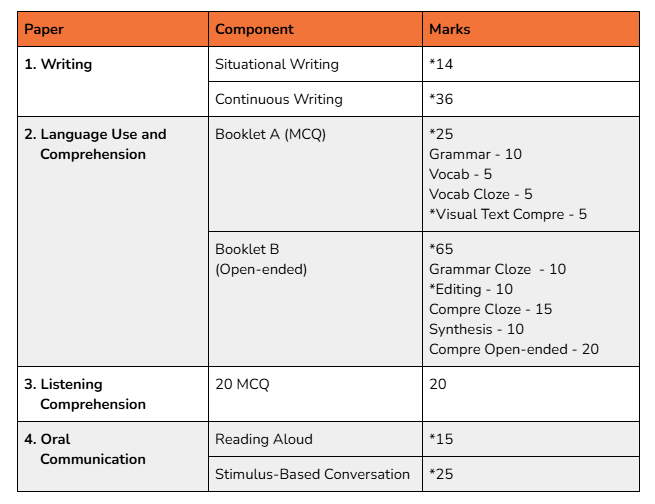
The O-Level English exam is designed to assess how well students use the language in both academic and everyday contexts. It consists of four papers, each focusing on a different skill area. Writing includes situational tasks and continuous writing, where students must organise ideas clearly and use an appropriate tone. Comprehension tests a student’s ability to understand passages, visuals, and summaries. Listening focuses on understanding spoken information and note-taking, while Oral Communication assesses spoken interaction and prepared responses.

Across all papers, clear communication and careful reading are essential. Students need to organise ideas logically, respond directly to questions, and support answers with relevant details. Grammar, vocabulary choice, and sentence structure strongly influence how responses are marked. When these foundations are weak, even good ideas may not translate into strong scores.

Many students lose marks due to common language errors. These include subject-verb agreement issues, tense mistakes, sentence fragments, run-on sentences, and punctuation problems. For example, writing “The list of reasons are long” instead of “The list of reasons is long” can affect clarity and accuracy. Misunderstanding the question is another frequent issue, leading students away from what is actually being asked.

Certain writing habits also quietly lower grades. Essays without a clear thesis tend to feel unfocused, while overly wordy explanations or heavy use of connectors like “moreover” weaken clarity. Informal expressions such as “I’m gonna explain” instead of “I will explain” reduce the formality expected in exams. Misplaced modifiers can also confuse meaning. While these mistakes may seem minor on their own, they add up during exams.

How Tuition Improves English Skills Quickly

Photo by RDNE Stock project on Pexels

Tuition accelerates improvement by focusing on areas that directly affect exam performance. Tutors identify specific grammar and vocabulary gaps and work on them through clear explanations and guided practice. As students apply rules correctly and expand their vocabulary, their writing becomes more accurate and their answers clearer.

Tuition also offers structured practice for writing and comprehension, areas where many students need extra support. Tutors guide students through essay planning, paragraph development, and question analysis step by step. For comprehension, students learn how to identify relevant information, explain answers clearly, and manage their time more effectively. Regular practice with feedback helps students understand what examiners look for and how to respond more confidently.

Speaking and listening skills improve with consistent practice in a supportive setting. Students rehearse spoken responses, work on clarity, and learn how to organise their thoughts. Listening tasks are broken down into manageable steps, making note-taking and understanding spoken content less stressful. Over time, students become more comfortable expressing ideas across all English exam components.

Real Progress You Can Measure

Photo by RDNE Stock project on Pexels

One of the strengths of tuition is the ability to track progress clearly. Tutors use regular assessments, writing tasks, and practice questions to check understanding. After each session or task, students receive specific feedback on what they are doing well and where improvement is needed. This helps students correct mistakes early and build stronger habits.

Mock exams provide an even clearer picture of progress. By simulating real exam conditions, students become familiar with the format, timing, and question styles. Parents can see improvements in scores over time, while students gain confidence in handling pressure and applying skills effectively.

Exam-Focused Strategies Taught in Online Tuition

Photo by Katerina Holmes on Pexels

Online tuition places strong emphasis on exam strategies that directly improve results. For essay writing, students learn how to analyse questions carefully, plan ideas, and structure essays using simple frameworks that meet marking criteria. Clear organisation helps examiners follow arguments easily and award marks more confidently.

In comprehension lessons, tutors train students to identify keywords and command terms so they respond precisely to each question. Students learn how to select relevant details, paraphrase effectively, and manage different question types, including summaries and visual texts. This approach reduces guesswork and improves accuracy.

Students are also guided through exam formats and mark schemes, helping them understand how marks are allocated and what examiners value most. Active recall techniques such as flashcards, mind maps, and practice questions without notes strengthen memory and recall. Timed practice papers help students improve speed, accuracy, and confidence. Tutors also teach elimination techniques for multiple-choice questions and run focused revision sessions that concentrate on commonly tested or challenging topics.

Why Online Tuition Works Better Than Traditional Classes

Photo by Annushka Ahuja on Pexels

In many classrooms, teachers must manage groups of students, which limits individual attention. This can make it difficult for students who need extra support in grammar, writing, or comprehension. Online English tuition provides a more focused learning environment, where lessons are adjusted to suit a student’s pace and learning needs.

Personalised learning allows tutors to slow down when students struggle and move ahead when concepts are clear. This builds confidence and helps students make steady progress without feeling pressured. One-to-one online tuition also means immediate feedback. Tutors can correct mistakes on the spot, explain why they occur, and guide students on how to avoid them in future exams.

Flexible scheduling makes online tuition especially appealing for families. Lessons can fit around school, activities, and family routines, with no travel time involved. Learning at home often helps students stay relaxed, focused, and consistent.

At Curio, we provide online English tuition that supports both academic performance and communication skills. Our structured lessons focus on clear expression, thoughtful discussion, and strong comprehension. This helps students grow into confident communicators while strengthening critical thinking skills across subjects.

Curio.sg offers fully online English tuition in Singapore for Primary 6 and Secondary 1, 2, and 3 students. Through engaging worksheets, experienced tutors, and a supportive online platform, students can learn step by step anytime and anywhere. With Curio.sg, online English tuition becomes accessible, effective, and enjoyable, helping students stay well-prepared for future academic success.

Here is some information about Curio’s new independent programme:

In this programme you can inform us what the school is covering and our teachers will upload personalised material for your child onto Google Classroom. This work will be marked in detail and returned. Should you need a video call with the teacher (e.g. before major tests/projects) you can book a call. 

Programmes available:

Independent Lite: one personalised worksheet uploaded every Friday, marked and returned within a week of student’s completion : $200 nett per month

Independent Unlimited: You can request for any number of worksheets. They will be uploaded throughout the week and marked once the student finishes: $320 nett per month

Video Consultation: $40 per half hour

10 Ways Parents Can Support Their Child’s English Learning at Home

Nadya Sharfina · October 24, 2025 · Leave a Comment

"The earlier a child starts learning English, the easier it becomes for them to absorb, understand, and use it naturally."

English has become a global language used for communication, education, travel, and work all around the world. Being able to speak and understand English opens many doors and makes daily life smoother in countless ways. For families in countries where English isn’t the main language, putting in a bit of extra effort to learn it can make a lasting difference in how confidently a child can communicate and explore the world.

That’s why it’s best to start early and help your child build familiarity with English while their brain is still in the stage of easily absorbing new information. In this article, we’ll share simple and practical ways parents can support English learning at home. We’ll also include useful educational resources that can help your child master English faster, so keep reading until the end to get all the tips and ideas you can use right away.

1. Make English Part of Everyday Talk

Photo by Ketut Subiyanto on Pexels

Speaking English at home every now and then can make a big difference in how naturally your child learns the language. When English becomes part of your daily conversations during meals, playtime, or simple chats, it starts to feel less like studying and more like just another part of family life. The brain picks up listening and speaking skills more easily this way, turning language learning into a natural daily routine.

You don’t have to worry about your child forgetting their mother tongue either. It’s all about balance. Keep using your home language while mixing in some English here and there. In fact, saying something in English and then repeating it in your mother tongue helps your child connect both languages. Kids usually focus on the language they understand best and naturally “tune out” the rest, so there’s no need to fear confusion, their brains are built to handle it.

Talking in English at home helps your child become more fluent and confident. It also strengthens their thinking skills, things like problem-solving and critical thinking, which can lead to better performance at school. Over time, this habit lays a solid foundation for their future. Being comfortable with English can open doors for study, work, and travel opportunities, while also helping them grow into clear communicators who are comfortable navigating different cultures.

2. Read Bedtime Storybooks

Photo by 🇻🇳🇻🇳Nguyễn Tiến Thịnh 🇻🇳🇻🇳 on Pexels

Start reading English storybooks to your child as early as you can. When children are very young, they’re simply focused on the comforting routine of bedtime stories. That makes this quiet time before sleep a wonderful chance to add a little extra English practice into their day without it feeling like a lesson.

Storybooks offer a fun and natural way to build your child’s English skills. The language used in children’s books is often simple, rhythmic, and repetitive, which helps kids absorb new words and sentence patterns easily. Illustrated pages also make the meaning clear, encouraging your child to ask questions about the characters and plot. Over time, this not only widens their vocabulary but also nurtures their curiosity and love for learning through stories.

3. Play Audiobooks

Photo by Dzenina Lukac on Pexels

There are times when you might be too busy to sit down and read a story to your child and that’s completely okay. On those days, you can still keep their English learning going by playing an audiobook instead. Audiobooks are an easy way to surround your child with English, even when you’re cooking, driving, or getting ready for bed.

There are plenty of platforms, like YouTube or Spotify, that offer hours of children’s audiobooks. You can start with simple English stories to help your child follow along easily. Some good options include The Very Hungry Caterpillar, Brown Bear, Brown Bear, What Do You See?, Curious George, Peppa Pig stories, or Frog and Toad Are Friends. These stories use clear, repetitive language that helps children understand and remember new words naturally.

You can also make listening more interactive. Encourage your child to annotate or draw small notes about what they hear, maybe writing down new words, sketching a favorite scene, or marking parts they didn’t understand. Later, take a few minutes to discuss the story together. Ask what they liked, what they learned, or what they found funny. This keeps the activity engaging and helps your child connect listening with thinking and speaking in English.

4. Sing Songs Together

Photo by Ketut Subiyanto on Pexels

Singing English songs together is one of the most enjoyable ways to help your child learn the language. Music and rhyme naturally support children in using full sentences, intonation, pitch, and rhythm. These are things that can be hard to teach directly, but songs make them easy and fun. When you sing together, your child absorbs these patterns without even realizing they’re learning.

Songs also introduce children to surprisingly complex grammar and sentence structures. Take a simple tune like “The Wheels on the Bus” it uses repetition and variations that teach how actions can change within a sentence (“The wipers on the bus go swish, swish, swish”). Another great one is “Old MacDonald Had a Farm,” which naturally exposes children to verb changes (“had,” “goes,” “moo”) and sentence rhythm in a fun, engaging way. Even “Head, Shoulders, Knees, and Toes” helps them follow and understand word order while connecting language to actions.

The beauty of songs is that they remove pressure. The melody, rhythm, and familiar words create a safe and joyful context for children to experiment with English. They sing along, imitate sounds, and learn grammar and pronunciation effortlessly.

5. Set Your Devices

Photo by Nicola Barts on Pexels

Set your home devices, such as the computer, tablet, smart TV, or phone, to use English. This small change helps your child see and hear English every day without making it feel like a lesson. Most gadgets allow you to switch the language, and choosing English gives your child regular, natural exposure to useful words and phrases.

Since children learn best through repetition, they’ll soon start recognizing common on-screen words like “password,” “sign up,” “log in,” “settings,” or “game over.” These simple phrases might seem minor, but they build comfort and familiarity with English vocabulary.

Each time your child watches you use technology in English or explores it themselves, they’re learning the language in a real, everyday way, one that feels effortless and practical.

6. Create an English Environment at Home

Photo by Dmitry Zvolskiy on Pexels

Create an immersive environment at home by placing English labels on everyday items. Label things like the door, table, fridge, and mirror so your child sees English words around them every day. This helps them connect vocabulary with real objects in a simple, natural way. You can make it more engaging by asking your child to help write or decorate the labels together. 

You can also set up a small “English corner” in your home. Choose a spot where you keep English books, flashcards, and games. Add a few fun things like a whiteboard, drawing tools, or story CDs to make it a place your child enjoys spending time in. 

7. Encourage Writing

Photo by Norma Mortenson on Pexels

Encouraging your child to write in English helps them express their thoughts and build confidence with the language. You can start by giving them a small journal for daily writing activities. Ask them to write about what they did that day, something fun they learned, or even a story they make up. The idea is to help them see writing as a natural way to share their ideas in English.

For younger children, don’t worry too much about grammar or spelling, those skills will develop over time. What matters most is helping them enjoy writing and use English creatively. The goal is to build the habit of thinking and communicating in English, not to have flawless sentences. Over time, this simple practice can improve vocabulary, sentence structure, and confidence in using the language both in writing and speaking.

8. Learn Through Games

Photo by Pixabay on Pexels

Making English learning fun and interactive helps your child stay engaged and excited about using the language. One of the best ways to do this is through games. Try using board games, flashcards, or word games like Scrabble, I Spy, or Simon Says to practice new vocabulary and language skills.

You can also make learning interactive by adding simple activities to your daily routine. Use fridge magnets to spell out words together, act out new words in a quick game of charades, or even make your own mini challenges. 

9. Watch Films/TV Shows Together

Photo by Ketut Subiyanto on Pexels

Watching English films or TV shows together is a fun and effective way to help your child learn the language. When you watch, turn on English subtitles. This helps your child connect spoken words with how they’re written, improving both listening and reading skills at the same time.

Children tend to pick up more words and phrases when using English subtitles instead of subtitles in their native language or none at all. As they get more comfortable, they’ll start to understand more just by listening and may not need subtitles anymore. When they can enjoy English shows without help, it’s a clear sign that their understanding and language ability are growing.

10. Provide Access to Quality English Educational Resources

Photo by Annushka Ahuja on Pexels

Making English learning accessible at home starts with using the right resources and technology. When used wisely, technology can open up many ways for children to strengthen their English skills beyond the classroom. That’s why Curio.sg provides quality educational resources designed specifically to help students improve in English. Our lessons are focused entirely on developing strong English foundations, so parents can be confident that their child is learning with purpose and direction.

At Curio.sg, we offer fully online English tuition for Primary 6 and Secondary 1, 2, and 3 students in Singapore. Our goal is to help every learner build solid academic skills in English through engaging lessons and expert guidance. By giving your child access to our online learning platform, you’re helping them master English step by step, anytime, anywhere. With Curio.sg, English learning becomes easier, more enjoyable, and truly accessible for every student.

O Level Essay Questions from Previous Years

Santhi Rebecca · August 14, 2025 · Leave a Comment

"Our curated collection of O Level essay questions, spanning past papers from 2004 to 2024, offers a targeted way to practise with purpose."

Preparing for the O Level English exam can feel like a big challenge, but with the right approach, it becomes a lot more manageable. In this programme, students sharpen their ability to plan, write, and express ideas clearly under timed conditions. This training builds the confidence needed to handle any topic that comes their way on exam day. By practising with the right kind of questions, students give themselves a stronger chance of performing well when it matters most.

To make that practice more focused, we’ve gathered a collection of O Level English essay questions spanning past papers all the way from 2004 up to 2024. These cover topics that frequently appear in the exam, giving students a clearer idea of what to expect. Working through them helps strengthen skills and familiarity with the style and range of questions likely to appear.

Year 2002 – Essay Questions

Describe the sights and sounds as students gather on the first morning of a new school term. 
Which aspects of your education do you think will be most useful to you in adult life? 
‘Animals and birds should never be kept in cages.’ What is your opinion?
‘Mother knows best’. What sort of problems do you discuss with your parents? Do you always take their advice? 

Year 2003 – Essay Questions

Imagine a reunion with three friends from your school days in 10 years’ time. How will your lives have changed? 
‘What a wonderful sound!’ Write about some of the sounds you like best and why they mean so much to you. 
‘There is no point in preserving the past. We should be looking to the future’. What is your opinion?
Write about a teacher who made an unfortunate mistake which caused a student to suffer as a result. 
Write a story about what happened when, on the morning of your journey to spend a year studying overseas, you were unable to find your passport.

Year 2004 – Essay Questions

Describe a place which is pleasant during the day but which is very different at night. 
Describe one of the large shopping malls in Singapore. Why does it attract so many customers? 
What changes have you seen in your school since you joined it? 
It is said that the school uniform gives pupils a sense of identity and encourages good discipline. Do you agree? 
Should both parents go out to work when their children are very young? What are your views? 
‘People are much too interested in their appearance nowadays.’ Do you agree?
Write a story based on the sentence: ‘It was only when I looked at the photograph that I saw just how similar we were.’
Write a story about someone who was wrongly accused and had to prove his or her innocence. 
Flight
Write about an occasion when a furious argument took place, based on a case of mistaken identity. 

Year 2005 – Essay Questions

Describe a local market or a popular harbour at a very busy time.
‘Parents and teachers are partners in the education of children.’ In what ways can parents and teachers contribute to the education of children?
It is not only shopping that brings visitors to Singapore. Describe some other tourist attractions and say why you think visitors enjoy them.
Choosing a career is one of the most important decisions to be made in life. What factors will affect your choice?
Do you consider sport to be an important part of life?
Write about how a serious accident led to an area being made safer for those who work or live there.
Write a story which includes the words: ‘I realised he was only human when…’
Marriage.
Write about two occasions when you had great fun as a young child.
Write about a time when a friend defended you in difficult circumstances.

Year 2006 – Essay Questions

What do you think secondary schools can do to ensure the health, well-being and safety of their students? 
Given the limited land available in Singapore, is it wise to set aside some areas as nature reserves? 
Do you feel that you need the long school vacation? How do you occupy your time during the December break, when schools are closed? 
Dreams.
Write about a time when your late arrival for a particular meeting or event led to serious trouble. 

Year 2007 – Essay Questions

If you were drawing up a set of school rules for a new school, what would they be? Explain which of these you think are the most important. 
Nowadays, people live longer than ever before. What problems does this present and how can these problems be dealt with? 
Write about some of the things in your country you value most and would miss greatly, if you had to live in another country.
Heroes
Write about someone who failed to live up to his or her reputation.

Year 2008 – Essay Questions

The delights and frustrations of being a teenager.
Television, newspapers and the internet – which of these do young people prefer as a source of information, and why? 
In your opinion, what kind of voluntary work is worth doing, and why? 
Greed.
Write about an occasion when you just could not stop laughing at an inappropriate moment. 

Year 2009 – Essay Questions

In the 21st century, how important is it to be able to read, write and speak English in Singapore? 
‘I’m bored!’ is so often the cry of teenagers today. What could be done about this? 
Write about some of your worries and hopes for the future.
Power.
Write about an occasion when an attempt to help led to unexpected consequences for the helper.

Year 2010 – Essay Questions

What important lessons in life are learned away from school?
Some people say that the internet does more harm than good. What is your view? 
Describe the location and main features of your ideal home and explain why you think it would be the ideal place to live.
Leadership.
Write about an occasion when it was necessary to tell the truth whatever the consequences.

Year 2011 – Essay Questions

Describe how a religious or national event is celebrated in your country.
‘It is better never to borrow or lend money.’ What are your views on this advice?
Should girls and boys be given exactly the same type of education?
Freedom.
Write about an amusing incident on a day out with your family, which still makes you laugh whenever you remember it. 

Year 2012 – Essay Questions

People all over the world are living longer. What are the advantages and disadvantages of their increased life expectancy? 
‘The use of motorcars is the greatest threat to the environment.’ Do you agree?
Fame.
Write about an incident you still remember from your early childhood. Why do you think it has remained in your mind so clearly? 
Describe an annual event which you enjoy and explain why it is so important to you.

Year 2013 – Essay Questions

Parents often believe that it is better to be safe than sorry. Do you consider young people to be too protected? 
‘The way we dress reveals who we are.’ What are your views?
Describe some of your experiences in food courts and hawker centres. How important are these places in your life as a teenager in Singapore?
What do you consider to be your greatest achievement? Why does it mean so much to you? 

Year 2014 – Essay Questions

Which features of Singapore and its citizens make it a major tourist attraction for people from all over the world?
‘The best things in life are free.’ Write about some of the occasions when you have found this to be true.
Describe how you celebrated an important family occasion. Why will this event always remain in your memory?
Which person has the greatest influence in your life at the present time, and why?

Year 2015 – Essay Questions

‘The world would be a very dull place without music.’ What are your views?
‘Shoppers have too much choice, from chocolate bars to jeans’ What, in your opinion, are the advantages and disadvantages of having many things to choose from? 
Do electronic devices, such as tablets or smartphones, help or hinder students in their studies?
Describe the possession that matters most to you and explain why you would never be prepared to part with it.

Year 2016 – Essay Questions

Describe a childhood toy, or a game you played, which still means a great deal to you. Why is it so important?
Do you agree that we can learn from the mistakes of others or do we need to learn from our own experiences?
What are your ambitions for the future? Explain how you plan to achieve them, including any possible difficulties.
To what extent do you agree with the idea that some teenagers lead an unhealthy lifestyle? Give reasons for your views.

Year 2017 – Essay Questions

Describe a place that means a great deal to you. Why is it so important?
Write about a time when you caused great disappointment to a person. What did you do about the situation?
It is often said that people are too concerned with getting things and spending money. What is your opinion?
People should always tell the truth.’ Do you think there are any situations in which this might not be the best thing to do? Explain your views

Year 2018 – Essay Questions

Describe an event that you looked forward to which turned out to be disappointing. Explain why you were excited about it and why it didn’t live up to your expectations.
I had never seen my friend laugh so much!’ Write about a time when this happened.
Some people like to stand out from the crowd; others just want to be part of it. Which do you prefer and why?
Which modern invention is essential for you and your family and which one could you and your family live without? Explain your views.

Year 2019 – Essay Questions

Which person has the most positive impact on your life? Describe the individual’s personality and in what ways he or she has influenced you.
“It was the proudest moment.” Write about a time when you felt like this.
Most young people today are obsessed with fame and imitating celebrities. What are your views?
‘People can only be happy if they feel they are treated fairly.’ Do you agree?

Year 2020 – Essay Questions

Describe ways to relax after you have been busy. Explain why it is enjoyable for you.
Write about a time when you did something to impress someone and regretted it.
Learning how to respond to mistakes is essential for success. What is your opinion?
‘There’s no place like home.’ How true is this for you?

Year 2021 – Essay Questions

Describe the sights and sounds at a busy shopping mall. Remember to describe some of the people there as well as the place.
‘I felt as though I was on top of the world!’ Write about a time when you felt like this.
‘Young people are changing the world for the better.’ What is your opinion? 
‘A happy person is a healthy person.’ How far would you agree? 

Year 2022 – Essay Questions

Some people enjoy being in a crowded place, while others prefer somewhere quieter with fewer people. Describe your perfect place when you want to relax.
“I realised that I was much stronger than I had previously thought.” Write about a time when you felt like this.
“Young people spend so much time thinking about the future that they forget to enjoy the present.” How far do you agree?
“People today are far too easily persuaded to spend money on things they don’t need.” Do you agree that advertising has made us wasteful?

Year 2023 – Essay Questions

What is your idea of a perfect afternoon? Describe what you like to do and how it makes you feel. 
“As I looked back, I realised I had made the right decision.” Write about a time when you felt like this. 
“Schools should teach practical skills such as cooking and managing our finances.” Do you agree? Why or why not?
‘All you need to succeed in life is a positive attitude.’ How far would you agree?

Year 2024 – Essay Questions

Describe a special meal you enjoy with friends or family. As well as describing the food, explain where and when you have the meal you have the meal and why it is important to you.
‘We should all value time spent alone.’ How far would you agree?
‘Social media does more harm than good.’ Do you agree? Why or why not?
Write about a time when you experienced a difficult but interesting journey.

If you’re looking for a reliable study companion, we recommend our book 12 Years of O Level Model Essays. It features a collection of well-written essays drawn from the past 12 years of O Level examinations, covering a range of styles including expository, descriptive, argumentative, and discursive writing. Each piece demonstrates strong structure, relevant content, and rich vocabulary. Perfect for students to pick up techniques they can apply in their own work.

Alongside the book, you can take your preparation further by joining our O Level English Language classes. Our experienced teachers guide students through proven strategies and offer personalised feedback to sharpen their skills. Every step of the way, your child will be supported in building confidence and mastering the techniques needed for exam success.

Clearing Up Common Misconceptions About Online Tutoring

Nadya Sharfina · May 30, 2025 · 4 Comments

"Modern learning may look unfamiliar, but online tutoring is designed to support today’s students in ways that truly work."

Online tutoring has become more common in recent years, but there are still a lot of misconceptions about how it works. Some parents may feel unsure about it—maybe because it’s done through a screen, or because it looks different from what they remember growing up. These doubts are completely normal, especially with so many choices out there. Still, online tutoring can offer meaningful support for children at all learning levels.

In this article, we’ll explore some of the most common misconceptions about online tutoring and explain why they don’t always match up with reality.

Not Just for Homework

Many people assume tutoring is just about getting through tonight’s homework, but that’s only a small part of what it can offer. Good tutoring goes deeper—it helps students build the skills they need to really understand what they’re learning. Things like critical thinking, problem-solving, and staying organised don’t always come naturally, and that’s where a tutor can really make a difference. Over time, students start to approach tough concepts with more ease and less frustration.

Tutoring also encourages better habits that stick with kids well beyond a single assignment. They learn how to manage their time, study more effectively, and feel more prepared when it’s time for standardised tests. Instead of just reacting to challenges as they come, students start to develop strategies that help them stay ahead. So, while homework help is part of the package, the real benefit is in building a stronger foundation for learning overall.

Connected, Not Isolated

A common myth about online learning is that it leaves students feeling isolated, but that’s far from the reality of how most programs work today. Many online platforms offer group classes where class sizes are carefully planned, so students still get that sense of being part of a learning community. They can join virtual study sessions, share ideas, ask questions, and collaborate just like they would in a traditional classroom, just in a different format.

For students who need more personal attention, one-on-one video calls with tutors or teachers are often part of the experience. In fact, online tutoring can sometimes be more interactive than in-person classes, simply because the tutor is focused on fewer students and can give more attention to each one. Instead of feeling alone, many students actually feel more seen and heard in an online setting.

Learning Doesn’t Stop When the Session Ends

Photo by Katerina Holmes on Pexels

It might seem like learning stops when a tutoring session ends, but that’s not quite how it works. While tutoring can give your child an extra boost by explaining tricky topics and guiding their understanding, it isn’t meant to replace independent study. Just like in school, what students do outside of the lesson matters just as much. Logging off a session doesn’t mean putting the books away for the rest of the day.

To really make progress, students need to revisit what they’ve learned, practise applying it, and give themselves time to absorb the material. This helps the concepts stick and leads to stronger results in the long run. Tutoring sets the foundation, but regular review and self-study help build something lasting. A little effort outside the sessions can go a long way in helping your child get the most out of their learning.

No Need to Be Tech-Savvy

Photo by Antoni Shkraba Studio on Pexels

Many parents worry that online tutoring won’t be as effective as in-person sessions, especially if their child isn’t very tech-savvy. It’s true that learning through a screen isn’t exactly the same as sitting in a classroom, and that can feel a little intimidating at first. However, most online tutoring platforms are built to be simple and easy to use, with familiar apps like Google Meet and Zoom making it straightforward to connect. Tutors usually take time to guide students and parents through the setup, so you don’t need to be an expert with technology to get the hang of it.

With the right tutor, interactive tools, and video calls, online tutoring can be just as effective as traditional methods and often more flexible. These sessions allow for personalised attention and make it easier for students to ask questions and get instant feedback. The convenience of learning from home, combined with user-friendly technology, helps make online tutoring a practical option for many families.

Discipline Still Counts

Photo by Annushka Ahuja on Pexels

Online learning often gets a reputation for being too relaxed, but that doesn’t mean discipline goes out the window. Just because students and teachers aren’t in the same physical space doesn’t mean expectations disappear. Students are still expected to show up on time, stay focused, and follow a routine. This kind of setup gives children the chance to take more ownership of how they manage their time and stay on task.

It may look easy at first, but online learning actually helps students build consistent habits. This is a great chance for your child to build discipline on their terms. It’s also a good opportunity for your child to develop time management skills. They need to meet deadlines, organise their work, and find a balance between screen time and study time. These are all useful habits that can support steady progress and help students stay more prepared day to day.

Tutors Do More Than Just Give Answers

Photo by Ketut Subiyanto on Pexels

Some people think tutors are just there to hand out answers, but that really misses the point of what good tutoring is all about. A big part of tutoring is helping students understand how to get to the answer on their own. Tutors give students the tools to break down problems, think critically, and figure things out step by step. When kids know the process behind a solution, they’re much better prepared for the next challenge that comes their way.

Tutors often act like a personal guide, showing students smart ways to approach their studies and prepare for exams. They might share strategies or tips that aren’t always covered in the classroom, kind of like giving your child a cheat code, but for learning. This helps students build real skills that stick with them long after the session is over. Instead of just memorising answers, they’re learning how to tackle all kinds of questions with more clarity and independence.

At Curio, our tutors are thoughtful and intentional in how they teach. They understand that every child learns differently, so they adjust their approach to match each student’s needs. Our tutors are former RGS educators who know what it takes to prepare for exams and how to teach smart, effective ways to tackle questions. If your child needs extra support in English, Curio’s online tuition program offers engaging, personalised learning that keeps students motivated. With expert guidance and tailored lessons, your child will pick up useful strategies and practical skills that make studying feel more manageable.  Sign up today and see how Curio can make English learning a better experience for your child.

Check out more articles on online learning here: How Online Learning is Reshaping Education, The Joys of Learning Online, The Role of Parents in Online Learning Success, and The Rise of Online Education: What Parents Need to Know.

How to Help Your Child Get Ready for the PSLE

Nadya Sharfina · May 28, 2025 · 6 Comments

"The PSLE marks not just the end of primary school, but the beginning of new possibilities—preparation is the bridge between where your child is and where they can go."

The PSLE, or Primary School Leaving Examination, is a major step for all Primary 6 students in Singapore. It marks the end of their primary education and helps determine their next school placement. The exam covers four main subjects: English, Mother Tongue, Mathematics, and Science. Each subject has its own format and areas of focus, so preparing for the exam means understanding what each one requires.

In this article, we’ll offer practical tips to help your child improve their PSLE results and approach the exam with greater ease.

Time Management Strategies

Photo by JESHOOTS.com on Pexels

Time can pass quickly during an exam, especially if your child gets stuck on a difficult question. Without a clear plan, they might spend too long on one problem and end up rushing through the rest. 

Start by encouraging your child to read through the entire paper before answering. This helps them understand the questions and spot the ones they feel more comfortable tackling. A good tip is to go for the easier questions first; this helps them secure those marks early on and builds a steady rhythm for the rest of the paper.

It’s also helpful to set rough time limits for each section. For example, in English Paper 2, they might allocate about 20 minutes to the grammar and vocabulary sections, then use the remaining time for comprehension and synthesis. The goal is to manage time wisely, so no section is rushed or overlooked.

Learn Note-Taking Methods

Taking good notes can greatly help your child when reviewing what they’ve learned. It organises information in a way that makes it easier to understand and remember. Your child can experiment with different note-taking methods to find one that matches their learning style.

One common technique is the outline method, where ideas are arranged in a clear, hierarchical format. This works well for subjects with lots of facts or steps, like Science or Social Studies. Another useful approach is the boxing method, which groups related information into separate boxes on the page. This method helps break down concepts or examples clearly.

The sentence method is more straightforward, with your child writing important points as full sentences. This can be especially helpful for summarising explanations or stories in English. It encourages them to process the information in their own words, which can deepen understanding. Writing in full sentences also mirrors the way they might need to explain ideas in written assessments, making this method a practical tool for subjects that involve more descriptive answers. Over time, this technique can help build a stronger habit of thinking clearly and expressing ideas more effectively on paper.

Visual Aids for Better Understanding

Photo by Kelly Sikkema on Unsplash

Using mind maps, diagrams, and flow charts can be a great way to help your child organise their thoughts and see how different topics connect. In subjects like Science and Math, students often need to link ideas together, and visual aids make these connections much clearer. Check out: 5 Ways to Take Better Notes in Class.

A simple way to create a mind map is to write the main topic in the centre of a page, then draw branches out to related ideas. Adding colours, symbols, and images can make the map more memorable. Feel free to use whatever helps your child remember the information easily.

Mind maps work well for topics such as life cycles or ecosystems in Science, and concepts like geometry or problem-solving methods in Math. These tools help your child break down complex information into manageable parts, making study sessions more effective and engaging.

Review Past Papers

To prepare steadily for the PSLE, many students benefit from practising with past exam papers. These resources give your child a clearer sense of what to expect, how questions are phrased, which topics come up often, and the level of detail typically required in answers.

A good place to begin is with older papers. These help build a solid foundation and allow your child to become familiar with the structure of each subject. Once they’re more comfortable, move on to more recent papers to stay in tune with current question formats and trends.

However, don’t stop at just completing the papers. Go through the answers together and take time to review any mistakes. This step is just as valuable as the practice itself. Understanding why an answer didn’t work, or how a different method might be more effective, helps your child avoid making the same errors again.

With regular practice, the exam format will begin to feel more natural and less overwhelming. This gradual approach allows your child to prepare thoroughly without the pressure of cramming everything at once.

Developing Strong Writing Skills

Photo by 人约黄昏后 on Unsplash

Writing plays a big role in the PSLE, especially in the English paper, and developing strong skills requires time and regular practice.

Begin by encouraging your child to read a wide range of books, articles, or short stories. The more they read, the more they’ll pick up different sentence structures, vocabulary, and writing styles. Over time, this helps shape their writing and allows them to share ideas more clearly and creatively. Check out: 10 Essential Books for Teens: Boosting English Skills & Building Character.

Consistent essay practice also has a strong impact. Set aside time each week for your child to write on various topics, both personal and imaginative. When working on narrative essays, encourage them to use vivid descriptions and natural dialogue to make their stories come alive.

How Different Resources Help with PSLE Study

There are many educational resources available today to support your child’s PSLE preparation. From textbooks and assessment books to online platforms and tutoring services, each offers its own benefits. Exploring these options can help you find what suits your child’s learning style and needs best.

In addition to self-study materials, interactive and engaging classes can help keep your child motivated. Sometimes, a fresh explanation or a new way of looking at a topic makes it easier to understand.

Our online tuition programme is designed with this approach in mind. With structured lessons, experienced tutors, and a supportive learning environment, we help your child develop strong writing skills.. The lessons are content-rich and encourage active participation, making learning enjoyable and effective.

Ready to support your child’s learning journey? Sign up for our creative writing programme today!.

How to Know if Your Child Needs a Tutor

Nadya Sharfina · May 22, 2025 · 2 Comments

"Your child may be trying their best, but quiet struggles often go unnoticed. Maybe it’s time to consider a tutor who can offer the support they need."

Sometimes, it’s hard to tell if your child is managing well in school or quietly facing challenges. Even students who work hard and study dedicatedly can reach a point where the material becomes overwhelming or their interest begins to wane.

At times like these, extra support can really help. A tutor provides personalised guidance, helping your child review difficult topics, clear up confusion, and gain a deeper understanding of the material. This focused support helps them build a stronger foundation and approach new challenges with greater ease.

In this article, we’ll explore some common signs that suggest your child could benefit from a tutor.

Your Child Has Difficulty Starting Schoolwork

Photo from Freepik

When something feels difficult or unpleasant, what do we usually do? We procrastinate. Children are no different. If your child is regularly delaying their homework or coming up with reasons to avoid it, it could be more than just a temporary slump. This kind of procrastination often signals that they’re finding the work too challenging or overwhelming.

You might notice them skipping parts of their assignments, struggling to get started, or even trying to hide their homework altogether. If they used to finish their schoolwork in an hour or two but now spend several hours with little progress, it’s a clear sign that something’s not working.

When Effort Doesn’t Match Results

Photo by Pragyan Bezbaruah on Pexels

One of the most frustrating experiences for any student is putting in a lot of effort but not seeing the results they expect. If your child has been diligently completing homework and studying for every test, yet their grades on tests and assignments are slipping, it can be tough for both of you.

This situation often leaves them feeling confused and discouraged. They might begin to doubt their abilities, even though the issue usually isn’t a lack of effort. More often, it comes down to their approach. They may be missing key concepts, using study methods that don’t match their learning style, or simply needing more focused guidance to turn their hard work into better results.

Grades Going Down

Photo from Freepik

One of the most common signs that your child may benefit from extra academic support is a noticeable drop in their grades. When a child fails a test or brings home a disappointing report card, it can feel disheartening. While every student can face challenges now and then, ongoing struggles in their academic performance usually signal that they need some help.

The key is to find out what’s causing the decline. Maybe they’re having trouble keeping up in class, or perhaps they didn’t fully grasp earlier topics and are now feeling lost. Whatever the reason, getting to the root of the issue early can prevent further setbacks.

Anxiety Around Exams

Photo by Andy Barbour on Pexels

It’s completely normal for children to feel a little nervous before a big test. However, if your child always gets anxious around exam time, it might be a sign that they need more support. Some kids feel overwhelmed simply because they don’t know how to prepare. They may stare at their notes, unsure of where to start, or feel like no matter how much they study, it’s never enough.

This kind of anxiety often comes from a lack of confidence and structure. If they don’t feel prepared, it’s hard for them to walk into an exam room with a clear mind. When that stress builds up over time, it can start to affect their overall attitude towards school and learning.

Your Child Has Low Self-Esteem

Photo by Thirdman on Pexels

Sometimes, children begin to believe they’re just “not good” at a certain subject. You might hear them say things like, “I’m terrible at English,” or “I’ll never get this.” These kinds of comments often reflect low self-esteem and doubt in their own abilities.

When kids lack confidence, they may hesitate to speak up in class. They might avoid asking questions when they’re confused or shy away from answering, even if they know the right response. This reluctance usually shows that they’re feeling unsure or uncomfortable in that learning environment.

With the right support, children can not only understand the material better but also start to feel more capable and encouraged. As their confidence grows, they become more willing to participate in class and develop a more positive attitude toward learning.

Dislike of a Specific Subject

Photo from Freepik

Not every child struggles in every subject. Sometimes their overall grades look fine, but one subject consistently presents a challenge. Maybe they’re often receiving lower marks in one subject, or they simply seem to dislike the subject. When a child avoids or resists a particular area of study, it usually means they find it confusing, frustrating, or too difficult to handle on their own.

Even if their overall performance hasn’t dropped, ongoing difficulties in one subject shouldn’t be overlooked. Struggles in important areas like English, where skills in reading, writing, and comprehension form the foundation for many other subjects, can affect their progress over time.

That’s where we can help. Curio is an online tuition platform specializing exclusively in English. Our tutors are experienced ex-RGS teachers who know how to explain complex ideas clearly and provide supportive, personalised guidance. With expert help and tailored learning plans, your child can improve their English skills and regain confidence.

At Curio, your child is in safe hands. We offer a variety of classes and programmes designed to fit your child’s individual needs and learning style. Join us today and give your child the focused support they need to grow and thrive.

Mid Year Check in for Sec 1 Parents: On Your Child’s Academic Journey

Santhi Rebecca · May 15, 2025 · 2 Comments

"Half a year gone in a blink, but it’s not too late to pause, check in, and steer your child’s journey with clarity and care."

It is almost June and where did the time go? Your kids seemed to have grown up quite suddenly, gone on to secondary school and are now halfway through their first year. They have made friends, navigated new and unfamiliar terrain, and have busier schedules. On the academic front, the additional subjects and complexity that some of them come with must have posed a challenge. How can you help them better navigate through their academic journey in secondary school? 

This check-in is a chance to breathe, take stock, and gently steer the course for the rest of the year. Whether your child is thriving, struggling, or somewhere in between, you are not alone. Let’s walk through some key areas of their journey so far.

Tackling Tough Subjects

Photo by Annushka Ahuja on Pexels

One of the biggest changes in Secondary 1 is the introduction of new subjects and a more rigorous pace. For many students, subjects like Math, Literature, or Mother Tongue can suddenly feel more complex than before.

If your child is facing difficulties, it doesn’t mean they are falling behind for good. It often takes time to adjust to new styles of teaching, unfamiliar terminology, and higher expectations. Be patient. Offer support without pressuring them to “just get it.”

Here are some signs your child may be struggling academically:

  • Avoiding certain subjects or homework
  • Feeling discouraged or frustrated easily
  • Sudden drops in test scores or class participation
  • Saying things like “I’m just not good at this”

What You Can Do:

  • Check in regularly without sounding like an interrogation. A simple “How did Math go today?” can open doors.
  • Celebrate small wins, like a better quiz score or understanding a tough topic.
  • Reach out to teachers if you’re unsure how your child is performing. Teachers appreciate proactive communication and can offer insights or suggestions.
  • Consider extra help—whether that’s online resources, group tuition, or a friend who’s good at explaining things. Not all help has to be expensive or formal.

Most importantly, reassure your child that progress matters more than perfection. Every learner has strengths and areas to improve—this is part of growing up.

Handling Emotions and Growth Spurts

Photo by Annushka Ahuja on Pexels

It’s no secret: Secondary 1 students are going through a lot emotionally and physically. Hormones are surging, friendships are shifting, and identity is forming. One day they’re laughing with you at breakfast, the next they’re giving you one-word answers and closing their room door.

This emotional rollercoaster is normal.

Your child is learning to balance independence with the need for guidance. They may not say it, but they still need you—just in new ways.

Some emotional shifts you might notice:

  • Mood swings or increased irritability
  • Being more private about school or friendships
  • Feeling self-conscious about appearance or abilities
  • Wanting to “fit in” more than before

Ways to Support Emotional Growth:

  • Offer a safe space to talk—without judgment or trying to “fix” everything.
  • Validate their feelings. Even if something seems small to you, it may feel huge to them.
  • Model emotional regulation. How you handle stress and disappointment teaches them a lot.
  • Encourage good habits—like sleep, balanced meals, and screen breaks. These directly impact mood and energy.

Growth spurts can also leave your child feeling physically tired, clumsy, or awkward. If they suddenly outgrow uniforms or complain about joint aches or fatigue, it’s not uncommon. Make sure they’re eating well and getting enough rest. Teens need more sleep than we often realise—about 8 to 10 hours a night.

Building Good Study Habits

Photo by Antoni Shkraba Studio on Pexels

Secondary 1 is the perfect time to build sustainable study habits that will carry your child through the next few years. But remember, habits don’t form overnight. This is a good point in the year to help your child reflect:

  • What study methods are working?
  • Which subjects need more attention?
  • Are distractions (like social media or gaming) becoming a problem?

Tips for Better Study Routines:

  • Use a planner or digital calendar to track homework and test dates.
  • Break big tasks into smaller parts.
  • Encourage regular revision—not just before exams.
  • Create a dedicated, tidy study space at home, even if it’s just a corner of a table.

Help your child find their own rhythm. Some kids study better in short bursts, others need longer quiet stretches. The goal is not just hard work—it’s smart, consistent effort.

Navigating New Friendships and Social Pressures

Photo by RDNE Stock project on Pexels

Friendships can be a major source of joy—or stress—in Secondary 1. With students from different primary schools mixing together, new social groups are constantly forming and shifting.

It’s normal for your child to be figuring out where they belong. They might feel left out one week and included the next. You may also notice them talking about new people they admire—or ones they dislike.

While you can’t choose their friends, you can help them learn to recognise healthy friendships: those built on kindness, respect, and shared values. Encourage them to be open-minded and inclusive, but also to stand firm on their boundaries.

What if my child is being bullied or left out?

  • Listen calmly and avoid jumping to conclusions or actions right away.
  • Ask open-ended questions like “How did that make you feel?” or “What do you want to do about it?”
  • If needed, talk to the school discreetly. Most schools take peer relationships seriously and can provide support.

Managing the Pressure to Perform

Photo by Katerina Holmes on Pexels

In Singapore’s competitive academic culture, it’s easy to feel that every grade, every test, and every subject matters too much. But remember, Secondary 1 is a foundation year. It sets the tone for later academic years, but it doesn’t define your child’s future.

If you sense your child is putting too much pressure on themselves (or feels that you are), try to shift the focus:

  • From marks to learning
  • From comparison to self-improvement
  • From perfection to progress

Praise effort, not just results. Recognise the courage it takes to ask for help, the dedication behind revision, or the resilience in bouncing back from a bad grade.

Looking Ahead: What’s Next for the Year?

Photo by Tara Winstead on Pexels

Now is a good time to sit down with your child and set realistic, encouraging goals for the second half of the year.

Try these questions to guide the conversation:

  • What’s one subject you want to improve in?
  • What’s something you’re proud of so far?
  • What’s one new thing you’d like to try before the year ends?

This helps your child reflect meaningfully and take ownership of their journey. You don’t have to plan everything—but a gentle sense of direction can be motivating.

Final Thoughts: You’re Doing Better Than You Think

Photo by Annushka Ahuja on Pexels

Parenting a Secondary 1 child can feel like a balancing act. You’re giving them more freedom but also worrying if they’re ready. You’re cheering them on, but also wondering when to step in.

Take comfort in knowing that this phase—however bumpy—is one of growth, learning, and transformation. Your child doesn’t need you to be perfect. They just need you to be present, to listen, and to believe in them—even when they doubt themselves.

Celebrate how far they’ve come. And if things aren’t going as smoothly as hoped, remember: it’s never too late to reset, reach out, and move forward.

You’ve got this, and your child does too. One step at a time.

Visit our English Language and English Literature programme at Curio to help your child build confidence, improve their writing, and develop a deeper understanding of what they read. We’re here to support them as they grow and thrive.

O Level Essay Questions from Previous Years

curiosg · May 8, 2025 · 5 Comments

“With the O Levels fast approaching, our focused English programme ensures no time is wasted—students are equipped with proven strategies, real exam practice, and the support needed to succeed.”

In our O Level English programme, we focus on making sure every student is fully prepared to ace the English Language examination. With the O Levels fast approaching, there’s no time to waste. Our programme is designed to sharpen essential skills like essay writing, comprehension accuracy, summary writing, and oral communication.

Our teachers are committed to helping students tackle the exam with confidence. Special attention is given to common essay topics, so students learn how to approach and write effectively under exam conditions. Every lesson is focused, practical, and aimed at helping students succeed.

To give our students a strong advantage, we’ve compiled a list of O Level English essay questions from past years, from 2024 all the way back to 2013. These questions offer valuable insight into the types of topics that often appear in the exam and help students practise with purpose.

Year 2024 – Essay Questions

  1. Describe a special meal you enjoy with friends or family. As well as describing the food, explain where and when you have the meal and why it is important to you.
  2. ‘We should all value time spent alone.’ How far would you agree?
  3. ‘Social media does more harm than good.’ Do you agree? Why or why not?
  4. Write about a time when you experienced a difficult but interesting journey.

Year 2023 – Essay Questions

  1. What is your idea of a perfect afternoon? Describe what you like to do and how it makes you feel.
  2. “As I looked back, I realised I had made the right decision.” Write about a time when you felt like this.
  3. “Schools should teach practical skills such as cooking and managing our finances.” Do you agree? Why or why not?
  4. “All you need to succeed in life is a positive attitude.” How far would you agree?

Year 2022 – Essay Questions

  1. Some people enjoy being in a crowded place, while others prefer somewhere quieter with fewer people. Describe your perfect place when you want to relax.
  2. “I realised that I was much stronger than I had previously thought.” Write about a time when you felt like this.
  3. “Young people spend so much time thinking about the future that they forget to enjoy the present.” How far do you agree?
  4. “People today are far too easily persuaded to spend money on things they don’t need.” Do you agree that advertising has made us wasteful?

Year 2021 – Essay Questions

  1. Describe the sights and sounds of a shopping mall. Remember to describe the people too.
  2. “I felt as though I was on top of the world.” Write about a time when you felt like this.
  3. “Young people are making the world a better place.” What is your opinion?
  4. “A happy person is a healthy person.” How far do you agree?

Year 2020 – Essay Questions

  1. Describe ways to relax after you have been busy. Explain why it is enjoyable for you.
  2. Write about a time when you did something to impress someone and regretted it.
  3. Learning how to respond to mistakes is essential for success. What is your opinion?
  4. ‘There’s no place like home.’ Is it true to you?

Year 2019 – Essay Questions

  1. Which person has the most positive impact on your life? Describe the individual’s personality and in what ways he or she has influenced you.
  2. “It was the proudest moment.” Write about a time when you felt like this.
  3. Most young people today are obsessed with fame and imitating celebrities. What are your views?
  4. ‘People can only be happy if they feel they are treated fairly.’ Do you agree?

Year 2018 – Essay Questions

  1. Describe an event that you looked forward to which turned out to be disappointing. Explain why you were excited about it and why it didn’t live up to your expectations
  2. ‘I had never seen my friend laugh so much!’ Write about a time when this happened.
  3. Some people like to stand out from the crowd; others just want to be part of it. Which do you prefer and why?
  4. Which modern invention is essential for you and your family and which one could you and your family live without? Explain your views.

Year 2017 – Essay Questions

  1. Describe a place that means a great deal to you. Why is it so important?
  2. Write about a time when you caused great disappointment to a person. What did you do about the situation?
  3. It is often said that people are too concerned with getting things and spending money. What is your opinion?
  4. ‘People should always tell the truth.’ Do you think there are any situations in which this might not be the best thing to do? Explain your views

Year 2016 – Essay Questions

  1. Describe a childhood toy, or a game you played, which still means a great deal to you. Why is it so important?
  2. Do you agree that we can learn from the mistakes of others or do we need to learn from our own experiences?
  3. What are your ambitions for the future? Explain how you plan to achieve them, including any possible difficulties.
  4. To what extent do you agree with the idea that some teenagers lead an unhealthy lifestyle? Give reasons for your views.

Year 2015 – Essay Questions

  1. Describe the possession that matters most to you and explain why you would never be prepared to part with it.
  2. ‘The world would be a very dull place without music’ What are your views?
  3. ‘Shoppers have too much choice, from chocolate bars to jeans’ What, in your opinion, are the advantages and disadvantages of having many things to choose from?
  4. Do electronic devices, such as tablets or smart phones, help or hinder students in their studies?

Year 2014 – Essay Questions

  1. Describe how you celebrated an important family occasion. Why will this event always remain in your memory?
  2. Which features of Singapore and its citizens make it a major tourist attraction for people from all over the world?
  3. Which person has the greatest influence on your life at the present time, and why?
  4. ‘The best things in life are free’ Write about some of the occasions when you have found this to be true.

Year 2013 – Essay Questions

  1. Parents often believe that it is better to be safe than sorry. Do you consider young people to be too protected?
  2. Describe some of your experiences in food courts and hawker centers. How important are these places in your life as a teenager in Singapore?
  3. ‘The way we dress reveals who we are’ What are your views?
  4. What do you consider to be your greatest achievement? Why does it mean so much to you?

To support your child further, we recommend our book 12 Years of O Level Model Essays. This comprehensive resource features carefully curated essays from the past 12 years of ‘O’ levels, covering a wide range of essay types including expository, descriptive, argumentative, and discursive writing. Each model essay is written to meet examination standards, offering clear examples of strong structure, relevant content, and rich vocabulary that students can learn from.

For those who want more focused guidance, we welcome you to sign up for our O Level English Language classes. Our experienced teachers are here to support your child every step of the way, helping them write with clarity, purpose, and confidence.

The Rise of Online Education: What Parents Need to Know

Vanessa Chang · April 30, 2025 · 1 Comment

"Online education is no longer the future—it’s the new normal, and it’s reshaping how our children learn."


In recent years, Singapore has witnessed a remarkable transformation in its educational landscape. Online education, once considered a supplementary learning method, has evolved into a mainstream approach that’s reshaping how our children learn. At Curio, we’ve observed this shift firsthand through our virtual tuition programs.

The global pandemic acted as a powerful catalyst, accelerating what was already a growing trend toward digital learning solutions. Now, as we navigate this new educational frontier, parents across Singapore are asking important questions: Is online education effective for my child? How can I ensure they receive quality instruction? What long-term impacts might this have on their development?

This comprehensive guide explores the multifaceted world of online education from a parent’s perspective, offering research-backed insights and practical strategies to help your child thrive in virtual learning environments.

The Evolution of Online Education in Singapore

Photo by Andy Barbour on Pexels

Singapore’s education system has long been recognized globally for its excellence and innovation. Our transition to incorporating more digital learning options reflects this forward-thinking approach. What began as emergency remote learning during circuit breaker periods has evolved into sophisticated virtual classrooms that offer engaging, interactive learning experiences.

According to recent Ministry of Education data, over 90% of Singapore students now engage with some form of online education, whether through school-based blended learning programs, supplementary tuition platforms like on Curio.sg, or self-directed learning resources. This widespread adoption represents more than just a temporary shift—it signals a fundamental transformation in how education is delivered and consumed.

The integration of technology into education aligns perfectly with Singapore’s Smart Nation initiatives, preparing students for a future where digital literacy is as essential as traditional academic knowledge. Parents who understand this evolution can better position their children for success in both their academic journeys and future careers.

Benefits of Online Education for Singapore Students

Photo by August de Richelieu on Pexels

Individualized Attention and Customized Learning

One of the most compelling advantages of quality online education is the individualized attention students receive. At Curio, our virtual tuition programs feature smaller class sizes that allow our tutors to focus directly on each student’s specific needs and challenges.

For students who might feel hesitant to ask questions in traditional classroom settings, the online environment often provides a more comfortable space to seek clarification. Our tutors can identify knowledge gaps quickly and address them immediately, ensuring no student falls behind due to unresolved confusion.

The customized nature of online tuition also allows us to tailor teaching approaches to match your child’s academic goals, whether they’re aiming for exam excellence, conceptual mastery, or addressing specific subject challenges. This focused attention is particularly valuable in Singapore’s competitive educational landscape, where personalized support can make a significant difference in academic outcomes.

Access to Expert Educators

Singapore’s geographical limitations once restricted access to certain educators and specialised programs. Online education has eliminated these barriers. Through virtual learning platforms, your child can now learn from expert tutors regardless of their physical location.

At Curio , we leverage this advantage by connecting students with specialised subject experts who might otherwise be inaccessible. Whether your child needs advanced guidance or targeted help with specific examination techniques, online education provides access to tutors with precisely the right expertise.

This democratization of educational resources ensures that all students, regardless of which neighborhood or school district they live in, can access Singapore’s top educational talent.

Enhanced Time Efficiency

For many Singapore families balancing packed schedules of academic and extracurricular activities, online education offers valuable time efficiency. The elimination of commuting time—a significant consideration in our busy urban environment—allows students to redirect those hours toward actual learning or essential downtime.

Parents appreciate that online tuition eliminates the logistical complications of shuttling children between multiple locations after school. This efficiency is particularly beneficial for families with multiple children or working parents with demanding schedules. The time saved can be invested in family activities, recreational pursuits, or additional academic support in areas of need.

Engaging, Interactive Learning Experiences

At Curio, we understand that effective online education must be engaging and interactive—not simply a digital version of traditional lessons. Our tutors employ a wide range of teaching strategies that promote active participation and deep understanding.

Through carefully designed discussion questions, real-world problem-solving exercises, and collaborative learning activities, we create dynamic virtual classrooms where students actively engage with the material rather than passively absorbing information.

Our tutors are trained to use effective questioning techniques that stimulate critical thinking and promote deeper exploration of concepts. By incorporating real-time feedback and guided practice, we ensure students remain engaged and motivated throughout each session.

This approach transforms online learning from a potentially isolating experience into an interactive journey that develops both academic knowledge and critical thinking skills.

Challenges of Online Education: A Parent’s Perspective

Photo by RDNE Stock project on Pexels

The Digital Divide Concern

Despite Singapore’s technological advancement, the digital divide remains a relevant concern. Not all families have equal access to high-speed internet connections, dedicated learning devices, or suitable home environments for online learning.

This inequality creates an additional dimension to educational disparities that parents must navigate. While various support programs exist to address these gaps, it’s important for parents to realistically assess whether their home environment is equipped for successful online learning.

For families facing these challenges, blended approaches that combine some online elements with traditional resources may be more appropriate. Community resources like libraries and community centers can also provide access to necessary technology for families without adequate home setups.

Managing Screen Time and Physical Health

The substantial increase in screen time associated with online learning raises legitimate health concerns for many Singapore parents. Extended hours focusing on digital screens can potentially impact vision, posture, and physical activity levels.

Healthcare professionals recommend implementing the 20-20-20 rule (looking at something 20 feet away for 20 seconds every 20 minutes) to reduce eye strain. Ergonomic considerations, including proper seating, screen positioning, and lighting, also play crucial roles in maintaining physical health during online learning.

Social Development and Interpersonal Skills

Traditional schooling environments provide natural opportunities for social interaction, collaboration, and relationship building. While quality online education platforms incorporate interactive elements, they cannot fully replicate the organic social development that occurs in physical classrooms.

Traditional classrooms naturally foster social interaction, but today’s innovative online learning platforms are revolutionizing how students develop interpersonal skills in digital environments. Curio’s groundbreaking Sapience Method specifically tackles this challenge with remarkable effectiveness.

What truly sets Curio apart is its comprehensive approach to social intelligence education. Beyond academic content, the Sapience Method explicitly teaches communication techniques, active listening, conflict resolution, emotional intelligence, and cultural sensitivity. These skills aren’t left to chance encounters in hallways or playgrounds but are systematically developed through expert guidance and deliberate practice.

The innovative use of role-playing exercises, scenario-based learning, and guided social simulations allows students to practice interpersonal skills in safe environments before applying them in real-world settings. This methodical approach accelerates social development even with fewer spontaneous interactions, giving students confidence in diverse social contexts.

Central to the Sapience Method is the robust parent-teacher-student partnership. This collaborative approach ensures children develop both digital and interpersonal communication skills in a balanced, intentional way that meets their individual needs.

Many parents report that their children actually develop stronger social awareness through Curio ‘s metacognitive social reflection practices. By regularly analyzing their interactions and identifying areas for growth, students become more socially adept than peers who experience frequent but unexamined social interactions in traditional settings.

In today’s increasingly digital world, the Sapience Method prepares students for success in both virtual and physical social environments. By addressing social development with the same careful attention given to academic achievement, Curio ensures students graduate with the complete skill set needed for future success. Experience how intentional online education can enhance rather than limit your child’s social development journey.

How to Ensure Quality in Online Education

Photo by RDNE Stock project on Pexels

Evaluating Online Learning Platforms

Not all online education providers deliver equal quality. When selecting virtual learning opportunities for your child, consider these critical factors:

  1. Qualified Educators: Verify the credentials and experience of the instructors. Quality platforms like Curio employ educators with strong academic backgrounds and classroom experience.
  2. Interactive Learning Design: Effective online education goes beyond video lectures. Look for platforms offering interactive elements, discussion opportunities, and application exercises.
  3. Structured Curriculum Alignment: Ensure the program aligns with Singapore’s curriculum requirements, particularly for examination-focused subjects.
  4. Appropriate Technology: The platform should be reliable, user-friendly, and secure, with proper protocols for student data protection.
  5. Assessment and Feedback Mechanisms: Regular progress tracking and constructive feedback are essential components of effective learning.

By carefully evaluating these factors, parents can distinguish between high-quality online education programs and those offering limited educational value.

How Curio Supports Online Learning Excellence

Photo by Katerina Holmes on Pexels

As a leading virtual tuition centre in Singapore, Curio has developed comprehensive approaches to maximise the benefits of online education while addressing its challenges:

  • Personalised Learning Paths: Our diagnostic assessments identify each student’s strengths and growth areas, allowing us to customise instruction accordingly.
  • Expert Singapore Educators: Our tutors bring extensive experience with Singapore’s curriculum and examination requirements, ensuring relevant, targeted instruction.
  • Interactive Learning Design: Our virtual classrooms incorporate discussion, application, and collaboration—moving well beyond passive video instruction.
  • Balanced Screen Protocols: We structure sessions to include appropriate breaks and offline components, protecting student wellbeing.
  • Parental Partnership: We actively involve parents through regular updates, progress reports, and strategy sessions to support home learning.

This comprehensive approach ensures that students receive not just academic instruction but develop the self-direction, digital literacy, and learning strategies essential for success in both online and traditional educational environments.

Conclusion: Making Informed Decisions

Photo by Ryutaro Tsukata on Pexels

Online education has secured its place in Singapore’s educational landscape, offering unprecedented flexibility and accessibility. However, its effectiveness depends on thoughtful implementation, appropriate support, and individualized application.

As parents, understanding both the benefits and limitations of online learning allows you to make informed choices that align with your child’s unique needs, learning style, and educational goals. By actively shaping your child’s digital learning experience rather than passively accepting standardized approaches, you can leverage the strengths of online education while mitigating its potential drawbacks.

The future of education is neither entirely digital nor exclusively traditional—it’s an intelligent integration of both approaches, customized to each learner. At Curio, we’re committed to guiding Singapore families through this educational evolution, providing the expertise, resources, and support needed to thrive in our changing educational landscape.

By embracing the opportunities of online education while thoughtfully addressing its challenges, we can prepare our children not just for academic success but for productive participation in Singapore’s increasingly digital society.

Ready to explore how quality online English tuition can benefit your child? Contact Curio today to learn more about our best tuition programmes!

Why Curio Might Be the Best Thing for Your Kid (And We’re Only Slightly Biased)

Santhi Rebecca · April 23, 2025 · 3 Comments

"Tuition in Singapore is a national sport—but Curio is the champion you’ve been searching for."

Let’s be real, parents. In Singapore, tuition is practically a national sport. We have tuition centres around every other corner, WhatsApp chats dedicated to finding the right tutor, and more comparison spreadsheets than an accountant. Here’s the thing though: not all tuition is created equal.

So, if you’ve stumbled upon Curio, congratulations—you’ve found a gem. Not just any shiny little rock, but a rare, precision-cut diamond in the vast quarry of cookie-cutter tuition centres. This article is going to tell you why Curio is different, why it works, and why your child needs to be part of it. 

1. We’re the Cool Nerds—And Proud of It

Let’s get this out of the way: Curio is unapologetically nerdy. But the fun kind of nerdy. The kind that makes Shakespeare interesting, essays exciting, and GP questions… well, less terrifying.

Our classes aren’t just about drilling answers and regurgitating model essays. We’re here to ignite curiosity (hence the name Curio!). Our tutors don’t just teach—they inspire. They’ve spent over 15 years mastering their craft, and now, they’re on a mission to help your child master theirs in just 90-minute chunks.

2. Online Learning, But Make It Magical

Raise your hand if your kid has ever been in an online class that was more like a digital snooze fest.

Yup. We’ve all been there.

At Curio, we use Zoom and Google Classroom to elevate the learning experience, not flatten it. Here’s what a typical lesson might look like:

  • Students log into Zoom, greeted by a tutor who knows them by name (and what essay they’re currently stuck on).
  • We dive into a warm-up discussion—maybe a trending news story, a poem, or a GP quote.
  • Students sometimes collaborate and share ideas, and sometimes delve into individual work: all under expert guidance.
  • Assignments and notes are posted in Google Classroom, along with a goldmine of resources: model essays, video explainers, mind maps, and curated articles.
  • Got a burning question at 10pm on a Wednesday? Just pop into the class comments or message your coach. We’ve got you.

3. The Sapience Method: A Fancy Name, A Fantastic Result

Let’s talk about our secret sauce. It’s called the Sapience Method, and no, it’s not just a buzzword.

It’s our way of helping students become smart thinkers, not just smart test-takers. It blends critical thinking, literary sensitivity, and self-directed learning into every lesson. Your child won’t just learn what to write—they’ll understand why it works, how to structure it, and when to break the rules for effect.

We want students who can slay essay questions and hold their own in thoughtful conversations. (Great for school, but also handy at future job interviews and awkward family dinners.)

Photo by Katerina Holmes on Pexels

4. Our Coaches Are More Like Mentors (And Slightly Cool Aunts/Uncles)

Our teachers aren’t just delivering content—they’re building relationships.

They remember your kid’s favourite book, their last essay topic, and how stressed they were before the last exam. They give feedback that’s kind but constructive. They push students to do better because they believe they can.

This isn’t robotic marking or red-pen rage. It’s mentorship, coaching, and genuine care.

And oh—did we mention unlimited marking? That’s right. Students can submit as many essays as they want, and we’ll return them with detailed, thoughtful feedback. Because practice doesn’t make perfect—feedback does.

5. We Fit Into Your Life (Instead of Taking Over It)

Gone are the days of racing through peak-hour traffic just to get to a tuition centre before 7pm. With Curio’s fully online system, students can learn from the comfort of home, the school library, or even grandma’s house (as long as there’s WiFi).

We also offer different plans for different kinds of learners:

  • Live Classes for students who want the full interactive experience.
  • Independent Plans for motivated learners who prefer self-paced study—with the same access to feedback and resources.

Busy CCA schedule? No problem. Weekends packed with family commitments? We get it. Curio is flexible enough to fit around your life, not the other way around.

6. Results That Speak for Themselves (And So Do Our Students)

We could go on and on about our approach, but the truth is—it works. Our students have improved by leaps and bounds, not just in grades, but in confidence.

We’ve seen the C5 Literature student who thought they “just didn’t get poetry” become the top scorer in class. We’ve seen GP students go from “I hate writing” to “Can I send in another essay this week?” (Yes. Yes, you can.)

Parents have told us their kids are reading again. Thinking harder. Writing more freely. And most importantly, enjoying English.

7. Community, Not Competition

Singapore’s education system is competitive enough. We’re not here to pit students against each other—we’re here to build them up.

In our classes, we encourage collaboration. Students learn from each other. They comment on each other’s writing, give peer feedback, and even (gasp) laugh in lessons.

Curio is a safe space for making mistakes, asking questions, and growing together. It’s the kind of learning environment we wish we had as teens. So we built it.

Photo by Katerina Holmes on Pexels

8. Parents, We’ve Got Your Back Too

We know how stressful it is to support your child through national exams. You want to help—but sometimes you’re not sure how.

At Curio, we keep parents in the loop. You’ll get updates, honest feedback, and the peace of mind that your child is learning from teachers who care.

And because it’s online, you can occasionally eavesdrop from the hallway and think: “Wow… I wish I had this kind of class back in my day.”

9. No Gimmicks. Just Good Teaching.

We’re not here to promise overnight miracles or guarantee A1s with magical formulas. (Though we do have some fabulous essay frameworks.)

What we do promise is this: your child will become a better thinker, reader, and writer. And that growth? It sticks.

Curio is about more than scoring well. It’s about developing the kind of curious, articulate, and confident young people who can thrive in school and beyond it.

10. TL;DR? Here’s Why You Should Sign Up Today:

  • We make English, Literature, and GP actually enjoyable (shocking, we know).
  • Our online classes via Zoom and Google Classroom are dynamic, engaging, and effective.
  • The Sapience Method trains students to be thoughtful, independent learners.
  • Our teachers are experienced, kind, and a little bit magical.
  • Unlimited marking, constant feedback, and flexible plans to suit every family.
  • Students actually improve, and they feel good doing it.

Still thinking about it? Here’s your sign.

If you’re a parent who wants more than just “get the marks and go,” Curio is the best tuition centre in Singapore for you. We’ll guide your child not only toward exam success but toward becoming the kind of person who can think clearly, express themselves powerfully, and take on the world with confidence.

All it takes is 90 minutes to feel the difference.

✨ Sign up for a trial class today.
Let curiosity lead the way.

Emotional Intelligence: The Subject Missing from School

Vanessa Chang · April 21, 2025 · 1 Comment

"Academic success is important, but without emotional intelligence, students are unprepared for life beyond the classroom."


In Singapore’s competitive academic landscape, students face immense pressure to excel in mathematics, sciences, and languages. While these traditional subjects form the backbone of our education system, there’s a critical component often overlooked in school curricula: emotional intelligence (EQ). At Curio SG, we believe this oversight creates a significant gap in preparing students for future success—both academically and in life beyond the classroom.

Why Emotional Intelligence Matters in Education

Photo by Tara Winstead on Pexels

Emotional intelligence encompasses the ability to recognize, understand, and manage our own emotions while simultaneously perceiving and influencing the emotions of others. Research consistently demonstrates that students with higher emotional intelligence perform better academically, navigate social relationships more effectively, and demonstrate greater resilience when facing challenges.

According to a landmark study published in the Journal of Educational Psychology, students with well-developed emotional intelligence skills score an average of 11% higher on standardized tests compared to peers with lower EQ levels. This correlation exists independently of IQ, suggesting emotional intelligence provides unique advantages in academic settings.

For Singaporean students facing the pressures of PSLE, O-Levels, A-Levels, and beyond, emotional intelligence serves as the hidden foundation that supports traditional academic achievement. Yet most schools simply don’t have the resources or curriculum space to address this crucial area of development.

Signs That Your Child Might Need Support With Emotional Intelligence

Photo by RDNE Stock project on Pexels

Parents often wonder whether their academically successful children need additional support with emotional intelligence. Consider these common indicators that suggest EQ development deserves attention:

  • Your child experiences disproportionate anxiety before tests despite adequate preparation
  • They struggle to bounce back from academic disappointments
  • You notice difficulties in group projects or collaborative settings
  • Your child avoids challenges for fear of failure
  • They express excessive perfectionism that impedes progress
  • Emotional reactions frequently interfere with homework completion
  • Your child has trouble articulating feelings beyond basic emotions

If these patterns sound familiar, your child may benefit from the integrated EQ approach we’ve pioneered at Curio.

The Curio Approach: Embedding EQ in Academic Excellence

Photo by Pixabay on Pexels

At Curio, we’ve developed a unique methodology that weaves emotional intelligence training seamlessly into our academic curriculum. Rather than treating EQ as a separate subject, our tutors incorporate these vital skills into every lesson, creating a comprehensive learning experience that addresses both cognitive and emotional development.

Self-Awareness: The Foundation of Learning

Photo by Pavel Danilyuk on Pexels

Self-awareness—the ability to recognize one’s emotions, strengths, weaknesses, and their impact on performance—forms the cornerstone of our teaching philosophy.

We  incorporate regular reflection questions throughout our lessons:

  • “What part of today’s material felt most challenging, and what emotions came up for you?”
  • “How did your energy level affect your understanding of this concept?”
  • “When you made that mistake, what thought passed through your mind first?”

By cultivating this awareness, students develop the ability to recognize emotional triggers before they derail learning. One parent reported that her Secondary 3 son, previously prone to shutting down when frustrated, now routinely says, “I notice I’m getting overwhelmed. Can we break this problem into smaller steps?”

Self-Regulation: Maintaining Balance Under Pressure

Photo by Annushka Ahuja on Pexels

Singapore’s high-stakes testing environment creates intense pressure that can trigger counterproductive emotional responses. Our tutors explicitly teach self-regulation techniques that students can deploy when emotions threaten to overwhelm their cognitive resources.

Importantly, our tutors model healthy emotional regulation in their teaching. When a student asks a challenging question, rather than providing an immediate answer, the tutor might say, “That’s an excellent question that requires some thought. Let us take a moment to consider it carefully.” This demonstrates that taking time to process complex information represents strength, not weakness.

Motivation: Cultivating Intrinsic Drive

Photo by Dom J on Pexels

Sustainable academic success requires internal motivation that persists even when external rewards diminish. At Curio, we deliberately foster intrinsic motivation by connecting academic material to students’ personal interests and values.

Our tutors work to understand each student’s unique motivational profile. For some, curiosity drives learning; for others, mastery or purpose provides motivation. By identifying these individual drivers, tutors customize lessons to engage students at a deeper level.

In literature and language classes, students select reading materials that align with their personal interests while still meeting curriculum requirements. We also help students develop what psychologists call a “growth mindset”—the understanding that abilities develop through dedication and hard work. Rather than praising intelligence (“You’re so smart!”), our tutors emphasize process and effort (“Your persistent practice with these essaytypes really paid off”).

Empathy: Strengthening Social Understanding Through Academics

Photo by RDNE Stock project on Pexels

Empathy—the ability to understand others’ perspectives and emotions—might seem disconnected from academic subjects, but our tutors find countless opportunities to develop this crucial skill during lessons.

In literature classes, character analysis becomes an exercise in emotional perspective-taking. Rather than simply identifying a character’s actions, students explore motivations, conflicts, and emotional journeys. These discussions develop a nuanced understanding of human behavior that transfers to real-world social interactions.

Social Skills: Collaborative Learning for Future Success

Photo by Julia M Cameron on Pexels

The modern workplace increasingly values collaboration, communication, and leadership—skills directly tied to emotional intelligence. Our tutors create structured opportunities for developing these capabilities..

For students in group sessions, we incorporate carefully designed collaborative exercises that require emotional intelligence to navigate successfully. These might include group problem-solving with assigned roles, peer teaching rotations, or structured academic debates.

Real-World Applications Beyond the Classroom

Photo by Angela Roma on Pexels

The emotional intelligence skills developed through our integrated approach extend far beyond immediate academic benefits. Students apply these capabilities in numerous contexts:

  • Leadership positions in co-curricular activities
  • Conflict resolution with peers and siblings
  • More effective communication with teachers
  • Greater resilience when facing setbacks
  • Improved decision-making regarding academic paths

One parent shared how her Secondary 2 daughter, after six months at Curio, successfully mediated a complex group conflict during a school project—a situation that previously would have overwhelmed her. The student later explained she had applied the perspective-taking techniques practiced during literature discussions with her tutor.

How Parents Can Support EQ Development at Home

Photo by RDNE Stock project on Pexels

For maximum effectiveness, emotional intelligence development should continue beyond tutoring sessions. We partner with parents by providing specific strategies for reinforcing EQ skills at home:

  • Practice “emotion labeling” during homework sessions
  • Create a designated “reset space” for when emotions interfere with studying
  • Use reflection questions that connect academic content to personal experiences
  • Model healthy emotional responses to challenges
  • Celebrate effort and strategy use rather than focusing exclusively on results

Start Your Child’s Emotional Intelligence Journey

Photo by cottonbro studio on Pexels

At Curio, we’ve witnessed countless students transform their academic experience through integrated emotional intelligence development. By addressing this critical missing subject, we provide students with both immediate academic advantages and lifelong skills for success.

Unlike programmes that focus exclusively on content knowledge, our approach equips students with the emotional tools needed to apply that knowledge effectively—even under pressure. This comprehensive development prepares students not just for exams, but for the complex challenges of university education and future careers.

If you’ve noticed your child struggling with the emotional aspects of learning or simply want to provide them with the full spectrum of skills needed for long-term success, we invite you to experience our unique approach during our English tuition classes.

Contact Curio today to arrange a consultation and discover how emotional intelligence integration can enhance your child’s learning journey. Together, we can fill the gap left by traditional education and develop truly well-rounded students prepared for whatever challenges tomorrow brings.

The Role of Parents in Online Learning Success

Vanessa Chang · April 17, 2025 · 2 Comments

"Engaged kids start with engaged parents—online learning works best when home becomes part of the classroom."


Are your children struggling to stay attentive during online learning? As experienced educators at Curio.sg, an online tuition centre based in Singapore, we have seen firsthand how proper parental support transforms virtual education outcomes. Let us share proven strategies to keep your child engaged, motivated, and productive in today’s digital learning environment.

The landscape of education has dramatically shifted with the rise of online learning. At our tuition centre, we consistently notice that children who thrive online have one thing in common: involved parents who create supportive learning environments at home.

Why Your Support Is Essential for Your Child’s Online Success

Photo by Annushka Ahuja on Pexels

In our years of teaching experience, we’ve found that students with involved parents consistently outperform their peers. For example, when parents help establish consistent daily schedules by actively participating in their child’s online learning experience, they provide the structure and encouragement they need to succeed.

We suggest creating a routine that mirrors a traditional school day, with regular wake-up times, scheduled classes, and dedicated study periods. Our most successful families report that treating online school days with the same structure as in-person schooling—including proper morning routines and appropriate attire—significantly improves engagement.

We’ve also found that incorporating strategic breaks prevents the screen fatigue that many students experience. Our tutors recommend the 50/10 approach—50 minutes of focused study followed by a 10-minute screen-free break—to maintain optimal learning conditions.

Creating an Effective Learning Environment

Photo by Samantha Gades on Unsplash

From our experience working with hundreds of families, we’ve observed that a designated study area makes a remarkable difference in a child’s ability to concentrate. We recommend setting up a quiet, well-lit space free from household distractions. Many of our most successful students have simple but dedicated learning stations with proper seating, necessary technology, and organized supplies.

Parents often tell us that children who study in spaces solely dedicated to learning develop stronger mental associations with academic focus. This separation helps them transition between “home mode” and “school mode” even when both happen under the same roof.

Fostering Active Learning Habits

Photo by Julia M Cameron on Pexels

In our virtual classrooms, we consistently observe that active participants gain a deeper understanding of concepts than passive viewers. Encourage your child to turn on their camera, respond to questions, and contribute to discussions just as they would in a physical classroom.

When parents reinforce these engagement practices at home, we see remarkable improvements in comprehension and retention. Simple actions like discussing lesson content afterward or asking your child to teach you what they’ve learned strengthens their understanding while giving you insight into their progress.

Managing Digital Wellness

Photo by energepic.com on Pexels

At our tuition centre, we emphasise balanced technology use for optimal learning outcomes. We’ve found that excessive screen time diminishes learning effectiveness while creating potential health concerns. We recommend parents schedule non-digital activities between online sessions—physical exercise, hands-on projects, or traditional reading—to provide necessary cognitive variety.

Many of our families successfully implement “tech sunset” rules, where devices are put away 1-2 hours before bedtime to improve sleep quality. Remember that your child’s eyes and mind need regular breaks from screens to maintain focus and process information effectively.

Developing Essential Time Management Skills

Photo by JESHOOTS.com on Pexels

Our experience shows that students who master time management excel in online learning environments. We encourage parents to help children create visual schedules, set timers for work periods, and use digital calendars with deadline reminders. These organizational tools provide crucial structure that’s otherwise missing in virtual education.

Start with more hands-on guidance for younger ones, gradually transferring responsibility as they demonstrate readiness. This progressive independence prepares them not just for academic success but for life beyond school.

Providing Emotional Support

Photo by Annushka Ahuja on Pexels

Our tutors frequently remind parents that online learning can feel isolating for children accustomed to classroom social dynamics. We recommend regular check-ins about your child’s emotional well-being, not just academic progress. Creating opportunities to discuss frustrations, celebrate achievements, and normalize challenges helps maintain motivation during difficult periods.

In our virtual classrooms, we notice that students whose parents acknowledge effort rather than just results develop greater resilience when facing academic challenges. Your encouraging words and understanding perspective provide the emotional foundation necessary for sustained learning.

Building Strong School-Home Communication

Photo by RDNE Stock project on Pexels

At Curio, our most successful student outcomes occur when parents maintain open communication with teachers. Attend virtual parent-teacher meetings, respond promptly to communications, and don’t hesitate to reach out when you notice your child struggling with specific concepts.

We encourage parents to help children develop appropriate communication skills with their teachers as well. Guide them in formulating questions, expressing concerns respectfully, and seeking clarification when needed—but allow them to lead these interactions when possible.

Nurturing Independence While Providing Structure

Photo by Katerina Holmes on Pexels

Our teaching approach emphasises building self-sufficiency while providing necessary support. We recommend parents adopt a similar balance at home—be available for questions but resist the temptation to provide answers too quickly. When your child encounters challenges, guide them toward resources rather than solutions.

At our tuition centre, we’ve found that students develop deeper understanding when encouraged to work through problems independently before seeking help. This approach builds confidence and problem-solving skills that extend far beyond specific lesson content.

Facilitating Social Connections

Photo by Annushka Ahuja on Pexels

Through our experience with online education, we’ve learned that maintaining social connections significantly impacts learning outcomes. Consider organizing virtual study groups with classmates or enrolling in our interactive group sessions where students collaborate on projects and discussions.

Our tutors have observed that children who maintain social connections during online learning show greater engagement and enthusiasm for their studies. These relationships provide motivation, peer learning opportunities, and the crucial social development that traditionally happens in physical classrooms.

Ensuring Digital Safety and Responsibility

Photo by Kampus Production on Pexels

We emphasise the importance of teaching proper online behavior and safety practices. Help your child understand appropriate digital communication, privacy considerations, and the permanent nature of online interactions. Establish clear guidelines about acceptable websites and applications while explaining the reasoning behind these boundaries.

Our students benefit from parents who take an active interest in their online activities without micromanaging. This balanced approach builds trust while ensuring safety in digital environments.

Partner With Us for Your Child’s Success

Photo by RDNE Stock project on Pexels

At Curio, we’ve developed comprehensive resources specifically designed for online learning success. We provide engaging lessons, personalised support, and regular progress reports to keep parents informed.

We invite you to join our community of successful online learners. With our educational expertise and your supportive home environment, your child can thrive in virtual education. Contact us today to learn how our specialised programs for students in Primary 5 through Junior College can complement your efforts at home and create an optimal online learning experience for your child.

The PSLE English Paper 2025: Important Changes Your Child Can’t Miss

curiosg · April 15, 2025 · 2 Comments

"Changes to the PSLE English Paper in 2025 mean parents need to stay informed to support their child effectively."

The PSLE English Paper is going through some changes in 2025, and as a parent, being aware of what’s ahead can really help you support your child. The exam will feature a new format, along with adjustments to how marks are distributed across different components.

In this article, we’ll walk you through what’s changing, why it matters, and how it could impact your child’s performance. Let’s take a closer look at what to expect and how to best support your child during this transition.

Breaking Down the Changes in PSLE English Paper 2025

PSLE English 2025 Examination Format

A key change to the PSLE English exam in 2025 is how marks will be distributed across the different sections. Let’s go through the changes and what they mean for your child’s preparation.

In English Paper 1 – Situational & Continuous Writing, the weight has been slightly reduced from 27.5% to 25%. Students will be assessed on their ability to write strong narrative pieces, with a focus on creativity, coherence, grammar, and vocabulary. Your child will need to develop their ideas clearly and thoughtfully, not just focus on technical accuracy.

In English Paper 2 – Language Use & Comprehension, the weight has been reduced from 47.5% to 45%, and there are some important changes to the format. In Booklet A, the visual text comprehension section will now have two texts instead of one, with one of the texts including visuals. The number of multiple-choice questions (MCQs) has been reduced to 5, and one of those will ask students to make connections between the two texts. In Booklet B, the Editing for Spelling and Grammar section is now worth 10 marks (down from 12.5). This section will now include 5 grammar questions and 5 spelling questions, so your child will need to be strong in both areas.

For English Paper 3 – Listening Comprehension, there are no changes, so students will continue to demonstrate their ability to listen carefully and respond to spoken texts.

Lastly, in English Paper 4 – Reading Aloud & Stimulus-Based Conversation, the weight has increased from 15% to 20%. This reflects a growing focus on verbal communication and active listening. The oral exam will now include a visual stimulus, like an actual photograph of people in real-life situations. This means that students who are good at speaking and listening will have an advantage. Those who may struggle with oral communication should focus more on practicing speaking clearly and listening carefully to catch important details.

Overall, these changes reflect a move towards a more well-rounded assessment, with added focus on verbal and listening skills. Helping your child strengthen these areas will go a long way in preparing them for the updated format.

The Impact of PSLE 2025 Changes on Student Performance

Photo by Katerina Holmes on Pexels

The changes to the PSLE English exam in 2025 are designed to help students build a wider range of skills, going beyond just memorising facts. While students will still need to show creativity and clarity in their writing, these changes mean they will need to take a more balanced approach to their preparation. It’s not just about perfecting written expression anymore; they’ll also need to focus on developing their oral communication and listening skills. This means practicing speaking confidently and listening carefully to what’s being said.

One major change is the reduced focus on Reading Comprehension and Language Use. This shift encourages students to think more critically about what they read. Students will need to improve their critical thinking skills, like interpreting texts, drawing conclusions, and making connections between ideas. They will be asked to think deeper about what they read, which will help them in both their exams and beyond.

These changes encourage students to engage more deeply with the materials they read. Instead of just answering basic questions, they’ll need to apply higher-level thinking, like connecting ideas and considering different viewpoints. This shift will help them build stronger comprehension skills and better problem-solving abilities—skills that will serve them well not just for the PSLE but in their future learning too. 

Preparing for PSLE with Curio

Photo by Annushka Ahuja on Pexels

At Curio, we understand that every student has unique learning needs—especially when it comes to navigating changes like those in the PSLE English Paper. That’s why we offer specialised programmes designed to support your child in building strong, confident language skills. 

Our Creative Writing Programme for Primary 5 and 6 students has a focused 2-year curriculum that nurtures students into confident writers. Lessons are fun and colourful, full of good phrases that are taught in context and not just rote memorisation. Our specialised curriculum helps students express themselves clearly, confidently, and effectively.

What sets Curio apart is our team of NIE/MOE-trained teachers, our small-group classes that allow for personalised attention, and our commitment to offering affordable and flexible lesson timings that work for busy families. If you’re looking for a learning environment where your child can grow, gain confidence, and prepare effectively for their English exams, we’d love to help.

To learn more, visit us at curio.sg or feel free to call or WhatsApp us at 8892 2948. We’re here to support your child’s journey every step of the way.

FAQ: How to Pick the Ideal Tuition Centre for Your Child

Santhi Rebecca · April 8, 2025 · 2 Comments

"Choosing the best tuition centre for your child is an investment in their future, providing them with the tools and support they need to succeed and reach their full potential."

Frequently Asked Questions (FAQs)

1. Why is tuition so popular in Singapore?

Singapore’s education system is highly competitive, with national exams like the Primary School Leaving Examination (PSLE), O-Levels, and A-Levels determining a child’s academic future. Many parents turn to tuition to give their children an academic edge, reinforce school learning, and boost confidence.

2. What types of tuition options are available in Singapore?

There are several types of tuition services to cater to different learning needs:

  • Online Tuition: Conducted over Zoom or other platforms, offering flexibility and convenience, with structured lesson plans aligned with MOE syllabus.
  • Private Home Tuition: One-on-one sessions conducted at home, tailored to the student’s pace.
  • Tuition Centres: Group-based classes with structured lesson plans, often aligned with MOE syllabi.
  • Enrichment Classes: Focused on specific skills such as creative writing, critical thinking, or advanced mathematics.

3. What should I look for in a good tuition centre?

A good tuition centre should have the following characteristics:

  • Qualified and experienced teachers: Check if tutors have NIE certificates, MOE teaching experience and strong academic backgrounds.
  • Proven track record: Look for testimonials, reviews, or success rates in improving students’ grades.
  • Structured curriculum: Lessons should align with the MOE syllabus and provide clear learning objectives.
  • Small class sizes: This ensures personalized attention and better interaction between tutor and student.
  • Effective teaching methods: Engaging lessons, interactive discussions, and regular assessments are crucial.
  • Convenience and accessibility: Location, class timings, and flexibility should fit your schedule.

4. How do I know if my child needs tuition?

While tuition is common, it may not be necessary for every child. Consider tuition if:

  • Your child consistently struggles with a subject despite putting in effort.
  • There is a lack of confidence or motivation in learning.
  • The teacher’s pace at school is too fast for your child to keep up.
  • Your child has upcoming major exams and needs extra support.
  • You notice gaps in understanding that self-study cannot address.

5. Should I choose group tuition or private tuition?

This depends on your child’s learning style and needs:

  • Group Tuition: Suitable for students who benefit from peer learning and structured lessons. It is also more affordable than private tuition.
  • Private Tuition: Ideal for students who need personalized attention, flexible lesson planning, and targeted improvements.
Photo by Annushka Ahuja on Pexels

6. How much does tuition cost in Singapore?

These are the typical fees charged in Singapore. Tuition fees vary based on the tutor’s qualifications, subject complexity, and lesson format:

  • Private Home Tuition:
    • Primary: $25–$70/hr
    • Secondary: $35–$100/hr
    • JC: $60–$150/hr
  • Tuition Centres:
    • Primary: $100–$300/month
    • Secondary: $150–$400/month
    • JC: $250–$800/month
  • Online Tuition: Lower than face-to-face classes, typically 10–20% cheaper with lessons being just as effective.

7. What are the red flags of a bad tuition centre?

Be cautious of tuition centres that:

  • Make unrealistic guarantees like “Guaranteed A* in PSLE.”
  • Have unqualified, non MOE tutors with no proven experience.
  • Lack structured lesson plans or materials.
  • Have overly large class sizes, reducing individual attention.
  • Focus too much on rote memorization instead of conceptual understanding.

8. How can I tell if tuition is effective for my child?

Signs of effective tuition include:

  • Improved test scores and overall academic performance.
  • Increased confidence and motivation in the subject.
  • Greater participation in school lessons.
  • Better time management and independent study habits.

If tuition does not show any improvement after three to six months, reconsider the tutor or method of learning.

9. What are some of the best tuition centres in Singapore?

Some well-known tuition centres with proven success include:

  • The Learning Lab – Known for its premium curriculum and highly qualified teachers.
  • Mind Stretcher – Offers structured lessons and enrichment programs.
  • Mavis Tutorial Centre – Affordable and accessible.
  • Aspire Hub – Focuses on small-group learning.
  • Curio.sg – Offers affordable small group specialised classes in English, GP and Literature.

However, the best tuition centre for your child depends on teaching style, budget, and location.

10. How often should my child attend tuition classes?

This depends on the subject and the child’s needs:

  • 1x per week – Suitable for students who need slight reinforcement.
  • 2x per week – Ideal for struggling students or major exam preparation.
  • More than 2x per week – Only recommended if the child is significantly behind.
  • Crash Course – Ideal for students who just need a quick boost before a major exam.

Remember that it’s important to balance tuition with self-study and leisure to prevent burnout.

Photo by Antoni Shkraba on Pexels

11. What alternatives are there to tuition?

If tuition is not the right fit, consider:

  • Self-study using assessment books and online resources (Khan Academy, YouTube tutorials, etc.).
  • MOE school consultations – Teachers often provide free remedial classes.
  • Study groups with peers – Collaborative learning can be effective.
  • Online learning platforms – Coursera, Udemy, and other e-learning platforms offer structured courses.

12. Is online tuition as effective as in-person tuition?

Online tuition can be effective if:

  • The child is disciplined and able to focus without physical supervision.
  • The tutor uses engaging methods, such as interactive tools and digital whiteboards.
  • The platform allows real-time interaction and personalized feedback.

However, younger students or those needing hands-on guidance may find in-person tuition more beneficial.

13. Should I get tuition for multiple subjects?

Prioritize subjects based on your child’s weaknesses and upcoming exams. For example:

  • If your child struggles only with Math, focus on Math tuition rather than multiple subjects.
  • For PSLE/O-Levels/A-Levels, students often take tuition for core subjects like English, Math, and Science.

14. How do I choose the best tuition option for my child?

To make the best decision:

  1. Identify your child’s strengths and weaknesses.
  2. Decide on the learning format (group, private, or online tuition).
  3. Research and compare tuition centres and tutors.
  4. Look at testimonials, reviews, and trial classes.
  5. Monitor progress and adjust if necessary.

Conclusion

Finding the right tuition centre in Singapore requires careful consideration of your child’s learning needs, budget, and the quality of teaching. By asking the right questions and doing thorough research, parents can make informed decisions that set their children up for academic success.

  • Page 1
  • Page 2
  • Page 3
  • Page 4
  • Go to Next Page »

CURIO SG

Copyright © 2026 Curio Singapore · Log in

  • Home
  • Journal
  • Frequently Asked Questions
  • Contact
  • Careers
  • Free Resources