• Skip to primary navigation
  • Skip to main content
CURIO SG

CURIO SG

Holistic Education

  • Home
  • Programmes
    • Secondary School Programmes
      • English Language ‘O’ Level Programme
      • English Literature ‘O’ Level Programme
    • Junior College Programmes
      • English Literature ‘A’ Level Programme
      • GCE ‘A’ Levels: General Paper
    • IP
      • IP Programme: English Language
      • IP Programme: English Literature
    • Crash Courses
      • O Levels English Language
  • Free Resources
  • About
  • Journal
  • Shop Assessment Books & Exam Papers
  • Show Search
Hide Search
You are here: Home / Archives for school

school

How to Pick the Right A-level Subjects for You

Nadya Sharfina · April 13, 2023 · 4 Comments

"A-Levels are important because they are one of the requirements for admission into many local universities and some universities abroad."

A-Levels are examinations taken by students in their final two years of IP or JC studies in Singapore. Students typically take three to four A-Level subjects for examination. A-Levels are important because they are one of the requirements for admission into many local universities and some universities abroad. Students who perform well in their A-Levels may also be awarded scholarships and financial aid from these institutions. In order to help students make informed decisions about their subject combinations, this article will provide an overview of three essential questions that students should consider when picking their A-Level subjects.

What Subjects Can I Take for A-Levels and What Degrees Will They Prepare Me For?

Photo by lil artsy on Pexels

When choosing A-Level subjects, it is important to consider the type of degree you may be interested in pursuing. Different degrees have different subject requirements.

For example, if you are interested in pursuing a Pharmacy degree, then Chemistry will be one of the subjects typically required for admission into that course. You may also need at least one of the following subjects: Biology, Maths or Physics. Those interested in an English Literature degree should take English Literature at the A levels. Students who intend to pursue Geology or Earth Sciences will need to have taken Maths, Physics, Chemistry or Biology, while an Economics Degree might require either Maths or Economics. Students wishing to pursue Law should take either English Literature or History as an A-Level option.

How Do I Know Which A-Level Subjects Are Right for Me and My Interests/Future Career Plans?

Photo by Javier Trueba on Unsplash

The best way to choose the right A-Level subjects is to consider your interests, strengths and weaknesses. Students should pick A-Level subjects that they are interested in and enjoy learning — this will help make studying more enjoyable and efficient.

It is also important to look at your ‘O’ level results and determine which subjects you did well in. Students who perform well in a particular subject should consider continuing further study in that area as it could lead to higher prospects of university admission and academic success.

Taking an online aptitude test or career assessment can also provide insight on which A-Level options may be suitable for you based on your personality type and interests. This information can then be used as guidance when choosing your subjects.

How Many A-Level Subjects Should I Take?

Photo by Jeswin Thomas on Pexels

Most students take three A-Level subjects, and some will choose four. Students should consider their academic goals and interests when deciding how many A-Level subjects to take on. It is ideal to pick the number of subjects that are necessary for admission into your desired degree program.

It is important to note that most universities impose a limit on the number of degree courses you can apply for with just your A-Levels. Students who want to apply for more than this number should consider taking additional qualifications such as an International Baccalaureate (IB) Diploma or explore other professional qualifications, such as those from ACCA, CIMA or CFA.

The Importance of Selecting A-Level Subjects

Photo by cottonbro studio on Pexels

A-Level subjects are not to be underestimated as they play a major role in university entrance and serve as the foundation for future studies. A-Level subjects serve as a great foundation to further your higher education studies in Singapore or abroad. Therefore, students should take their time in researching which subjects best suit their interests and career aspirations, and make an informed decision about their choice of A-Level subjects. With the right selection, students can open up more doors towards achieving their future goals.


Nurturing Emotional Maturity as a Teenager

Nadya Sharfina · April 12, 2023 · Leave a Comment

"It is normal to feel overwhelmed at times, but if you are constantly feeling bad about yourself, it might be time to work on your emotional maturity."

Emotional maturity is the ability to have healthy relationships with others and manage your own emotions effectively. It is not always easy to become emotionally mature, but with practice, you can learn how to deal with your feelings more productively.

There are many benefits to becoming emotionally mature. You will be able to have healthier relationships with the people around you and be better equipped to handle difficult situations. You will also find that you are happier and more content with life when you are emotionally mature.

What Does an Emotionally Mature Teenager Mean, Exactly?

Photo by Tim Mossholder on Unsplash

Being emotionally mature means having the ability to take ownership and responsibility for your emotions, practice self-awareness, set healthy boundaries, observe others with curiosity and follow someone else’s lead to better understand how to manage your feelings. It also involves being able to recognize when you have made a mistake to learn from it and prevent similar mistakes in the future. 

Becoming emotionally mature allows us to lead happier, more fulfilling lives by developing meaningful relationships and taking charge of our behavior. With practice, we can all strive towards this goal and reap its many rewards.

The Importance of Taking Responsibility for Your Emotions

Photo by Nik on Unsplash

One of the most important aspects of emotional maturity is taking responsibility for your emotions. It is easy to blame others when we are feeling upset, but we must learn how to take ownership and navigate our feelings to reach a state of emotional maturity. This means being able to recognize our mistakes, admit when we need help, and apologize when appropriate. 

Self-awareness plays a vital role here as it allows us to understand ourselves so that we can better manage our emotions. Taking responsibility for our emotions is an essential part of becoming an emotionally mature teenager.

Self-Compassion and Understanding Your Emotions

Photo by Vijay Hu from Pixabay

Self-compassion is the key to becoming an emotionally mature teenager. Self-compassion means being understanding and kind towards yourself, even when you make mistakes or feel overwhelmed by certain emotions. This does not mean that you should hide from or ignore your feelings; instead, it involves accepting them with love and understanding. When we practice self-compassion, we allow ourselves the space to grow, learn, and become stronger in the face of challenges.

Self-compassion also involves forgiving yourself for any errors in judgment and allowing yourself to move on after making a mistake. Acknowledging our feelings without judgment will help us become more emotionally mature teenagers.

Setting Boundaries and Owning Your Reality

Photo by Keegan Houser on Unsplash

Setting healthy boundaries is also an essential part of becoming an emotionally mature teenager. This means understanding and respecting your limits, as well as those of others. It is important to be honest with yourself when it comes to setting boundaries so that you can take ownership of your reality and stay true to yourself. Setting boundaries can help us develop meaningful relationships and ensure that we are not taken advantage of by those around us. 

Self-awareness plays a major role here, as it helps us understand our feelings better and ensure that we do not cross any lines to maintain healthy relationships. By setting clear boundaries, we can strive toward emotional maturity.

Learning From Others and Observing Them with Curiosity

Photo by Andrew Neel on Unsplash

Emotional maturity is also learned from those around us. Paying attention to how other people respond to emotions can help us better understand our reactions and learn new strategies for managing them. It is also important to observe others with curiosity and without judgment so that we can gain insight into their behaviour and empathise with them. By following someone else’s lead maturely, we can learn valuable skills to become more emotionally mature teenagers.

Developing Emotional Maturity as A Teenager

Photo by Jackson David on Unsplash

It is a process that takes time and effort, but it is worth it in the end. Emotional maturity allows you to have healthier relationships with yourself and others, navigate difficult situations more effectively and feel more content in your skin.

If you are interested in developing these skills, there are plenty of ways to get started. Self-reflection and building self-awareness are essential, as well as seeking out support from friends or family members. There are also many books, articles, or online courses available that can guide on this topic.

The bottom line is that emotional maturity is something that anyone can learn – it does not require any special intelligence or aptitude. So, if you are ready to embark on the journey toward emotional maturity, then go for it! You won’t regret it.

The Story of the Tattooist of Auschwitz

Santhi Rebecca · April 11, 2023 · Leave a Comment

"Prisoners risk their lives for each other trying to sneak food or medicine around, but they also fight for space, quarrel and struggle for survival, because being alive for even 24 hours more is no longer a guarantee."

When I read novels about the Holocaust, especially those based on real life experiences, I need to be in a calm state of mind, so that I don’t become too distressed by the time I get to the various torturous episodes which will inevitably be present in any recounting of one of the worst war crimes in the last century – the genocide of European Jews throughout World War II.

Admittedly, the novel did not touch on or dwell on the tortures and deaths as much as some of the other novels I have read that centred on the topic. Indeed, the protagonist, Lale Sokolov, manages to procure for himself a better life than most of the other prisoners, albeit with the horror of having to tattoo all of his fellow prisoners with serial numbers – a practice introduced in order to allow the German authorities to not just keep track of prisoners, but to able to identify bodies when they died. People were thus relegated to the status of mere objects, and in exchange for a better chance of survival, Sokolov had to carry out this horrific task.

Photo by Snowscat on Unsplash

The novel describes malnutrition, typhus, the gassing of and random shootings of prisoners and ashes raining down upon the concentration camp – ashes of the Jews who were burnt in the massive incinerators. Prisoners risk their lives for each other trying to sneak food or medicine around, but they also fight for space, quarrel and struggle for survival, because being alive for even 24 hours more is no longer a guarantee. The novelist Heather Morris weaves in the sense of desperation and hopelessness well, along with the fury and frustrations that sweep through the prisoners, at being treated inhumanely for no reason other than the hate perpetuated by anti-Semitism.

A part of the plot involves Lale Sokolov meeting the love of his life, Gita, and how he goes the extra mile, often risking his life, to make sure that he takes care of her in whatever way he can. They go through stretches of time when they don’t see one another, and live in utter terror that the other has been gassed or incinerated. The love story and the hope the reader starts to nurture, that the two lovers will survive, leave the camp and thrive together after the war, will keep one turning page after page to see if it works out.

Overall, it is not as compelling a read as some of the other Holocaust Literature I have read, such as ‘Night’ by Elie Wiesel or the famous ‘The Diary of a Young Girl’ by Anne Frank. The character of Gita was not as well-rounded as it could have been, and representatives from the Auschwitz Memorial Research Center have questioned some specific facts in the novel as being understated or misrepresented. The novel however is a good read for anyone starting out on the vast canon of Holocaust Literature, and the lessons to be learnt from the horrors of that time.

The Rise & Fall of the Roman Empire

Santhi Rebecca · April 11, 2023 · Leave a Comment

"If you want rainbow, you have to deal with the rain."

-Augustus Caesar

Circa 117 CE (Common Era), The Roman Empire was a powerhouse of political, social and cultural sophistication in the western world. The first emperor of Rome was Augustus Caesar, and the last was Romulus Augustulus. Their respective rules were fascinating in their political complexities. The Empire did not die with Augustulus, it went on to be known as the Byzantine Empire in the east, up until the famous fall of Constantinople. Why is any of this relevant to us today? Only because almost all facets of the Roman Empire and its influence can be seen almost everywhere in the western world today.

The Famous Caesars

Photo by Nikolay Atanasov on Pexels

“I found Rome a city of clay but left it a city of marble” – Augustus Caesar on his deathbed. Augustus, the first emperor of Rome, indeed brought glory to Rome by vanquishing its enemies and earning the title of ‘Emperor’. Indeed, the area of his conquest was so large it’s almost hard to imagine today, as the man went on to annex Egypt, Dalmatia, Pannonia, Noricum and Raetia, plus parts of Africa and Hispania. His famous reformations to included tax reformations that saw the wealth of Rome increase exponentially. We also owe the month of August to Augustus – that’s right, an entire month in the calendar year was named after him.

No less charismatic, Augustus’ uncle Julius Caesar ruled before him, but without the title of emperor. He held the title ‘Dictator’ and proudly too, as Caesar advocated for a brand of politics that would come to be known as Caesarism, rule that involves a popular leader who operates on a cult of personality, rules by force and is in favour of the military playing a large role in government. As one can imagine, the man and his ideas were rather controversial even for those days. Julius Caesar was betrayed and assassinated, stabbed 23 times in the Senate. The event has been imagined and represented by Shakespeare, and countless artists through the ages.

A steady stream of stable, steady leadership followed the Caesars. Tiberius, Caligula, Claudius, Nero, Galba, Otho, Vitellius, Vespasian – who initiated building the Coliseum of Rome – Titus, Domitian, Nerva, Trajan, Hadrian, Antoninus Pius, Marcus Aurelius. All the men contributed in some way or built on previous rulers’ strengths, through plenty of contention, jealousy, assassinations and dark plots.

The Fall

Photo by Ilona Frey on Unsplash

The main cause of the fall of the Roman Empire is still a topic of debate amongst historians, maybe because it symbolizes what we fear about our own civilization. There are a number of theories about why an empire that ruled over so many for 500 years finally fell, but most historians feel that it wasn’t a single event, but rather a series of factors that contributed to the steady decline. Possible causes include:

  • Conflicts between the Emperor and the Senate and subsequent weakening of the emperor’s power
  • Overspending – the Romans threw lavish parties and spent freely on annual “games”
  • Slave labour – Large, wealthy farm owners used slaves to work on their farms, allowing them to farm cheaply, in contrast to smaller farmers. This may have led to high unemployment figures
  • Political Corruption
  • Economic Decline
  • Military spending – The government focused more on military spending than building houses or other public works, which enraged the people. When people stopped volunteering for the army, it forced the government to employ hired mercenaries, who were expensive
  • The Eastern Empire – The Roman Empire was divided into Eastern and Western empires that drifted apart, rendering the empire weaker.
  • Civil War and Barbarian Invasion

The history of the Roman Empire and the people involved in its rise and fall are the topic of countless works of literature. Indeed, the lessons learnt from this empire of yesteryear still hold weight today.

The Legacy

Photo by Thomas K. on Pexels

So just why is it that the Roman empire is lauded to this day? One of the major reasons was that it covered the most substantial and expansive political and social structure in western civilization. Another is that these men were founders in their time – a title that many entrepreneurs today strive to live up to. The efficiency with which the Roman leadership ran the empire is admirable, considering the sizes of the populations that they were dealing with. The empire after all, extended from Britain to what is today northern Iraq and included Egypt and North Africa, the western part of Germany and all of the Mediterranean. 

Harnessing the Power of Technology in Teaching

Santhi Rebecca · April 10, 2023 · Leave a Comment

"Technology in education improves collaboration. It can create greater connections between student and educator."

Some students today have yet to see a traditional chalkboard as these have been replaced with digital whiteboards, and classrooms have a surplus of iPads, laptops and projectors. Technology has altered life as we know it in myriad ways, and the classroom looks very different from 100—or even 20—years ago.

Does this advancement benefit your students, or does it detract from their learning? 

Technology allows for greater student engagement – It can help encourage active participation in your classroom, even more so with each student having access to personal devices. Devices such as laptops, tablets, or other types of technology can help turn slightly dull topics into interactive and fun activities. Many children – and even adults – learn better through play, and an interactive online quiz or game to reinforce learning might work a lot faster than traditional worksheets.

Technology in the classroom allows for different learning styles. Each child is different, and it can be challenging to adjust a learning plan to bring out the best in every student. Fortunately, technology can help you modify your lessons. Students may prefer to showcase their research via an infographic for example, instead of via a written report. The various possible approaches when utilizing technology in lesson design will allow an educator to create more tailored approaches so that no child is left behind.

Photo by Shawn Rain on Unsplash

Technology in education improves collaboration. Some students who find it difficult to work together in person might be whizzes at the keyboard, and will be able to shine when they are allowed to collaborate online instead. Tomorrow’s world will continue to integrate technology into the workplace and as more and more people are beginning to work from home, online collaboration skills harnessing various software will become invaluable.

Technology can create greater connections between student and educator. The shy students who seldom speak up in a classroom or fear asking questions in front of their peers will find it easier to connect with their educators online. Students also have the option to email their teachers during the week if they are really struggling, an option that was unheard of 30 odd years ago.

Technology continues to evolve in the realm of teaching and learning and while some may argue that it has taken human connection away, it is also indisputable that it has made leaps and bounds in personalising learning for students, and easing the burden on educators where it concerns their ability to reach out effectively to each and every child.

The A-Levels: How to Ace it!

Santhi Rebecca · April 10, 2023 · Leave a Comment

"Achieving excellent results in the A-Levels is the key to getting into top universities both locally and abroad."

The A-Levels are a crucial milestone for students in Singapore who want to pursue tertiary education. Achieving excellent results in the A-Levels is the key to getting into top universities both locally and abroad. However, with so much pressure on students to excel, it can be difficult to know where to start when it comes to revision. Don’t worry! We are here to help. In this article, we will share some tips on how best to prepare for A-Level exams. So read on and ace your A-Levels!

1. Follow a Schedule and Make To-Do Lists to Stay on Track

Photo by Ekaterina Bolovtsova on Pexels

Formulating a study schedule is essential to cover all the topics and stay on track with your A-Level preparation. This will help you organize your days and structure revision plans efficiently so that you have enough time to go back to your notes or understand complex concepts. Avoid cramming information as it can lead to stress. Dividing tasks up into small chunks also helps reduce anxiety and prevent burnout at the end of the A-Level period. Plus, this technique helps with anything that needs memorizing more effectively since less content is being processed at once.

2. Focus On One Task at a Time

Photo by Kyle Gregory Devaras on Unsplash

When studying for A-Levels, it is important to stay focused on the task at hand. With so much information to digest and remember, it can be difficult not to get overwhelmed by all the topics you need to cover. It might seem counterintuitive but focusing on doing one thing well will save you more time than juggling multiple tasks simultaneously.

In other words, choose one subject or topic that you want to work on and stick with it until you finish the task. A single-minded focus allows you to retain more information and concentrate on each concept in greater detail.

3. Use Past Exam Papers to Your Advantage

Photo by Annie Spratt on Unsplash

Past A-Level papers are your best friend when it comes to A-Level revision. Familiarizing yourself with the types of questions and answers that come up during exams can help you anticipate what kind of topics or questions might appear in real A-Level exams. This way, you can save time and effort since you already have an idea of what to expect on the day itself.

Moreover, revising past A-Level papers allow for better time management during the actual A-Level assessment. Going through previous A-Level papers trains your brain to think accurately under pressure and not be flustered by tricky questions or unfamiliar topics.

4. Break Down Your Notes into Manageable Chunks

Photo by Kelly Sikkema on Unsplash

Breaking down A-Level notes into smaller chunks makes it easier to digest what you are reading. This way, you can focus on the main points and not get overwhelmed by too much information at once.

There are several ways to break down your A-Level notes. Divide each topic according to its relevance or complexity and then use symbols, colors, or headings to separate one from the other. You can also highlight important keywords that might come in handy when exam time rolls around. All these techniques will help you organize A-Level material efficiently and make revision a simpler process overall.

5. Take Breaks and Have Fun While You Are Revising

Photo by Tima Miroshnichenko on Pexels

While studying for the A-Levels are important, it is also essential to give your mind a break and enjoy yourself. Having fun while revising will help you stay motivated and energized throughout the A-Level period. A few simple activities can be incorporated into revision time like listening to music, watching an episode of your favorite show, playing video games, or even enjoying a snack after studying for a certain amount of time.

Taking breaks allows for better concentration when it comes to A-Level content so that you can handle all the information at once. Plus, having fun helps relieve any stress associated with A-Levels.

6. Get Help if You Need It! Tutors or Classmates Can Be a Great Resource

Photo by Alexis Brown on Unsplash

It is perfectly normal to feel intimidated by A-Levels and need a bit of extra help and support. Most A-Level students can benefit from the assistance of tutors or peers. A tutor can provide additional guidance on topics you may struggle with, while classmates can offer peer support when it comes to revision techniques.

No matter who you turn to for your A-Level journey, do not be afraid to ask for help when needed. A little bit of extra assistance could make all the difference in helping you ace your A-Level exams! Try Curio’s General Paper Programme.

So there you have it – our top tips on how best to prepare for the A-Level exams.

Should Your Child have Private or Group Tuition?

Santhi Rebecca · April 9, 2023 · Leave a Comment

"The best tuition style isn’t one-size-fits-all—it’s the one that fits your child."

Some parents insist on private one to one tutoring being the best for their child, while others sing praises of tuition centres or private group settings. The truth is, there is no one size fits all and it all depends on your child’s unique learning needs. We have tried to make the decision easier for you by breaking down the pros and cons.

CriteriaPrivate TuitionGroup Tuition
Learning Pace If the student is slower in the subject or struggling to catch up, a good tutor will be able to adjust the pace according to the student’s learning speed.Unless there are personalised learning plans and individual attention, slower students may fall behind – especially if they tend not to ask questions during lessons.
Travel TimeTravel time to a tuition centre can be both time consuming and tiring, especially if it happens to be a school day. Having a tutor come to the comfort of your home is ideal in this case.Unless the lessons are online, or a stone’s throw away from home, travel or waiting time does take up a significant amount of one’s day.
The Power of Collaborative LearningA good private tutor would be able to facilitate learning, but be limited by the interaction that they can bring to the session, with only 2 parties involved, the tutor and the student.During self-study, we remember about 28% of what we learn. When studying is used however, by answering questions about it and interacting with peers, we remember 69%. Conceptualizing, recalling, and using information creates “memory pathways” that stick in one’s mind. Group tuition is invaluable in this regard, as the wealth of the interaction in the classroom will not replace a one to one session with a tutor.
ExpertiseThe expertise, skills and knowledge the tutor brings to the student is limited to the tutor.A tuition centre would have curriculum experts and teachers who will collaborate to create better learning material and they may even discuss how to help students. More eyes on the curriculum as well as teacher evaluations will ensure that students are always getting taught in schools which are consistently improving.
Personality & Fun FactorSome tutors do know how to make lessons fun, but when it’s not the case, kids dread meeting a strict adult and having to interact with just them for hours. Other times, issues may crop up if they just don’t ‘click’. A group setting may allow for more fun leaning as kids do enjoy studying together when the class is well facilitated. Fun activities that promote learning and retention are definitely better carried out in a group setting.
Private vs Group Tuition: Comparison Table

Which Type of Tuition Is Better for My Child?

Photo by Julia M Cameron on Pexels

You could start by talking to your child or even their teachers in school to understand their unique learning needs. A child may be stressed out at first about having to interact with an adult one on one, and it might be better to ease them into tuition in a group setting. Check out Curio’s group learning plans here.

Check out Curio’s Independent Learning Plan for a unique offering: Students who just need marking & feedback without weekly tutoring sessions can try it out!

How Online Learning is Reshaping Education

curiosg · April 9, 2023 · Leave a Comment

"When you choose online education, you will have more freedom to balance your career, education, and personal life without the constraints of a set schedule."

Nowadays, students have a lot of options when it comes to their education. They can choose to attend a traditional school or they can study online. While there are many benefits of attending a physical school, online education has become a more popular and viable option in recent years. 

Here are some reasons why online education is becoming a better choice for students:

1. It Is More Affordable Than Traditional Education

Photo by Yan Krukau on Pexels

The cost of education has skyrocketed over the past few years. Online education, however, is more affordable and accessible to a larger group of people. It eliminates many of the traditional costs associated with education, such as commuting and textbooks. 

In addition to this, there are usually discounts available for those who choose online education. This makes it a great option for those who are looking for an education that won’t break the bank.

2. It Offers More Flexibility

Photo by Katerina Holmes on Pexels

Online education allows students to work at their own pace and pursue an education that best suits their learning styles. This is great for students who may struggle with traditional education, as they can choose a format of education that helps them learn more effectively. It also gives students more time to pursue other interests outside of school, such as sports and other hobbies.

3. It Allows for More International Opportunities

Photo by Max Fischer on Pexels

Online education allows students to explore different cultures without having to leave their homes. This is especially beneficial for students who are looking for a way to experience the world without spending extensive amounts of money on travel expenses. 

With online education, students can easily connect with others from different countries and learn about their cultures. They can even take classes taught by instructors located in other parts of the world.

4. It Offers More Content Than Traditional Education

Photo by Ketut Subiyanto on Pexels

Online education provides access to plenty of educational content that is not available in physical classrooms. This includes videos, tutorials, quizzes, exercises, and interactive learning materials like simulations or virtual reality-based lessons. This extra content is available at any moment from anywhere, which will offer you a more dynamic and tailor-made education.

5. It Eliminates Geographical Constraints

Photo by Antoni Shkraba Studio on Pexels

Traditional education often limits young people from studying in the exact physical location for extended periods. With online education, students can study anywhere and anytime with just an internet connection and a device such as a laptop or a tablet. This makes it easier for them to move around without having to worry about finding a new school or enrolling in a new program.

6. It Allows for a Customized Learning Experience

Photo by Annushka Ahuja on Pexels

We have mentioned how flexibility can help with education, but the even bigger benefit of online education is the ability to customise your learning experience. With most traditional education systems, students are required to follow a particular curriculum that may not be able to meet their specific needs. 

On the other hand, with online education, you can choose courses and resources that cater specifically to your own goals and interests. This allows you to focus on what matters most and spend more time studying topics that are relevant to your career or personal development.

7. It Promotes Independent Learning

Photo by Julia M Cameron on Pexels

Online education encourages independent learning by offering plenty of self-directed activities like researching material online or engaging in discussion forums with peers from around the world. For students who are used to having someone telling them what to do in a traditional education setting, this can be a refreshing change and a great way to develop self-discipline.

8. It Helps Students Stay Connected With the Digital World

Photo by Zen Chung on Pexels

With online education, students don’t have to worry about being left behind in the digital age. Through online education, they can learn how to use technology properly and get comfortable with new tools such as video conferencing or virtual learning environments that are used in many workplaces today. This not only keeps them up-to-date but also gives them an edge when looking for jobs after graduation.

In sum, online education is an excellent choice for students who are looking for a more modern and flexible way of pursuing their education.

Why Gaming Might Be Good for Your Brain 

Nadya Sharfina · April 9, 2023 · 2 Comments

"There are numerous positive effects of video games, ranging from improved memory and problem-solving to improved mood and social skills."

Video games have been a staple in the lives of teenagers for decades, and their popularity is increasing. With new games being released every month, it is no wonder that kids and adolescents are spending more time than ever before glued to their screens. While some parents may worry about the negative effects that gaming can have on their children’s development, there are many benefits of playing video games that should not be overlooked. Studies have shown that video games can even make teenagers smarter.

The Popularity of Video Games Among Teenagers

Photo by Erik Mclean on Unsplash

Video games have become increasingly popular among teenagers in recent years, with more and more kids playing games on their phones, computers, and consoles. There is no doubt that this trend will continue to grow as technology advances and the gaming industry provides new and exciting experiences for players.

One of the main reasons why video games are so attractive to teenagers is because they provide a way to connect with friends. Social media platforms give teens an easy way to stay in touch with each other and play popular online games like Fortnite, Minecraft, Apex Legends, or Call of Duty together. Video games also provide a great way to bond with family members thanks to local multiplayer games such as Mario Kart or Super Smash Bros Ultimate.

What’s more, video games offer a huge variety of activities and rewards that keep players engaged and motivated. With achievements, leaderboards, and customization options available in modern games, teens can feel connected to their gaming experience as they progress through levels or compete against each other for high scores. Some video games even provide educational benefits such as helping players learn about history or practice mathematics skills.

It is easy to see why video games have become so popular among teenagers all over the world. They provide a way for friends to stay connected while also offering an immersive gaming experience that can be tailored to any individual’s interests or abilities. Whether it is building worlds from scratch in Minecraft or experiencing stories from different perspectives in narrative-driven titles like The Last of Us, there is something out there for everyone.

The Benefits of Video Games for Teenagers

Photo by JESHOOTS.COM on Unsplash

Video games are more than just a fun pastime for teenagers. They can help them gain valuable skills. Studies show that video games can improve focus, problem-solving abilities, and multitasking skills. For example, by playing action-based games, teens can practice making quick decisions while under pressure. This type of training helps them stay focused and organised in their daily lives, which is essential for academic success. Additionally, many video games require players to strategise and think critically to progress further. This helps boost cognitive function and encourages young people to come up with creative solutions to problems they may encounter in the future.

Video games can improve motor coordination and accuracy when it comes to precise movements like aiming or pressing buttons quickly. Not only does this help with hand-eye coordination, but it also provides teens with an opportunity to learn about game mechanics that use physics and gravity. As a result, young people who play video games regularly may find themselves able to solve complex physical problems faster compared to those who do not have this experience.

Apart from physical benefits, playing video games can also positively influence teenagers’ emotional intelligence. By immersing themselves in different worlds through different stories or roles in the game, teens can experience diverse perspectives and better understand what other people may be going through in real life. Many online multiplayer games require communication between players to win the game or accomplish tasks; this helps develop social skills such as collaboration and team building that kids will need later on in university or career environments.

Ultimately, there are numerous advantages of playing video games as a teenager. It is not all about entertainment! Through engaging in virtual experiences or competitive gameplay with friends online, teenagers can hone their problem-solving abilities while developing essential mental and physical skills that will benefit them throughout their lives.

Negative Effects of Video Games on Teenagers’ Development

Photo by Branden Skeli on Unsplash

While playing video games can have positive impacts on teenagers’ development, there are also potential negative effects to consider. For example, teens who play too much may experience a decrease in physical activity, which can lead to health problems such as obesity and poor posture. Furthermore, gaming addiction is a real problem that affects many teenagers and can cause them to spend hours glued to their screens instead of engaging in more productive activities.

Some video games contain mature content that may not be suitable for young players. Parents need to monitor the type of games their teenager is playing and ensure they are age-appropriate. Furthermore, online communication between players can sometimes be toxic or unsafe if it contains inappropriate language or messages.

Overall, video games can be an excellent way for teenagers to gain valuable skills, but there are also potential risks that parents should be aware of. With the right guidance and supervision, however, teens can enjoy the benefits of gaming while avoiding any negative consequences.

How Video Games Could Make You Smarter

Photo by Lorenzo Herrera on Unsplash

Video games can provide teenagers with several mental and cognitive benefits, such as improved problem-solving skills, better hand-eye coordination, quicker decision-making, and increased focus and concentration. The science behind how video games make teenagers smarter is clear: playing video games regularly can help teenagers become smarter by strengthening their brains’ ability to process information quickly and efficiently. Ultimately, video gaming provides teenagers with an enjoyable way to improve their cognitive functioning and learn valuable skills that will help them in the future. 

However, teenagers need to practice moderation when gaming so they don’t become addicted or face physical health issues due to excessive playtime. With the right amount of gaming and balance with other activities, teenagers can use video games to become smarter and more successful in life.

How to Adjust to Life in Secondary 1

Santhi Rebecca · April 8, 2023 · Leave a Comment

"Then secondary school life begins and it does not seem at all like what anyone expected."

PSLE, the Everest of every primary school student’s life has been defeated, and you and your child are relieved beyond measure. Then secondary school life begins and it does not seem at all like what anyone expected. Double the subjects and triple the work needed to stay on track? CCAs with auditions, seniors who all know what they are doing and teachers who seem to talk too fast. Read on to find out how to detangle, and demystify your child’s new path.

Configure a New Routine

Photo by 2H Media on Unsplash

There are more subjects to handle coupled with CCA. The psychological impact of being in a new environment, trying to mingle, fit in and make friends also has to be taken into account. Routines will thus become extremely important in helping your child cope with the added stress. Going to bed and waking up at the same time everyday and specifying what ought to be scheduled after school hours – including time for lunch, rest and play – will make all the difference. Allow your child to have a say in this timetabling as well, and make sure that it is neither too stringent nor too relaxing.

Implement Habits of Mind

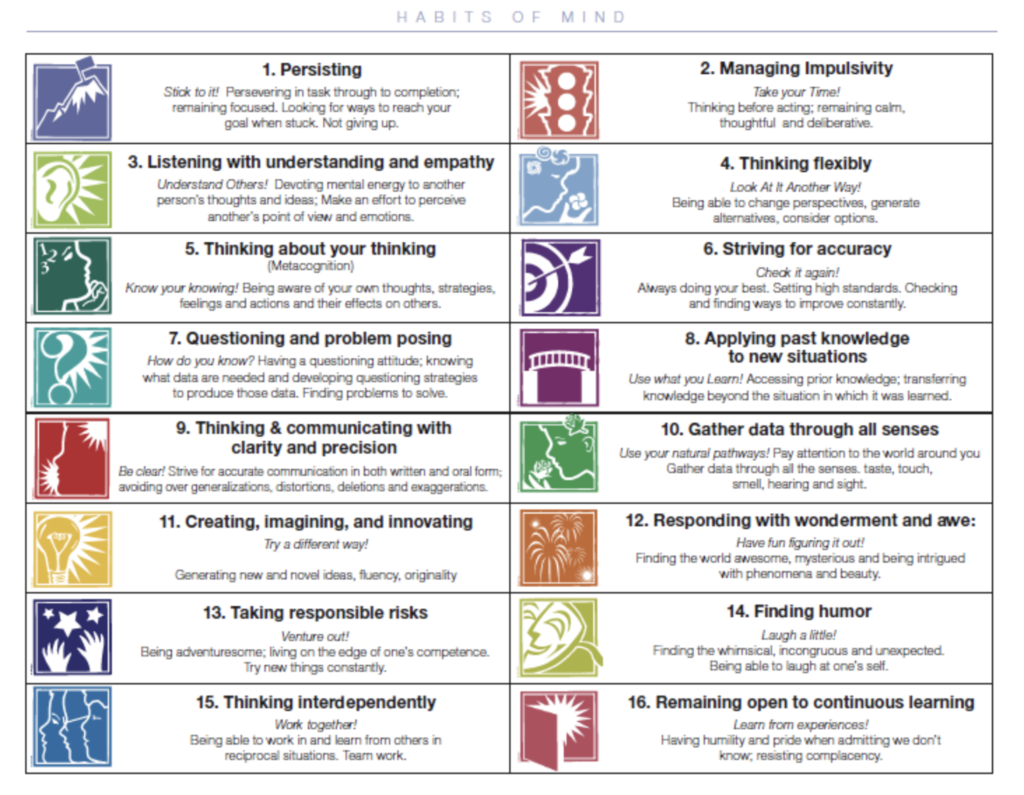
Source: Screengrab from teachthought.com

Habits of Mind are dispositions that are mindfully employed by characteristically intelligent, successful people when they are confronted with problems. When we draw upon these mental resources, the results are more powerful, of higher quality, and of greater significance than if we fail to employ those habits. ‘Finding humour’ will help you to relax and take on stresses with some ease. Metacognition or ‘Thinking about your Thinking’ will aid you and your child to be more aware of the way you think and the reasons for why you arrive at a certain conclusion. Try some of them out yourself before introducing them to your child!

Give Your Child a Head Start

Photo by RDNE Stock project on Pexels

Ensure that both you and your child have a nice, relaxing break after PSLE. If you are nervous about some of the new subjects and demands that will arise in Secondary 1 however, find some fun, engaging holiday classes with preparatory lessons for the year ahead. This might assuage some anxiety, so long as it does not involve the stress of ‘mugging’ or a tutor who is obsessed with piling on holiday homework. Check out the classes offered at Curio: https://curio.sg/programmes/

Life in Secondary 1 will be daunting at first, and then the year will fly by and you will both settle into a new phase in your lives. Enjoy the journey!

7 Ways for Students to Increase Their Focus

Santhi Rebecca · April 7, 2023 · Leave a Comment

"We often struggle to pay attention, but when presented with a task that we perceive to be difficult, we are more prone to giving up before truly attempting it."

Everyone struggles with their attention span at some point. External factors such as exhaustion from a packed schedule, lack of exercise or a disagreement with a loved one can be the cause of a loss of focus. Conversely, even oversleeping and too much Netflix or screen time can contribute to a wandering mind.

1. Have ‘Focus Breaks’

Photo by Pixabay on Pexels

You can use a timer or an app on your phone that reminds you to take breaks, or even have someone in your house pop by at a preset time with a drink (or cookies). 15 to 20 minutes is an ideal length of time for a break, but make sure you walk away from the screen or your study area and take a real break. What you do during your break is entirely up to you, but I would recommend having a stretch, looking out at some greenery, getting a hot drink or even lying down and closing your eyes. Some apps that might help: TomatoTimer, Time Out and Eyecare 20 20 20.

2. Adjust Your Study Time Frame

Photo by Enikő Tóth on Pexels

We are all unique individuals with our own ideal timings built for focus. You can try the famous Pomodoro Technique, which encourages people to work with the time they have rather than work against it. In the Pomodoro Technique, you will choose a task and allocate the total time you need for it. Set your timer to 25 minutes, work furiously and then take a 5 minute break. That’s it, you will have completed ‘1 Pomodoro’. After completing 4 sets of Pomodoros, you can give yourself a 20 to 30 minute break. Adjust this method as you see fit for yourself, and you will start to see improvements in your focus!

3. Include Exercise in Your Day

Photo by Pavel Danilyuk on Pexels

A lack of movement does generally contribute to lethargy, especially if you are on HBL. Even an activity as simple as stretching first thing in the morning will get your blood flowing and freshen up your mind for tasks in the day. If you are not a morning person, try some night cycling or an evening walk (with permission of course) and you will find your sleep greatly improved and your mind ready and set to concentrate the next morning.

4. Play Memory Games

Photo by Jonathan Kemper on Unsplash

That’s right! You are actually encouraged to play games in this instance. Memory games have been proven to build focus and to force you to concentrate. Some simple games only take 5 minutes to play and the increased attention you are forced to give in order to jog your memory will help you when you need to memorise dates or formulas. There are plenty of apps available but if you want to try a simple web-based site, you can go to: Memozor.

5. Reflect and Alternate Tasks

Reflect on a timetable after you have gone through the day or week. Were you more distracted on a Monday after the weekend and would prefer to focus on revising Math that day? Were you energized after a workout on a Thursday and felt like concentrating on History and Chemistry? Does writing out an English essay on a Friday feel like a drag? Alternate and move your timetable around as you see fit. There is no need to stick to or force yourself to a set schedule if it is not working out for you. Try writing down how you feel after each day e.g. ‘Today I took 2 hours to try just one sum, and I felt drained as I couldn’t get the answer’ or ‘Doing Biology revision on a Wednesday afternoon is great as it is just after Biology lessons in the morning’.

6. Remove Distractions

Photo by Howard Bouchevereau on Unsplash

People on a diet often remove all snacks and unhealthy foods from their fridges and cupboards, so that they aren’t tempted to eat them. Similarly, your study area should be distraction free. Place your phone outside your room if it is a source of distraction (and make sure you don’t have any apps on your laptop with friends messaging). Remove any clutter such as a gaming laptop or anything else that is a usual source of distraction.

7. Break Down Your Task

A lack of focus often stems from a task being perceived as too difficult or impossible at the beginning. Try breaking the task down into small steps and bite sized chunks, and then concentrate on finishing only that little chunk for the day. Make a checklist of the little chunks and then tick them off when you’re done. You will find a deep sense of satisfaction from being able to tick off the little bits and when the entire task is finally done, you can give yourself a clap on the back for being both organised and for a job well done!

School Breaks: 5 Ways for Students to Thrive

Santhi Rebecca · April 7, 2023 · Leave a Comment

"When you think about it, vacation is a great time to get those tasks completed and set yourself ahead of the game once the break is over."

The holiday season is a time for relaxation and enjoyment, but it can also be a great opportunity for students to get ahead and prepare for the upcoming school year. Here are some ways that students can spend their holidays productively:

1. Catch Up on Classwork and Homework

Photo by Annushka Ahuja on Pexels

The holiday break provides a great opportunity for students to catch up on any assignments that they may have fallen behind on during the semester. This will help them start the new year on a strong footing and avoid the stress of trying to catch up once classes resume.

2. Set Goals for the Upcoming Semester

Photo by Ann H on Pexels

The holidays can also be a good time for students to reflect on their progress and set goals for the upcoming semester. This could include setting specific academic goals, such as improving grades in a particular subject, as well as personal goals, such as getting more involved in extracurricular activities or making new friends.

3. Get a Head Start on Next Semester’s Classes

Photo by Pavel Danilyuk on Pexels

Students can use the holiday break to preview the material that will be covered in their classes next semester. This could involve reviewing old notes and textbooks, or even doing some extra reading on topics that will be covered in the upcoming classes.

4. Take Care of Practical Matters

Photo by Towfiqu barbhuiya on Unsplash

The holidays can also be a good time for students to take care of practical matters, such as organising their schedules, buying textbooks, and making travel arrangements for the new semester. Getting these things out of the way early can help students start the new year off on the right foot.

5. Relax and Recharge

Photo by Aaron Burden on Unsplash

Finally, it’s important for students to take some time to relax and recharge during the holiday break. This could involve spending time with family and friends, engaging in hobbies and interests, or simply taking some time to unwind and de-stress.

Overall, the holiday break provides a great opportunity for students to catch up, set goals, and prepare for the upcoming semester. By using this time productively, students can start the new year off on the right foot and set themselves up for success.

IP, IB or ‘O’ Levels. Which is the Best Path?

Santhi Rebecca · April 7, 2023 · 12 Comments

"Which path will work out best in the long run, IP, IB or 'O' Levels?"

Today, Singapore is known for its world-class education system. During the 1950s and 60s however, Singapore banked on a ‘survival-driven’ education system in order to generate a skilled workforce for the nation’s industrialisation push. We have come a long way since then, and there are now multiple pathways to a promising future.

The Cambridge ‘O’ Level/SEC Programme

Statistics from MOE, Singapore

The ‘O’ Levels have been offered in Singapore since 1971. It is considered a traditional path with rigorous academic demand.

Indeed, the majority of Singaporeans have gone through this particular exam and gone on to obtain acceptance into higher education institutions with ease.

The Cambridge ‘O’ Levels are widely recognised by both universities and employers internationally as evidence of excellent academic achievement.

Students are allowed to take up to a maximum of 9 subjects, and a minimum of 6.

From 2027, students will sit for the Singapore-Cambridge Secondary Education Certificate (SEC) examinations. There will be no change to the existing syllabus and examination format, beyond the regular updates that occur for each subject. The SEC exams will still be examined and awarded by Cambridge, as well as MOE and the Singapore Examinations and Assessment Board. The difference between the current format and SEC is that students will be taking subjects based on their strengths in each subject, and not based on a stream as is the case today.

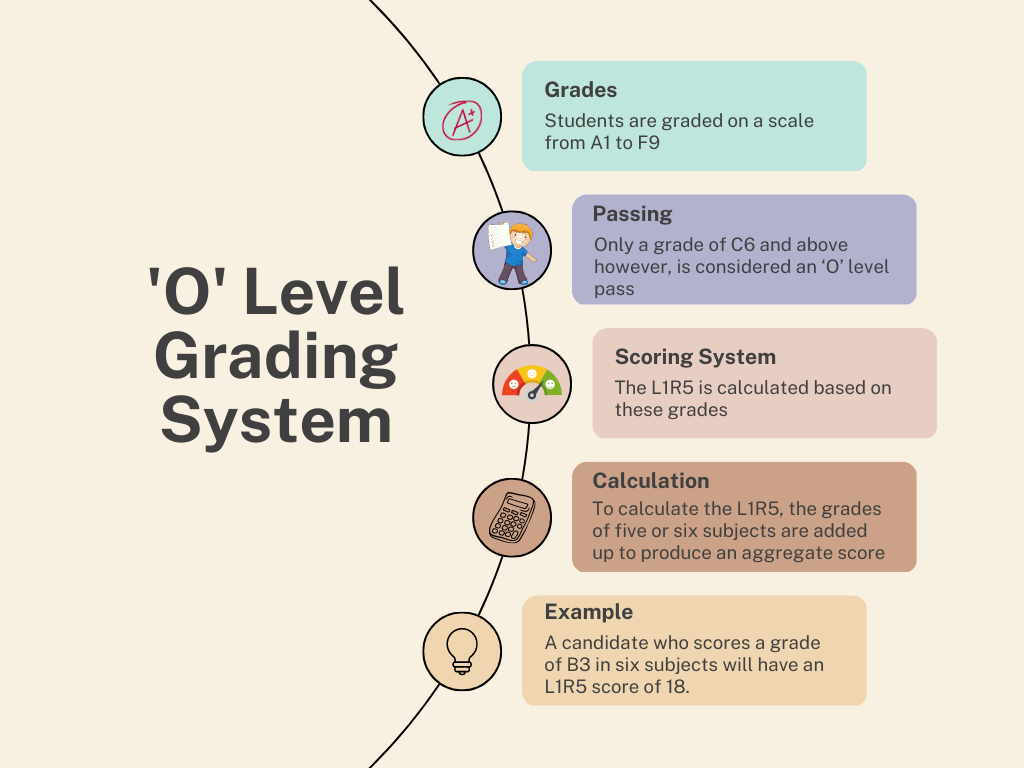
Grading is carried out as follows.

‘O’ Level Grading System

What Type of Student Would Enjoy the ‘O’ Level/SEC Programme?

The ‘O’ levels are considered the ‘traditional’ or ‘safe’ route by many, and in terms of opening up opportunities for higher education, it certainly is.

Many consider the programme to be content heavy with a focus on grades and academia, but schools and educators today have a variety of tools and resources in order to bring out the best in every student.

Students will have to take ownership of their education, learn how to take notes, condense and summarise their own learning.

Students who enjoy the ‘O’ level programme are driven by their interests, are determined to succeed and are willing to take risks, fail and learn from their mistakes.

The Integrated Programme (IP)

The Integrated Programme (IP) was introduced in 2004 in only 8 schools. It caters for high-ability students in Singapore at the secondary school level.  Instead of taking the GCE Ordinary Level (O-level) exam in Sec 4 or Sec 5, they will take the GCE Advanced Level (A-level) exam or the International Baccalaureate (IB) after six years of secondary education.

The IP is offered in the following 17 schools at the time of writing:

Nanyang Girls’ High SchoolCatholic High SchoolSingapore Chinese Girls’ School
National Junior CollegeCedar Girls’ Secondary SchoolTemasek Junior College
Raffles Girls’ School (Secondary)CHIJ St Nicholas Girls’ School Victoria School
Raffles Institution (Secondary)Dunman High SchoolHwa Chong Institution
River Valley High School
Schools offering the IP in Singapore

What type of student would enjoy the IP programme?

Academically, the IP is targeted at the top 10% of scorers in each PSLE cohort. The programme provides students with space to learn beyond textbooks and explore their interests in depth. Not having to spend 4 years in preparation for the ‘O’ levels allows for the time needed for students to delve deep in both academic and non-academic areas.

Schools offering the IP have the freedom to implement curriculum that imparts critical and analytical thinking skills, character building and leadership development.

Students who do well in the IP tend to be disciplined, motivated learners who are capable of keeping track of their own goals and progress. They truly enjoy school, learning and new challenges.

The International Baccalaureate (IB) Diploma Programme

The International Baccalaureate (IB) was founded in 1968. It offers a rigorous educational programme which is internationally lauded and renowned for its propensity to cultivate global citizens.

Creativity and the imagination are at the heart of the curriculum and students explore global issues with compassion as well as intellectual curiosity. Students don’t just learn, they also learn how to learn and are encouraged to excel both in their personal and academic lives.

Data from The Straits Times

6 subject groups form the IBDP: studies in language and literature; language acquisition; individuals and societies; the arts; mathematics; and the sciences. Students choose courses from these six groups, although choosing a subject from ‘The Arts’ is not always compulsory, depending on the school. Other subjects include Theory of Knowledge and Extended Essay.

The IBDP is offered at the secondary level in the following 5 schools (local) at the time of writing:

Anglo Chinese School (ACS) IndependentSJI International
Hwa Chong International SchoolSchool of the Arts (SOTA)
Anglo Chinese School (ACS) International
Local schools offering the IB in Singapore

A total of 28 schools (both local and international) currently offer the IBDP in Singapore.

What type of student would enjoy the IB programme?

Any student would benefit from the breadth and unique approaches to teaching which are available in the IBDP programme.

Perhaps one way to consider if you would thrive in the IB programme is to compare exam conditions. ‘O’ and ‘A’ level exams can be content heavy and grade focused, whilst IB students are graded on other assignments as well prior to the final exam.

About 70 to 80% of the final grade is determined by the final IB exams, giving some breathing space for students to work more gradually on achieving a desired grade.

The IB programme is thus suitable for students who are adept at time management, enjoy learning independently and conducting research.

Looking for Help with Some Subjects?

Photo by Annushka Ahuja on Pexels

Curio offers English Language, English Literature and General Paper group tuition in online classes. We cover the ‘O’ level, ‘A’ level and the new Singapore-Cambridge Secondary Education Certificate (SEC) which is to be offered in 2027. We also teach students in the Integrated Programme (IP) be it English, Literature or Language Arts. 

Beyond online group sessions, Curio also offers a unique Marking and Feedback programme for individual, independent learners. Students receive personalised worksheets on a weekly basis. Upon completion, Curio teachers will mark and provide personalised feedback. Curio teachers are also available via whatsapp and email for questions on anything related to the subject. Many of our students thrive from not having to block out time to attend weekly lessons, but still have the benefit of a Curio coach’s nurturing and experience.

To find out more, call or get in touch with us on whatsapp at 8892 2948. We are also available on email: [email protected].

How to Handle DSA Interviews

Santhi Rebecca · April 6, 2023 · Leave a Comment

"The Direct School Admission scheme for secondary schools in Singapore allows students to apply to specific schools before taking the PSLE."

Has your DSA Interview been scheduled? Or are you still figuring out whether DSA is something your child should consider? Read on to understand more about the DSA process and for interview tips!

The Direct School Admission scheme for secondary schools in Singapore allows students to apply to specific schools before taking the PSLE.

Students apply based on their talent in sports, CCAs and specific academic areas. These areas include:

  • Sports and games
  • Visual, literary and performing arts
  • Debate and public speaking
  • Science, mathematics and engineering
  • Languages and humanities
  • Uniformed groups
  • Leadership (for example, prefects)

Preparing for the DSA Application Process:

1. Research

Photo by Katerina Holmes on Pexels

Research and read up about the school that you and your child are interested in. Focus also on the talent that your child plans to use to apply and most importantly, discuss everything with your child. If they are not truly interested or feeling forced/stressed out about this choice, it will show in the interview. Some parents also over-prepare and this can be unhealthy if it stresses your child out unnecessarily. Memorised answers and parrot-like responses don’t do well at interviews, while real interest and knowledge about a topic will always be evident.

2. Prepare for a Variety of Questions

Photo by Annushka Ahuja on Pexels

Typical questions would include: 1. Why should the school pick you? 2. Describe some of your interests and passions. 3. What are some personal qualities that make you unique? 4. Why did you pick this school? 5. What do you hope to do with your talent in the future?

However, also prepare your child for more introspective questions like: 1. If you were playing opposite your best friend and they asked you to lose on purpose, what would you do? 2. If you made a huge mistake while performing on stage how would you handle it? 3. If you had to pick one scientist/mathematician/famous person to have dinner with, who would you pick? 4. If you are the captain of your team and you are losing the game, what strategy would you use to try and win?

3. Get Students to Discuss Topics with Other Adults

Photo by Pavel Danilyuk on Pexels

At the end of the day, the interviews are a 2 way conversation and not a speech. If your child can speak naturally with other adults in their lives – uncles, aunts, tutors, friends – get them to have conversations with them about their personality and interests to develop confidence, so that they get used to speaking about themselves candidly and sincerely.

At the end of the day, schools are looking for students who have and can display genuine interest in the talent that they are using for the application, as well as personable students who are genuinely interested in joining the school.

How to Get Your Kids Excited About the New School Year

Nadya Sharfina · April 6, 2023 · Leave a Comment

"The new school year is a great time for parents to help their children get off on the right foot."

The start of the school year brings mixed emotions for children and parents alike. For kids, it means saying goodbye to holidays spent playing with friends and embracing the structure that comes with returning to class. They are eager to return, but also concerned about their health and school safety and the outbreak’s impact on their academic progress. For parents, it is a time to prepare their children for success in the coming months, from organising study schedules to arranging for tuition and enrichment classes.

Parents want to give their children the best start possible in school. They want their children to be excited and ready to learn and grow. Here are some tips on ensuring your child has a positive outlook about starting their new school year and being motivated to succeed!

Get Your Child on a Sleep Schedule

Photo by Mostafa Mahmoudi on Unsplash

Holiday season often means later bedtimes and unstructured days with plenty of opportunities to form unhealthy habits. All that has to change when school is starting. Sleep is important for concentration and memory, it can also help your child’s mood. Your child should get at least 7-9 hours of sleep if they are between 13 and 18 years old and 8-11 hours of sleep if they are younger. Begin their new sleep routine a week or two before school starts to adjust not only their sleep schedule mentally but physically as well. Their body’s internal clock needs to be reset so that they can wake up early for school feeling refreshed.

Create a Morning Routine

Photo by Brooke Lark on Unsplash

Establishing a routine takes time, but it can help your child adjust back to the school year. Help them set an alarm clock, practice getting dressed on their own, and make sure they eat breakfast. Doing this every day will eventually become second nature for your children and help them transition into their new school schedule.

Pack Necessary School Supplies

Photo by Savannah Wakefield on Unsplash

A few days before school starts, make a list of items your child will need to bring with them. Stock up on pencils and notebooks that they will use throughout the year. If there are any special items that their primary school or secondary school requires, make sure to add them to the list too. Items like calculators for older children, protractors, and rulers are essential for an efficient school year.

Talk About Exciting Aspects of School

Photo by RDNE Stock project on Pexels

With the right attitude, a school can be an exciting place to learn and grow. Help your child focus on the positive aspects of going back to school such as seeing their friends, making new ones, and learning new things. You can also talk about expectations for the upcoming year, like academic goals or extra-curricular activities they would like to join.

Discuss What Your Child Will Be Learning

Photo by Johnny McClung on Unsplash

Talking about exciting topics and activities that can be explored in school can get your child excited about the new school year. Make sure they know their upcoming syllabus, what is being taught in each subject, and how it relates to the real world. Even discussing the career paths associated with specific subjects can get your child interested and motivated to learn.

Set Goals Together for the Upcoming Year

Photo by Ann H on Pexels

Goals can be a great motivation for your child, so sit down and talk about what they would like to accomplish in the upcoming school year. These could include academic goals such as improving their grades, joining clubs, and volunteering. You can also set goals with them that have nothing to do with school, such as spending more quality time together.

Find Time to Bond with Your Child

Photo by Alex Green on Pexels

School can be a stressful and busy time, so make sure you find the time to bond with your child even if it is just 20 minutes after school. Talk about their day and what they learned, ask them how they are feeling, or engage in fun activities with them. This is a great way to keep your child engaged and motivated to learn new things.

Celebrate Their Successes Throughout the Year

Photo by Pavel Danilyuk on Pexels

Make sure to celebrate your child’s successes throughout the school year. Whether it is getting 100% on a spelling test or acing their science project, praise your child and let them know they are doing great. A positive attitude will go a long way in helping your child stay motivated and excited about learning.

Check-in with Your Kids Regularly

Photo by RDNE Stock project on Pexels

Keep in touch with your child’s teacher to ensure that your child is on track and making progress. This also helps you to stay updated on any changes or updates involving their classes and/or school life. Check-in with your children regularly and ask them how they are doing, what they are learning, and if there is anything you can do to help.

Encourage Healthy Habits

Photo by cottonbro studio on Pexels

Healthy habits such as getting regular exercise, eating a balanced diet, and getting enough sleep will help your child focus in school. Encourage them to stay organised and take study breaks when needed. Helping them learn good time management skills can also be beneficial, especially in high school where they may have multiple assignments due on the same day.

By following these tips, you can make sure your child is set up for success in the upcoming school year. With a positive attitude and plenty of support from parents, children can get excited and motivated to start their school year!

How to Find Your Motivation: The What and the How

Santhi Rebecca · April 5, 2023 · Leave a Comment

"Everyone is used to hearing maxims like “Stay Motivated!” or “Persevere! You can do it!” but no one tells us HOW."

Whether you have had to live through trying to motivate yourself through the ups and downs of the school year in 2020 or whether you struggle with motivation anyway, this article is for you. Everyone is used to hearing maxims like “Stay Motivated!” or “Persevere! You can do it!” but no one tells us HOW. So, we stumble along, try this and that. Truth is, there is a method to motivation, and the key to getting there is understanding the WHAT. What is Motivation? 

The What

Photo by Tim Mossholder on Unsplash

Educational psychologists espouse two main types of motivation, namely intrinsic motivation and extrinsic motivation. Ever become so engrossed in learning or doing something that you forgot to eat and didn’t even notice several hours slip by? Intrinsic motivation shows up when we have such an intense, genuine interest in the topic or subject that learning itself becomes a pleasure, and an all absorbing activity. Extrinsic motivation is when we have an external reward at the outcome of our learning. Good grades or a reward from parents for doing well are classic examples of extrinsic motivation. Yet, while we may idealize intrinsic motivation, the reality of academic life often demands a balance between both types.

Intrinsic motivation is of course, highly desired by us all, and it has been linked clearly with higher levels of academic achievement and better mental health. It’s impossible for us however, to conjure up intrinsic motivation whenever we feel like it. Calculus can’t always be done in a burst of inspiration, and neither can that history essay on World War II. 

Some people use a mixture of intrinsic and extrinsic motivation to push themselves. Enjoying the study of Shakespeare will be so much better with an A1 to show for it. Using a mixture of the two types of motivation is probably the best way for most students to push themselves and move forward.

The How: Intrinsic Motivation

Photo by Bonnie Kittle on Unsplash
  1. Find a place where you study best, be it a cafe, your kitchen table or the school library, and stick to the few places where you feel both comfortable and undistracted.
  2. Decide an order in which you will tackle your homework or study plan, whether it’s starting with the hardest bits first or the other way around, but have a plan.
  3. Adults, nag less and praise more. praise creates intrinsic motivation when it’s heartfelt and celebrates effort (e.g. “you worked really hard,” vs. “you’re so clever”) and communicates encouragement, not pressure (e.g. “you’re doing really well, keep it up” vs. “you’re doing really well,  just like I asked you to”)

The How: Extrinsic Motivation

Photo by Mindspace Studio on Unsplash
  1. They can be really really small rewards, but very useful. 45 minutes of studying followed by say, a bubble tea or 10 minutes of TikTok or a 15 minute power nap. Even ticking off a to-do list can provide a sense of accomplishment. Make sure it’s at least somewhat healthy or enjoyable without destroying your rhythm and focus, then get right back to studying. 
  2. Study in intervals and figure out the best combination for you. It can be 25 minutes of study followed by a 5 minute break or 75 minutes study followed by a 15 minute break. You do you. 
  3. Adults, talk to kids about their extrinsic motivations and then give them a little boost along the way, whether it’s hugs or Hawaiian pizza. 

There are incredibly creative ways to keep your motivation going, and they do indeed carry on into adulthood and work life. Try different ways until you figure out what works best for you. Importantly, don’t kick yourself when you’re down. Everyone has bad days when they feel like they can’t get anything done. Move on to the next day, and try, try, try again.

How Should I Choose My Subject Combination?

Santhi Rebecca · April 5, 2023 · Leave a Comment

"Success and Happiness are choices, not destinations, and the subject combination you pick will not ultimately decide your fate."

We should play a game here. Two Lies One Truth, figure out which statement is true. 

Statement 1: The subject combination I pick will determine the course of the rest of my life. 

Statement 2: Following my interests will be my best bet.

Statement 3: The ‘triple science’ combination is the safest, and I can’t go wrong with it.

I will not be surprised to hear that most of you can’t figure out the truth because you have been told over and over again, that there is a set way of doing things, a ‘safe’ way, a way to ‘not make a mistake’. 

Newsflash: Statement 1 and 3 are false, and anyone who tells you, a 14 year old, that it’s possible to not ‘go wrong’ in life, is the biggest liar of all. Let’s get one fact out of the way, and the gentle truth is, you are going to make mistakes. Big ones and small ones. Some of you will make more mistakes than others, and some of you (like me) will trace a bit of the confusion in your life back to the point where you picked your subject combination at the end of Secondary Two. What is important to understand, is that life can get both weird and wonderful, promising and perplexing all at once, and that learning how to deal with it all is the real secret to success, and certainly not determined by the ‘perfect’ subject combination. 

Photo by Katerina Holmes on Pexels

Let’s take a look at Statement 1 for instance. “The subject combination I pick will determine the course of the rest of my life.” It is possible that not taking all the sciences might lead to you not obtaining a compulsory course, a requirement or prerequisite for Medicine, Dentistry, Pharmaceutical or Forensic Science and so on. The first question to ask yourself here then, is whether your heart already knows where it’s going. Not your mom’s or dad’s or grandma’s heart, but yours. Have you been dreaming about a career in medicine since you were in diapers? Are you genuinely interested in branches of medicine? Will the ability to heal others give you a sense of fulfillment? Do your grades also reflect this interest? Grades aren’t everything but let’s face it, if you’ve spent many nights losing hair and struggling to bond with the elements, you don’t really see yourself getting to know them even better over the next two years do you. The fact of the matter is, if you already know beyond the shadow of a doubt where you’re headed, one bad grade or nay saying teacher will not stop you, you will find a way to meet your destiny come hell or high water. 

Let’s take a look at the vast majority of students however. You don’t know what you want, and you have no idea who or what you’re going to be when you grow up. Heck you barely know who you are right now. You should not then allow this decision to plague your life. Go with the subjects that you find more interesting, or at the very least, that you find easier to score in. Don’t refer to just your final grade, but your entire journey with the subject so far. Did you really enjoy that Shakespeare group presentation you had to do way back in Term 1? Did the transfer of sound energy through vibrations cause a reverberation in your mind? Are quadratic equations actually – secretly – kind of… fun?

Remember that life is a continuous journey of growth and exploration. Know that whatever decision you make right now is not the end of the world. You are going to go on to graduate secondary school, further your education in whichever field you see fit, go out into the working world and then see that there are even more possibilities out there for you, and that ultimately, you determine your own path.

Steve Jobs told the world to “have the courage to follow your heart and intuition. They somehow already know what you truly want to become.” I will leave that here for you. 

How to Cope with Exam Anxiety and Perform at Your Best

Santhi Rebecca · April 5, 2023 · Leave a Comment

"As a student, you can take several steps yourself to prevent a build-up of stress. Stress is like an invisible load that gets heavier if you ignore it or choose not to deal with it."

Read the statements below. Does one or more of them apply to you? 

  1. “I often worry that it will be difficult for me to take a test.”
  2. “I worry I will get poor grades at school.”
  3. “I feel very anxious even if I am well prepared for a test.”
  4. “I get very tense when I study for a test.” 
  5. “I get nervous when I do not know how to solve a task at school!”

These were the questions posed to 5,825 Singaporean students in a study conducted by the Organisation for Economic Cooperation and Development (OECD) in 2017. The response was disturbing: 76% of students reported feeling extremely anxious for a test, even if they were well prepared for it, and the results overall revealed high levels of stress and distress when it comes to academic performance. 

This isn’t news to any of us. Students in Singapore have been exhibiting and complaining about stress for many years. The Ministry of Education takes a serious view of it and has taken and continues to take measures to combat this issue on many levels, especially before it takes a turn for the worse. To understand why this issue persists despite these efforts, it’s important to consider the deeper cultural roots of our education system.

One reason for this level of stress probably just goes back to our culture. Our predominantly Asian population retains an intense focus on the value and importance of education. Images of our grand and great grandparents spanking our ancestors and forcing them to study with candlelight over many hours comes to mind. Culturally, being only the very best at one’s educational pursuits has often been viewed as the only path to success.

Photo by Brodie on Burst

Some steps you can take are:

  1. Pay attention to your sleep. Having regular hours of sleep is more important to your performance than studying late into the night, and being exhausted throughout the school day.
  2. Drink plenty of water. Water is brain juice, it helps to clear your mind and refresh your body.
  3. Eat your fruits and vegetables! Bubble tea and fried snacks are yummy, but don’t forget to eat your fruits and vegetables regularly, as they are crucial for your well-being and overall health.
  4. Communicate with a loved one about your problems, be it a family member or a good friend. Talking it out will help ease your mind and heart.
  5. Set realistic goals. Don’t stuff your timetable with so much work that your mind becomes too exhausted to continue.
  6. Have a plan! Planning out your revision will help you focus on your weaker subjects without neglecting your stronger ones.
  7. Believe in yourself! Write out goals and notes of encouragement to yourself and stick it up on your laptop or even your bedroom walls! (You can get friends and family to write them too, the more the merrier!)

5 Ways to Take Better Notes in Class

Santhi Rebecca · April 4, 2023 · 109 Comments

"Note-taking could happen on plain, boring pieces of foolscap paper too, with pages and pages of scribbled ballpoint pen inked notes, sometimes organized, sometimes wildly illegible to anyone except yourself."

Note-taking for students generally conjures up cute little notebooks, pages inked with a rainbow of colours and more. Notes are also covered with doodles because that’s the time when you have to make it seem like you’re listening to the teacher and writing things down, when in reality, you’re kind of bored or tired and have lost track of your teacher’s voice already, forcing you to take a doodle break before getting back into the mix.

Note-taking could happen on plain, boring pieces of foolscap paper too, with pages and pages of scribbled ballpoint pen inked notes, sometimes organised, sometimes wildly illegible to anyone except yourself. For me, this form of note-taking often occurs when I am truly in the zone, capturing the essence of almost everything the teacher is saying. No doodles adorn these pages – there isn’t time – and these notes are often handed around to lazier, sleepier fellow classmates, to copy or digest as they see fit.

Few students know it at the time, but note-taking is actually therapeutic. You are producing your understanding of what your teacher is imparting, creating a little bit of art out of it and using colours to create something aesthetically pleasing. Research into colour therapy has even resulted in recommended colours for note-taking. Try using yellow when you know you’re taking down something that needs to be remembered and memorized, and use blue to draw your focus to something.

As the therapeutic nature of note-taking intertwines with technological advancements, students can now enhance their academic pursuits by utilising a variety of innovative apps designed to optimise their note-taking experience. Technology has made headway into the world of note-taking, and some tools are just absolute must-haves for the trendy student. Here are 5 great apps that will help you to ace note-taking.

Goodnotes

Photo by Goodnotes

Goodnotes is great for writing as smoothly and colouring as quickly as you would on paper, but the truly fantastic bit to me, is the search function, which allows you to hunt down a handwritten note! Also, you no longer have to print out notes uploaded into SLS by your teacher. Import it into Goodnotes and go ahead and annotate virtually right on the document itself! Get rid of your bulky files and random loose notes from who knows when, Goodnotes folders keeps them all organized.

Ginger Labs

As a serial doodler, Notability is a ton of fun for me. Being able to add in photos is a cute function as well. Try using it for group projects as a collaboration tool, and if you’re lazy to type in comments, you can use the audio tool to verbally convey your thoughts and ideas.

Inspiration Maps

Photo by Inspiration Maps

This one is for the mind mappers. Some people think and work better with maps and Inspiration Maps’ beautiful interface is the perfect app for them. Concept maps, cause and effect diagrams, process flows, family trees and just about any kind of mind map is possible. What I find enticing is that unlike paper, where a mistake involves scribbling out or starting over, with Inspiration Maps I can simply drag and drop to organize and categorise concepts and ideas as many times as I want.

OneNote

Photo by Microsoft.com

OneNote is a great note taking tool that allows for easy revision with highlighting and ink notations. Organisation is made straightforward across notebooks, sections and pages while coloured tags are available for reminders or for categorising your notes. You can also record voice notes and upload videos. Sharing notes with desperate friends the night before the exam is made easy with this app.

LiquidText

LiquidText is a phenomenal app that has already created waves in the medical, legal and business worlds. While it has all the usual features which allow you to take notes, annotate and organize, it also draws relationships between notes and ideas, so that you will not forget, say, a foundational concept while learning a new one. A little pinch on the screen shows up connections with everything else the idea could possibly be connected to. It almost – I daresay – works like (some of) our brains!

Technology is here to help, but for many of us, a hybrid of note-taking on paper and on an app might be the solution. While keeping our notes organised is an invaluable function of note-taking apps, there is a deep sense of satisfaction to be derived from handwritten notes as well. Check out hand-written note-taking instagrammers like @studyfel, @studyrella and @studyscript for inspiration! Meanwhile, you do you.

O-Level Triumph: 6 Essential Tips for Early Preparation

curiosg · April 4, 2023 · 2 Comments

"Passing the O-Levels is not just an achievement, it's a key that unlocks many doors of opportunity. It can pave the way for a successful academic career and set the foundation for a brighter future."

The O-Levels are an important milestone for students as it can open many doors of opportunity for their futures. The O-Levels can be a gateway to a successful academic career. Whether it involves juggling difficult subjects, CCAs, your social life, tuition or family affairs, it’s important to get your head in the game and make sure you’re ready to tackle these high-stakes exams. Here are 6 essential tips that will help students prepare effectively for the O-Levels!

1. Creating an O-Level Exam Timetable

Creating an O-Level exam timetable will help you keep track of what topics you need to cover and when to be fully prepared for the O-Level exams. Prioritize subjects that will need more of your attention and plan accordingly. Make sure to factor in sufficient breaks between study sessions to rest and re-energize before jumping back into studying again. 6 hours without a break will only break you. Regular pauses will help you stay focused and motivated to keep studying. Create a realistic study timetable that takes into account other commitments such as tuition and extracurricular activities. Being able to manage your time well is essential for O-Level preparation.

2. Dealing With Pre-exam Stress and Anxiety

O-Levels can be a nerve-wracking experience, and it is normal to feel some anxiety before taking them. It is important to take steps to manage your emotions so that they don’t interfere with your performance. Some options are:  

  • Talk with friends and family about how you are feeling to reduce the sense of isolation that often accompanies pre-exam stress.
  • Meditate or practice deep breathing exercises to clear your mind of stressful thoughts and feelings.
  • Start early and pace yourself. 
  • Find a relaxing hobby that does not take too much time – or become too addictive – and absorb yourself in it whenever you feel too much pressure

O-Levels are not a sprint, they are more like a marathon. Start preparing for your O-Levels months before the actual exams. This will give you enough time to thoroughly review the material and deepen your understanding of the topics.

3. Taking Care of Your Physical Health During O-Level Preparations

Photo by cottonbro studio on Pexels

O-Levels can be mentally and physically taxing, and it is important to take care of yourself while you prepare. Getting enough sleep each night is essential for staying sharp during study or tuition sessions and consolidating newly acquired knowledge and improving memory retention. 

Make sure to eat well-balanced meals throughout the day to fuel your body with all the necessary nutrients. Eating a balanced diet full of fresh fruits, vegetables, and whole grains will provide you with the energy you need to power through your studying sessions. Additionally, don’t forget to stay hydrated by drinking enough water throughout the day, and remember that exercising regularly will help keep your energy levels up and boost your mood, enabling you to stay focused on O-Level preparations.

4. Utilizing Online Tutorials and Resources

Photo by Katerina Holmes on Pexels

There are a variety of O-Level-related tutorials and online resources available which can be incredibly helpful for O-Level preparation. Take time to browse through the internet, books, or educational magazines available in libraries for additional tips and methods on tackling O-Level exams. 

Consider attending O-Level preparatory classes or tuition sessions if necessary. These classes usually cover topics students may have missed during school lessons, so they are an extremely valuable resource for O-Level candidates.

These sources also provide details on subjects that students might find challenging or when they are in need of more instruction. Resources such as test practices can help assess knowledge and identify areas where more revision is needed. 

Here are some resources which you can access for free online:

  • Khan Academy: The best and most popular instructional channel on YouTube is Khan Academy, which has a ton of videos for a variety of subjects that cover both complex and basic topics.
  • Tyler DeWitt: This channel focuses on chemistry. There are so many videos on practically every chemistry topic, and more are being added all the time. It uses analogies to aid recall and provides explanations with amazing graphical illustrations.
  • HegartyMaths: With a mathematics concentration, this channel helps you practice past paper questions to help you become familiar with exam-style questions. If you want to learn anything, whether it’s fundamental trigonometry or something more difficult, this channel is highly recommended.
  • Mr. Salles Teaches English: Mr. Salles’ videos can assist you with language. They dissect texts, explain illustrative student responses, and assist you in identifying patterns in your essay or core text.
  • Free Science Lessons: One of the most popular YouTube channels for revision, the videos on this channel organize and cover every GCE scientific topic in great detail.

5. Revision is Key

When it comes to preparing for O-Levels, revision is key. Without proper revision and practice, students may struggle to recall important information, make mistakes in their answers, and score lower marks than they can achieve. Revision allows students to deepen their understanding of the topics and increase their confidence in the exam hall. 

Make sure to revisit all the topics you have learned throughout the year and go over past exam papers to get a better feel of what types of questions may be asked. This will help you identify areas where you need to focus more and thoroughly prepare for the O-Levels. 

6. Stay Focused

Photo by Annushka Ahuja on Pexels

O-Levels are a long process, so stay focused until the day of the exam. Make sure that you are not procrastinating and leaving everything to the last minute. Try not to get overwhelmed by difficult topics as this can cause your O-Level preparation efforts to be derailed. Instead, plan how you will tackle each subject and stick with it until the day of the O-Levels.

When studying for the O-levels, you should focus on understanding concepts rather than memorizing facts. Use mnemonics and other memory aids to help you remember key facts, and make sure to practice solving O-Level type questions as this will give you a better idea of what to expect on exam day.

Remind yourself that O-Levels are an important milestone in your educational journey. The O-Levels can be an intimidating experience but do not forget that if you have followed all these tips and done your best with preparation, the most important things are to have faith in yourself and believe you can achieve your goals. 

  • « Go to Previous Page
  • Page 1
  • Interim pages omitted …
  • Page 3
  • Page 4
  • Page 5

CURIO SG

Copyright © 2026 Curio Singapore · Log in

  • Home
  • Journal
  • Frequently Asked Questions
  • Contact
  • Careers
  • Free Resources