• Skip to primary navigation
  • Skip to main content
CURIO

CURIO

Singapore's Fairest Tuition Agency

  • Home
  • Free Resources
  • Journal
  • Show Search
Hide Search
You are here: Home / Archives for tips

tips

All about Co-Curricular Activities: How to Choose the Right CCA for Your Kids

Nadya Sharfina · December 14, 2023 · 11 Comments

"CCAs empower students to explore their passions, build character, and foster inclusive communities that transcend academic boundaries, shaping resilient individuals equipped for future challenges."

Co-Curricular Activities (CCAs) go beyond mere extracurricular pursuits; they are essential elements in moulding individuals into well-rounded and socially adept beings. This page seeks to serve as an informative guide for parents navigating the realm of CCAs for their kids entering Secondary School.

In this article, we will delve into the significance of CCAs, guide you in selecting the most suitable activity for your children, and offer advice for situations where they may not have a clear preference yet.

1. Understanding CCAs

Photo by J. Schiemann on Unsplash

CCAs are activities that encourage students to discover their passions and talents. Aside from that, CCAs provide a conducive setting for character development, teaching values, cultivating social-emotional competencies, and providing students with critical skills that will be invaluable in handling challenges in the future.

CCAs are inclusive spaces that bring students from various backgrounds together and are a prominent venue for developing solidarity among students from all origins and academic abilities. It becomes a place where they can form friendships, play, and learn from one another, providing vital possibilities for socialising, and also deepening students’ sense of belonging to both the school and the larger community.

Students in most secondary schools are presented with a choice of four distinct CCA groups, namely:

  • Clubs and Societies
  • Physical Sports
  • Uniformed Groups
  • Visual and Performing Arts

On occasion with the permission of the school, students can also establish activities that allow them to explore hobbies or concepts that are not currently represented in existing CCAs. These projects also broaden the range of activities offered at their school, resulting in a more diversified and engaging co-curricular experience.

2. Why CCAs Matter and When to Start

Photo by Van Tay Media on Unsplash

The Ministry of Education (MOE) emphasises the importance of Co-Curricular Activities (CCA) as an essential component of a student’s educational experience. At times, parents may become overly focused on academia and exams. Students frequently discover their interests and abilities while participating in CCAs. This engagement not only reveals hidden potential but also fosters critical skills and competencies.

CCA involvement in primary schools is often initiated in Primary 3. This early introduction establishes the groundwork for overall development.

Moving on to secondary schools, CCA participation becomes mandatory beginning in Secondary 1. Students are expected to participate in at least one CCA, with many choosing to participate in a second CCA. This not only broadens their skill set but also improves their overall educational experience.

3. Choosing the Right CCA in Secondary School

Photo by Kai Oberhäuser on Unsplash

Choosing a CCA in secondary school is a fun time for children to explore their interests, whether it’s sports, clubs, groups, or arts. CCAs can teach them things they won’t learn in class. How can you help your children pick the right one? Here are some tips:

  1. Reflect on interests and goals: Identify your child’s passions and align them with suitable CCAs.
  2. Manage time and commitments: Consider the time demands of CCAs and align them with your child’s schedule and other commitments.
  3. Research options: Explore various CCAs either through resources online or from the school to make informed choices.
  4. Encourage trying new things: Embrace the opportunity to step out of your child’s comfort zone, and potentially discover new interests.
  5. Promote Personal Growth: Focus on CCAs that will contribute to your child’s personal development.
  6. Flexibility in Choices: If the chosen CCA doesn’t align with your child’s expectations, encourage exploration of other meaningful activities.

4. What to Do When You Can’t Decide

Photo by Azzedine Rouichi on Unsplash

If your child hasn’t identified a particular ability or passion, and you as a parent haven’t indicated an interest, it’s a good idea to do some preliminary research.

Open House events or co-curricular activity (CCA) showcases and fairs are common at most secondary schools. Students, joined by their parents and siblings, acquire insights into the dynamics of each CCA group at these events. They can participate in a variety of events, and both senior CCA members and faculty advisors are on hand to answer any questions.

It is also important to note that these events are critical opportunities for CCA organisations to actively find and cultivate talent. As a result, if your child’s school extends an invitation to one of these meetings, you should make time in your calendar to attend.

In summary, CCAs are crucial for shaping well-rounded individuals by fostering passion and life skills. This guide helps parents navigate CCAs for Secondary School, emphasizing inclusivity, social development, and a sense of belonging. The article covers understanding CCAs, their importance, and tips for choosing the right activity. It highlights diverse options and advises on early initiation. For indecisive parents and students, attending school events like Open Houses is key to exploring possibilities. In actively participating, parents contribute to their child’s holistic development, ensuring a fulfilling secondary school experience.


How to Select a Secondary School: Sec 1 Posting

Santhi Rebecca · November 21, 2023 · 2 Comments

"Selecting the right Secondary School is not just a choice; it's a pivotal decision shaping the path for the next four to five years of a student's journey."

Going to Secondary 1 is an important milestone in a student’s educational journey. Choosing an appropriate Secondary School truly makes a difference as it determines the course of the next four to five years of their lives. The Secondary One Posting Process may seem complex, but not to worry, we have broken it down for you step by step. 

Starting from the the 2023 Primary 6 cohort, students will be posted through Posting Groups 1, 2 and 3 under the Full Subject-Based Banding (Full SBB). This allows them greater flexibility to offer subjects at appropriate subject levels. (To understand more about SBB, check out our article here: No More Boredom! Thanks to Subject Based Banding)

After receiving PSLE results, you and your child will have to shortlist the secondary schools and submit the school choices to MOE within 7 calendar days. The Secondary One posting process will then take place. Download the booklet below for a step by step process on how to pick your school of choice!

Booklet-Secondary-1-posting-process-CurioDownload

Connecting with Your Kids: After-School Chats

Nadya Sharfina · October 31, 2023 · 2 Comments

"The foundation of effective parenting lies in after-school interactions."

After-school conversations between parents and children play a pivotal role in a child’s overall development and well-being. These interactions are more than just a part of the routine; they are the foundation of effective parenting. Here are some of the reasons why after-school chats are necessary:

Creating the Right Environment

Photo by cottonbro studio on Pexels

After a long day at school, children frequently require a relaxing environment in which they can be themselves and talk. Ensure that your children feel at ease at home. Make sure your child has a comfortable place to sit, and consider providing food or refreshments if they are hungry.  Being comfy helps them feel relaxed. When your child returns home, show that you care about how their day went by giving them your full attention. Put away distractions like phones, laptops, or household chores. Make eye contact, smile, and offer a warm greeting to let your child know you’re focused on them.

It helps that you choose the best moment to speak with your child after school. Each child is unique; some may want to communicate right away, while others may require some time to unwind. Pay attention to what your child prefers. Start talking with them when you pick them up from school or around snack time. Having healthy food together and sitting down might make discussion more comfortable and relaxed.

The Power of Open-Ended Questions

Photo by Ketut Subiyanto on Pexels

Open-ended questions serve as a valuable communication tool, enabling deeper and more significant dialogues. Unlike closed-ended questions, which can be easily answered with a simple “yes” or “no,” open-ended questions encourage your child to share their thoughts, feelings, and experiences in a thorough and detailed manner. These questions create a welcoming space for conversation and motivate your child to express themselves openly. By using open-ended questions, you demonstrate your active listening skills and a genuine interest in your child’s perspective. This practice can enhance the parent-child connection and foster the development of trust.

Here are a few examples of open-ended questions that you can utilize to initiate meaningful discussions with your child after their school day:

  • What was the most interesting thing you learned today?
  • What’s something new you discovered today that you didn’t know before?
  • Is there anything that happened today that you’d like to talk about or share with me?
  • What challenges or problems did you encounter today, and how did you handle them?
  • If you could change one thing about your day today, what would it be?
  • What are your thoughts on a current event, a book they’re reading, or a subject they’re studying]?
  • Who did you spend time with during lunch or recess today? What did you talk about?
  • If one of your friends could be the teacher for the day, who would you want it to be?
  • What’s your teacher’s most important rule, and did anyone break it today?
  • What was your least favourite part of the day?

The Role of Routine

Photo by ShotPot on Pexels

Consistency in your after-school interactions with your child plays a crucial role in their development and well-being. This consistency often stems from establishing routines that create a sense of stability and predictability in your child’s life. Routines act like a comforting framework for children. Because children can rely on a regular pattern for stability, knowing what to expect after school helps reduce their anxiety and provides them a sense of emotional security.

When you keep up with routines, like having planned chats with your child after school, it naturally creates chances for talking and bonding. Your child knows that there’s a set time every day for sharing and getting closer. These routines ensure that you schedule special quality time to engage with your child on a regular basis. This consistency enhances your bond and highlights how important they are in your life. Consistency isn’t just about sticking to a daily routine; it’s also about staying connected with your children as they grow and face new challenges.

Your child’s needs and interests will change as they grow older. It’s crucial to adjust your routines and how you communicate to match their different stages of development and changing preferences. Encourage open-ended conversations about their goals, dreams, and ambitions.  Be a source of guidance and encouragement as they progress through adolescence. Always listen to your child with empathy and understanding, being someone they can trust and confide in when they experience both happiness and difficulties.

Smart Food Choices for Kids’ During Exams

Nadya Sharfina · September 19, 2023 · 1 Comment

“Healthy eating is a way of life, so it’s important to establish routines that are simple, realistically, and ultimately livable.” – Horace

During exams, what students eat can impact how well they do, how focused they are, and how they feel overall. From the moment they wake up until they go to bed, every meal or snack is an opportunity to improve cognitive abilities and maintain proper energy levels. 

This article delves into making smart food choices. It examines healthy options for breakfast, lunch, dinner, and various snack times. If parents include these healthy eating ideas in their children’s daily routine, they can help their kids get ready for exams and do well in school.

Breakfast: Starting the Day Right for Better Focus

Photo by Volodymyr Hryshchenko on Unsplash

The well-known saying, “Breakfast is the most important meal of the day,” rings true and holds significant value, particularly when getting ready for exams. As children prepare for long study hours and difficult tests, starting their day with a healthy breakfast gives them the groundwork for improved focus and brain performance.

Breakfast plays a critical function in refuelling the body’s energy stores after a night of fasting. Without a proper breakfast, children may begin their day with low energy levels, making it difficult to focus on and absorb knowledge.

Breakfast ideas:

  • Oatmeal: A bowl of oatmeal topped with berries, nuts, and a little drizzle of honey: your children are getting a mix of good stuff like fibre,  antioxidants, vitamins and minerals.
  • Eggs and Whole-Grain Toast: Combining scrambled or boiled eggs with whole-grain toast will provide your children with high-quality protein and energy that will last.
  • Fruit Smoothies: Blending bananas, berries, and even spinach with yoghurt or milk is a nutritious drink that’s easy on the stomach.
  • Peanut Butter and Banana Sandwich: For an easy, tasty, and quick meal, all you need to do is slather peanut butter onto whole-grain bread and layer on slices of banana. Both bananas and peanut butter contain nutrients that support bone health.

Avoiding breakfast mistakes:

  • Sugary Cereals: Sugary cereals that are highly processed might produce energy dumps and affect focus. Choose whole-grain products with lower sugar content.
  • Overloading on Caffeine: Relying only on coffee without enough healthy food might result in headaches and energy crashes.
  • Skipping Breakfast: Skipping breakfast may result in poor concentration, irritation, and overeating later in the day which may lead to energy slumps.

Lunch: Brain-Fueling Midday Meals to Enhance Exam Performance

Photo by Anh Nguyen on Unsplash

During the intense focus of exam preparation, nourishing your body with the right lunch can make a significant difference in your cognitive performance. When it comes to lunch during exam periods, prioritise whole, nutrient-dense foods that provide sustained energy and support cognitive function. 

Lunch ideas:

  • Salmon and Quinoa Salad: A composition of grilled salmon, quinoa, mixed greens, cherry tomatoes, cucumbers, and slices of avocado, drizzled with olive oil and lemon juice. This meal contains a variety of nutrients such as omega-3 fatty acids, protein, complex carbs and healthy fats.
  • BBQ Chicken Sweet Potato Bowl: This dish brings together both protein and dietary fibre. It combines the roasted sweetness of potatoes with the savoury flavours of BBQ chicken, black beans, corn, and a light sprinkle of cheese.
  • Veggie and Tofu Stir-Fry: A tasty stir-fry made with tofu or tempeh and a variety of veggies such as bok choy, snow peas, carrots, and mushrooms. This combination is frequently served over brown rice.

Avoiding lunch mistakes:

  • Heavy, Greasy Foods: It is best to avoid foods high in saturated fats or those that have been deep-fried. Consuming such foods may cause symptoms of sluggishness and a decrease in cognitive function. 
  • Overeating: While portion sizes are important, preventing the habit of overeating is equally important. Consuming too much can cause feelings of tiredness and reduce the ability to focus.

Snack: Nourishing the Mind Between Study Sessions

Photo by amirali mirhashemian on Unsplash

Strategic snacking plays a role in boosting brain efficiency during exam preparation. You can choose snacks with healthy ingredients for your kids.

Snack ideas:

  • Fresh Fruit: Apples, bananas, and berries are packed with natural sugars and vitamins for an instant energy boost.
  • Vegetable Sticks with Hummus: Crunchy veggies paired with hummus supply fibre, vitamins, and a touch of protein.
  • Dark Chocolate with Nuts: A small serving of dark chocolate alongside nuts offers a dose of antioxidants and healthy fats.

Avoiding snack mistakes:

  • Salty Snacks: Be cautious with packaged snacks which are high in salt. Too much of these can lead to feeling bloated and may not be the best for your health.
  • Mindless Munching: Snacking while distracted can lead to overeating. Take breaks and focus on enjoying your snack mindfully.

Dinner: Evening Meals and Getting Rest for Better Brain Performance

Photo by Sigmund on Unsplash

Choosing a well-rounded dinner that corresponds to children’s exam plans can make a difference. It helps to set the tone for productive and focused study time in the evenings. It’s best to choose foods that are high in nutrients and provide a consistent flow of energy without making them feel bloated. When children make suitable dinner choices, they are creating the opportunity for highly effective study sessions, and as a result, they will wake up feeling refreshed and prepared to tackle their exams.

Dinner ideas:

  • Quinoa Stuffed Bell Peppers: Take bell peppers, scoop out the insides, and stuff them with cooked quinoa, lean ground beef or turkey, black beans, corn, and a sprinkle of cheese. The mixture is then cooked to a warm golden. This dish contains protein, fibre, and nutrients.
  • Chicken and Avocado Salad Wrap: Grilled chicken, avocado slices, mixed greens, shredded carrots, and a light vinaigrette wrapped in a whole-grain wrap. This meal is rich in protein, healthy fats, and vitamins.
  • Tuna and Whole-Grain Pasta: Mix whole-grain pasta with canned tuna, cherry tomatoes, cucumbers, olives, and a simple olive oil and lemon dressing. This taste combination offers protein, complex carbs, and healthy fats.

Avoiding dinner mistakes:

  • High-Sugar Desserts: Sugary treats should be avoided because they might induce energy spikes and crashes, impairing the ability to focus or get a good night’s sleep.
  • Spicy Foods: While some people tolerate spicy foods, others may experience discomfort or stomach issues on the morning of an exam.
  • Caffeine: Avoid consuming caffeinated drinks close to bedtime because they can disrupt sleep.

Healthy eating habits are important for children since they affect not only their school activities but also the things they do outside. It’s also important to remember to stay hydrated. The link between hydration and brain function is complex and substantial, showing how optimal hydration influences cognitive performance and memory abilities. Dehydration, on the other hand, can cause difficulty with focus, lower cognitive processing speed, and weakened short-term memory.

How to Handle Your Child’s Bad Reports

Nadya Sharfina · August 9, 2023 · 1 Comment

"Handle your child's weak reports by listening, learning, and collaborating."

Receiving bad reports from your child’s school about their grades can be disappointing and cause concern for any parent. However, maintaining a proactive mindset and actively seeking practical solutions is important to support your child’s academic progress. In this article, we will provide five valuable tips on what to do if you receive negative reports about your child’s grades. 

1. Be Prepared Before Receiving the Report

Photo by Daria Obymaha on Pexels

As parents, it is important to actively stay engaged and have open discussions about your child’s academic progress each year. By regularly talking about their performance before their reports are given out, you can gain valuable insights into any subjects or areas where your child may be facing difficulties. 

Taking this proactive strategy allows you to intervene early and provide the required assistance to keep their grades from falling towards the end of the year. By staying informed and actively participating in these discussions, you create a nurturing environment that encourages your child to openly express their concerns, which leads to collaboration, problem-solving, and academic improvement.

2. Offer Support, Not Anger

Photo by Ketut Subiyanto on Pexels

It’s totally normal to feel frustrated when your child’s grades aren’t up to par. But it’s also important not to let your anger take control. Getting angry can create a bad vibe and make your child hesitant to talk about their academic struggles. It’s all about approaching the situation with a calm and supportive attitude.

If you find it hard to respond positively and supportively in the heat of the moment, it’s better to step back. Just let your child know that you’ve noticed their grades and that you’ll talk about it later. This approach allows you and your child to cool down and gather your thoughts before engaging in a constructive conversation.

3. Foster Open Communication

Photo by Ketut Subiyanto on Pexels

When you receive a less-than-ideal grade or report card, try to delve into the reasons behind it. Take the time to investigate and discover what might be causing the issue. “Is there anything going on at school or at home that is having an effect on your performance? Have you given yourself enough time to study? Do you find some subjects difficult, and if so, why?” 

Consider whether any other variables may be affecting your child’s grades. For example, you can ask them whether they have ever failed to complete their homework or projects, forgotten to get a necessary signature on an assignment or if they have been overly focused on socializing with friends rather than studying. Being mindful of these factors when analyzing their overall grades plays a crucial role.

Remember to avoid dominating your position during the conversation. By attentively listening, you establish a safe space in which you can openly identify the variables that are contributing to your child’s problem. Together, you can work as a team to brainstorm solutions and create a plan of action to address the issues you are encountering.

4. Reach Out to the Teacher

Photo by Pavel Danilyuk on Pexels

When your child appears hesitant to share their poor grades, take the initiative to understand and address the situation. Poor grades could be an indication of deeper concerns. It could be issues with classmates, difficulty sleeping, or even undiscovered hearing or visual problems. It is important to explore these possibilities and offer appropriate support.

You can acquire more information by talking to the teacher. The teacher’s observations and feedback can provide insight into the underlying issues affecting your child’s grades. You and the teacher can collaborate to provide the necessary assistance and advice.

5. Boosting Your Child’s Confidence

Photo by RDNE Stock project on Pexels

Remind your child that their worth is more than their grades. Recognize that suffering in one subject does not imply a lack of intelligence. Take time to encourage them by recognizing their other skills and talents. Tell your child about their many abilities and qualities. Demonstrate to them that poor grades are not the end of the world. Share kind words, emphasizing their great sense of humour, musical talents, sports accomplishments, or role as a supportive sibling. Make it clear to them that a single low grade does not constitute failure. Show them that everyone has different strengths and flaws which is what makes them unique. By highlighting their positive qualities and abilities, you can help them develop resilience and confidence.

Reinforce the idea that bad days happen to everyone and are a normal part of life, but they won’t continue if they take action to address the problems. Teach them that challenges are opportunities for personal growth and learning, and encourage them to always give their best effort, seek help when needed, and explore different strategies to improve. Assure them that your love and support are unwavering, regardless of their grades.

The 12 Best Inspiring Parent Bloggers to Follow

Nadya Sharfina · July 19, 2023 · 31 Comments

"Raising kids is like riding a rollercoaster, but with the insights from Singapore's parent bloggers, the journey becomes more manageable and fulfilling."

Parenting can be a rollercoaster ride, full of highs and lows, confusion, and at the end of the day, pure joy. In this age of technology, seeking advice and encouragement from other parents can be a lifesaver. Singapore has fantastic parent bloggers who generously share their stories, tips, and ideas online. These passionate people provide a treasured wealth of knowledge and support for parents in Singapore and abroad. They’re like your virtual best friends, sharing their real-life parenting experiences and practical advice.

1. Diana Gale – thedomesticgoddesswannabe.com

Photo by Diana Gale on thedomesticgoddesswannabe.com

The Domestic Goddess Wannabe is a popular blog among foodies. Diana Gale, the brain behind it, genuinely enjoys cooking, baking, and sharing tasty recipes with her readers. As a parent herself, Diana understands the challenges of preparing meals for the family and strives to provide helpful tips and culinary inspiration.

Diana’s blog serves as a virtual gathering place for parents who share a common love for cooking, filled with a range of sweet and savoury recipes. Not only does Diana provide helpful culinary ideas, baking techniques, and guidance, but she also complements her recipes with stunning pictures, making her blog visually captivating and irresistibly tempting to food enthusiasts.

2. Angeline Yeh – strawberrycoatedkisses.com

Photo by Angeline Yeh on Facebook

The blog called strawberrycoatedkisses.com is a must-visit for all those seeking interesting content. It is managed by Angeline Yeh, a mother of two children. The blog is organized into five different categories. In the “Motherhood” section, readers can delve into Angeline’s personal journey as a mother, including her valuable reviews on various products and toys. For fashion enthusiasts, the “Fashion” category is the perfect spot to discover Angeline’s chic looks and trendy outfit ideas. The “Beauty” section provides comprehensive reviews on skincare products, haircare, and even beauty surgery. The “Lifestyle” section offers a glimpse into Angeline’s daily life, sharing stories about home decor, attending events, and her children’s art classes. Lastly, the “Travel” section takes readers on exciting adventures to enchanting destinations like Prague, Amsterdam, Bangkok, Bali, and more.

3. Neetu Mirchandani – supermommy.com.sg

Photo by Neetu Mirchandani on Facebook

Managed by Neetu Mirchandani, a Californian who has called Singapore her home for over 15 years, this blog offers a personal touch to its readers, as evident from its tagline, “From one supermom to another.” Neetu generously shares her valuable experiences, insights, and helpful tips on motherhood and family life, creating a relatable and informative platform for fellow parents.

Alongside parenting topics, supermommy.com.sg covers a wide range of interests such as health, wellness, travel, cooking recipes, and general lifestyle topics. One noteworthy feature of the blog is its shopping segment, where Neetu provides recommendations on places to visit and items to purchase for kids and moms alike. This includes everything from top brunch spots to helpful tips for purchasing jewellery. This comprehensive and engaging blog serves as a valuable resource for parents seeking inspiration, helpful information, and enjoyable content.

4. Jennifer Lim – dinomama.com

Photo by Jennifer Lim on dinomama.com

dinomama.com is an awesome parenting and lifestyle blog started by Jennifer Lim. This blog covers a whole bunch of interesting topics that parents can relate to, like cool parenting experiences, reminiscences about school days, arts and crafts, fascinating books, and even photography skills. You can also find posts about product reviews and DIY projects. Plus, there are giveaways that readers can participate in.

5. Elizabeth Wu – motherkao.com

Photo by Elizabeth Wu on Facebook

Elizabeth Wu, also known as “Motherkao,” is a mother of three children named Ben, Becks, and Nat. She enjoys sharing her experiences as a mom and the progress of her kids, such as their milestones at different months and when they say “mama” for the first time. Her blog is heartwarming and relatable, appealing to mothers everywhere. Additionally, Elizabeth Wu provides her personal insights and reviews on skincare products, furniture, and food. 

6. Zoe Liu – bakeforhappykids.com

Photo by Zoe Liu on Facebook

Bake for Happy Kids is a food blog that you also don’t want to miss! Zoe, a passionate home baker, a Singaporean who has been living in Melbourne, Australia for the past decade, brings you the best of both food cultures. From delectable cakes and cookies to scrumptious bread and pastries, the blog has a wide array of mouthwatering recipes to satisfy your cravings. Zoe’s recipes are carefully tested and come with super detailed step-by-step instructions. You can even watch her bake on her YouTube channel, which makes recreating these amazing treats at home so much easier.

7. Andy and Mengchoo – sengkangbabies.com

Photo by Andy and Mengchoo on sengkangbabies.com

This blog is run by Andy and Mengchoo, a couple who love sharing their family adventures and experiences. Their lovely family includes four kids named Wen Wei, Wen Kang, Wen Yi, and Wen Xin.

sengkangbabies.com delves into various fascinating themes such as travel destinations and lifestyle-related content. You’ll discover captivating insights into their exciting travel escapades and uncover some useful tips along the way. They also provide reviews of incredible events happening right in Singapore and have their own YouTube channel where you can watch their videos and join in on their adventures firsthand.

8. Meiling Wong – universalscribbles.com

Photo by Meiling Wong on universalscribbles.com

Universal Scribbles is created by Meiling Wong, who knows a thing or two about parenthood, work, education, and so much more. What sets universalscribbles.com apart from other blogs is its comprehensive work section. It contains useful tips and strategies for moms who are making a comeback to work. You’ll find helpful advice on crafting a killer resume to score those job interviews, as well as strategies for busy working mothers who are juggling it all. It’s very relatable and perfect for moms who are rocking their careers while raising a family.

9. Dianaruth – mumcraft.com

Photo by Dianaruth on Facebook

This is a heartwarming blog created by Dianaruth, a Singapore-based mom who is passionate about motherhood, art, crafting, and DIY projects. It’s a fantastic resource for parents seeking creative ideas and inspiration to keep their children engaged in fun and educational activities. On mumcraft.com, Diana shares her own experiences in crafting and DIY projects, offering step-by-step guides and practical tips for families to enjoy together. 

10.  Kelvin Ang – cheekiemonkie.net

Photo by Kelvin Ang on Facebook

Kelvin Ang, the creator of Cheekiemonkie.net, shares his own personal experiences, insights, and recommendations to provide valuable information and inspiration to other parents and readers. It features recommendations for new family-friendly travel destinations as well as indoor and outdoor activities for kids. There are reviews of various attractions and events, product suggestions and discussions on general lifestyle topics. In addition, Kelvin Ang has authored a book titled ‘Got Kids, Go Where?‘ which contains 500 activities for parents to engage in with their children specifically in Singapore.

11.  Adeline Tan – growingwiththetans.com

Photo by Adeline Tan on Facebook

Adeline Tan, the author of this blog, used to work as a teacher. She eventually started chronicling her family’s adventures on her blog. Adeline takes pleasure in writing reviews about different products, services, and places related to children. Her main aim is to assist other parents in feeling more supported and knowledgeable. Additionally, her blog occasionally features exciting giveaways for readers to participate in.

12. Edmund Tay – edunloaded.com

Photo by Edmund Tay on edunloaded.com

Edmund Tay / Ed is a Daddy Blogger from Singapore who enjoys writing about his experiences as a parent. Surprisingly, Ed was never adept at handling children, so the idea of launching a blog about his own kids was the furthest thing from his mind. Besides writing about parenting, Ed is also an advocate for families. This blog was awarded Best Parenting Blog in the Singapore Parenting Category at Influence Asia 2016.

PSLE: 7 Game-Changing Techniques for Parents

Nadya Sharfina · June 28, 2023 · 3 Comments

"The PSLE serves as a turning point, prompting parents to proactively empower their children towards academic triumph and a bright educational future."

As the Primary School Leaving Examination (PSLE) approaches, parents across Singapore are gearing up for the crossroads in their child’s academic path. The PSLE is significant not just because it marks an important milestone, but also because it plays a significant part in defining a student’s educational future. 

This is the time for parents to take the initiative in guiding their children to success. It can be tough to know how to successfully aid and prepare your child for this demanding exam. In this article, we will look at some study recommendations that will equip you with the tools you need to confidently navigate the PSLE journey.

1. Time Management Technique

Photo by Aron Visuals on Unsplash

Time management is a superpower when it comes to conquering the PSLE. Create a study schedule that includes specific time slots for each subject or topic. This way, kids can stay organised and cover everything they need to without feeling overwhelmed. Demonstrate how to prioritise projects according to their priority and difficulty level. 

Encourage them to break their study time into reasonable portions and create precise goals for each session. Try using the Pomodoro technique which involves 25 minutes of focused work followed by 5 minutes of rest, This technique allows kids to deal with the most challenging problems when feeling fresh and focused and then taking a break in order to relax and maintain concentration.

2. Practising Past Year Exam Paper 

Photo by Jessica Lewis on Unsplash

These prior tests are like buried treasures, full of useful information about the exam’s format, question types, and difficulty levels. By working on these problems regularly, your child will become familiar with how the exam is constructed and gain the confidence to face similar difficulties. Reviewing previous exam questions allows students to see patterns, recognize repeating concepts, and improve their answers and strategies. 

Make sure your child dedicates study time to answering these questions, understanding why certain answers are correct, and learning from any mistakes. By incorporating this practice into their study routine regularly, your child will lay a solid foundation and strengthen their problem-solving skills, improving their chances of PSLE success.

3. Making Bedtime Notes with Reflection 

Photo by Pixabay on Pexels

Before you call it a day, encourage your child to take a few minutes to reflect on what they studied for the day. They can do this by verbally telling you what they did, or by journalling. The brain continues to process information during sleep, boosting memory retention and consolidation. Your youngster can use the power of sleep to reinforce their learning of critical topics by repeating relevant content before bedtime.

4. Tuition 

Level up the PSLE game by encouraging your child to enrol in extra lessons. These extra learning sessions provide a focused setting in which they can go further into subjects that are challenging for them. Extra classes are designed to help build on what children learn in school by providing particular instruction and expert guidance. 

Kids can improve their problem-solving abilities by taking subject-specific or exam-focused classes. It’s an opportunity to participate in active discussions, receive feedback, and obtain additional study materials—all of which are necessary for success in the PSLE. Check out Singapore’s top 5 tuition centres here.

5. Roleplay Technique

Photo by Ketut Subiyanto on Pexels

Roleplaying as both a student and a teacher is a unique and efficient technique to improve PSLE preparation. Encourage your child to take on the role of a teacher while you roleplay as a student during study sessions. 

Stepping into the shoes of a teacher, allows them to develop a better understanding of the subject matter by explaining it to someone else. This role reversal develops critical thinking skills, improves communication skills, and reinforces general knowledge. They may gain a deeper understanding of the difficulties they might encounter throughout the PSLE and develop effective solutions to overcome them.

6. Tackle the Weakest Subject First

Photo by Katerina Holmes on Pexels

When it comes to PSLE mastery, one effective method is to focus on the subject where your child feels the most vulnerable. Assist them in identifying their areas of difficulty and encouraging them to focus on those subjects early in the study session when their minds are still fresh. Whether it’s Maths, English, Science or Mother Tongue, focusing on their weak points will result in certain progress. Provide them with additional resources, such as practice materials or online courses, and consider hiring a tutor if necessary.

7. Build a Healthy Environment 

Photo by Katerina Holmes on Pexels

Encourage open communication and create a supportive environment in which your child feels comfortable addressing their academic concerns and goals. Participate actively in their education by demonstrating an interest in their progress, providing support, and applauding their accomplishments. 

Moreover, put their mental health first by promoting a healthy mix of study and relaxation. Offer breaks, workouts, and hobbies to relieve stress and keep a positive. mindset. By creating a supportive and positive home environment, your child will feel motivated and supported.

How to Write Great Essays: ‘O’ Level Model Essays

Santhi Rebecca · June 27, 2023 · 1 Comment

“Overcome the daunting task of essay writing and unleash your potential for success. Step-by-step guidance awaits you to ensure remarkable essays and excellent grades.”

Do you always find yourself stuck when writing an essay? Does the assignment appear to be too daunting to overcome? Fear not! You possess the ability to tackle this challenge head-on. Read on for step-by-step advice to assist you. Write amazing essays with good grades, always.

Brainstorming

Photo by Tatiana Syrikova on Pexels

First, let’s start by brainstorming. Generate a plethora of ideas by jotting down your thoughts on the subject. Afterwards, carefully review your brainstormed material. Continue from here and identify the most compelling idea. Ask yourself which ideas captivate you the most and which ideas you can write about naturally. Which ideas allow you to insert a personal touch? In addition, keep in mind the essay’s objective. Do your points you have brainstormed align with the answer to the question posed? If so, you’re ready to proceed.

Thesis Statement

Photo by Ben Mullins on Unsplash

Next, compose a powerful thesis statement. This sentence serves as the core concept of your essay. It expresses your thoughts on the subject matter. Once again, consider the essay’s objective. In addition, regard the thesis statement as part of your engaging introduction. This statement informs your reader about the essay’s content.

Topic Sentences

Photo by Will Porada on Unsplash

Now it’s time to outline the ideas that you will be using in your body paragraphs. With solid topic sentences in hand, you must reinforce your main idea with in-depth information, facts, thoughts, and examples. In addition, these supporting points address the question: “Why?” This stage may involve research and further brainstorming. Finally, arrange these points in a logical sequence, according to their significance. Congratulations! You now possess an outline for your essay.

Organisation

Photo by Ilya Pavlov on Unsplash

On your mark, get set, write! Follow your outline diligently, dedicating each paragraph to a supporting point. Utilise vivid and descriptive words to effectively convey your ideas to the reader. In addition, delve into the details, employing specific information to narrate your story or emphasise your viewpoint. Further, ensure that every element you include remains closely tied to the essay’s main idea, thereby maintaining focus. Finally, seamlessly connect your ideas using appropriate transition words to enhance the flow of your writing.

Conclusion

Photo by Diana Polekhina on Unsplash

As you approach the conclusion, wrap it up with finesse. Summarise your entire essay and restate your main idea in a concise and impactful manner.

Proofread

Photo by Castorly Stock on Pexels

The journey is not complete without proofreading and revising. Scrutinise your work for spelling, capitalisation, punctuation, and grammar errors. Further to this, seek opportunities to enhance clarity, comprehension, and engagement in your writing. Whenever possible, incorporate descriptive verbs, adjectives, or adverbs. Additionally, it is beneficial to have a fresh set of eyes review your work to catch any overlooked mistakes. Make the necessary corrections and modifications in a second draft. Repeat this revision process once more to ensure your final draft is of the highest quality possible.

Download Model Essays

Download these model essays and think about how you can cultivate your own voice and style in order to produce unique and original pieces. Remember to enjoy the process! If you need feedback on your essays, try out our Independent Marking & Feedback Plan here: https://curio.sg/programmes/english-language-o-level-programme/

O-Level-2014-Model-Essay_Greatest-InfluenceDownload
O-Level-2015-Model-Essay_World-Dull-without-MusicDownload
O-Level-2013-Model-Essay_Young-People-Overprotected-1Download

How to Manage Toddler Meltdowns: A Guide for Parents

Santhi Rebecca · June 21, 2023 · 4 Comments

"Parents often encounter various tantrum experiences with their kids, from mealtime meltdowns to all-day episodes. How can parents better cope with this draining phase of parenthood?"

Parents report varying experiences with their kids’ tantrums. Many of them recount how these escalate mostly during mealtimes, while others deal with consistent meltdowns occurring all day from sock wearing in the morning to bedtime. A brief cry of frustration can quickly turn into intense, roll-on-the-floor-screaming freakouts. How can parents deal better with this inevitable, draining period of parenthood?

The Science Behind a Meltdown: Understanding the Brain’s Response

Photo by DS stories on Pexels

Neuroscience explains that meltdowns involve two parts of the brain: the amygdala and the hypothalamus. The amygdala processes emotions like fear and anger, while the hypothalamus controls functions like heart rate and temperature regulation. During a meltdown, the amygdala detects a threat, triggering a response from the hypothalamus with hormones like adrenaline and cortisol. The prefrontal cortex is the part of the brain that helps humans with restraint and controlling one’s urges, among other functions, but it does not fully develop until adulthood.

The Impact of a Meltdown on Your Child 

Photo by Helena Lopes on Unsplash

A child experiencing a meltdown undergoes physical symptoms such as increased heart rate, sweaty palms, and tensed muscles. Their limited capacity for self-control, associated with the prefrontal cortex, is further diminished during the stress response. Unlike adults who can use logical self-reflection to curb their reactions, children lack a fully developed prefrontal cortex which in turn renders reasoning with them ineffective.

Managing Meltdowns: Start with Your Own Emotions

Photo by Karolina Grabowska on Pexels

To effectively handle an upset child, it is important to manage and control your own stress response first. Take a moment to breathe deeply or talk to your partner to dampen your anger and frustration. This allows you to use your calm state to soothe your child, potentially through activating a mirrored response. If your child sees you acting calm despite the chaos, they might be encouraged to monkey see, monkey do.

Managing Meltdowns: Communicate Safety

Photo by Anna Shvets on Pexels

In managing your child’s reaction, employ calmness together with nonverbal cues that communicate love and understanding. By focusing on your nonverbal communication—body posture, vocal tone, and facial expressions—you can help your child regulate their emotions. Bend down and go to your child’s level, which might help them feel less overwhelmed in a world full of people and things much bigger than they are. Make eye contact, showing them that you see them and acknowledge their fears and frustrations. Show them your willingness to listen to what is upsetting them. 

Managing Meltdowns: Encourage Self-Soothing

Photo by Unsplash+ on Unsplash

While physical touch may comfort some children, others might find it overwhelming to deal with. Instead, offer an alternative stress reliever such as play dough or a crayon and paper for them to vent out their emotions with drawing. Try to get them to practise deep breathing which can also help manage the intensity of their emotions. Discuss these self-soothing skills before a tantrum occurs, potentially enabling your child to handle future tantrums independently.

Managing Meltdowns: Affirm Your Child’s Feelings

Photo by Annie Spratt on Unsplash

During a meltdown, attempts to explain and correct behaviour are rarely effective. Once your child has calmed down, get them to form a narrative about the meltdown that just occurred. Give credence to their experience and recap what occurred, emphasising that both of you are okay and can remain close. This process helps the child process their emotions and regain a sense of security. 

There is Light at the end of the Tunnel

Photo by Bethany Beck on Unsplash

Meltdowns aren’t all bad. The shared tears and hugs will allow both parent and child to form a deeper bond. The triggers that your toddler experiences and how you react to their tantrums will give you a better understanding of how you both work. You might even become better equipped to handle the next time your child has a meltdown over a pair of socks that are blue instead of yellow.

The GP Essay: How to Craft Excellent Body Paragraphs

Santhi Rebecca · June 8, 2023 · 2 Comments

"A truly remarkable body paragraph captivates the reader."

An excellent body paragraph is engaging. It should support the central idea or argument of an essay by providing clear, concise information with well backed up evidence and explanations.

A suggested structure is as follows: 

POINT – EXPLANATION – EXAMPLE – LINK – EVALUATION

1. Point

Capture the main idea of what the entire body paragraph will consist of: possible to show some form of evaluation

E.g. In today’s society, which is consumer-driven and materialistic, it is indeed of concern that people are becoming increasingly phoney.

E.g. On the other hand, many young people in my society are concerned about the environment, and possibly contributing to saving our world instead of destroying it. 

2. Explanation

Explain the point that you have raised and provide an explanation which directly answers the question. This element should take up the BULK of your body paragraph. 

E.g. Singaporeans prioritise and take pride in the education system, which churns out prestigious scholarship winners and international science and maths awardees. With the consistent increase in income levels, most people can afford tuition and enrichment classes that give students a leg up in their educational pursuits. However, the path to academic success is not without its pitfalls. Students are often depressed, overworked and highly stressed individuals. In a survey done in 2021…

3. Example

Substantiation of your point and explanation thus far. 

Examples of examples that you can use! 

  • Information gleaned from reliable articles e.g. The Straits Times, The Economist, National Geographic etc
  • Examples of known facts e.g. In Singapore, a lockdown titled ‘Circuit Breaker’ was imposed during the height of the Covid-19 pandemic
  • Data, Statistics

4. Link

Connect your explanation to your evaluation, use it as a transition

E.g. Therefore it is quite clear that the local arts scene in Singapore is of incredible relevance to the fabric of the nation’s culture, as it has contributed significantly to the Singaporean identity. Keeping that in mind…

5. Evaluation

Consideration of all key factors that have contributed to the JUSTIFICATION of your argument. Point out a challenge to your point, followed by a justification for why it cannot hold. (as compared to your stand of course!)

Tip: Is there a long or short term consequence that may arise due to any assumption you have raised? 

Tip: Are there entities who may (or may not) be affected by the points you have raised? 

Downloadable Notes:

GP-Essay-Crafting-an-Excellent-Body-paragraph-Tips-TechniquesDownload

The GP Essay: How to Craft an Excellent Introduction

Santhi Rebecca · June 8, 2023 · 2 Comments

"Your GP essay intro is like a first impression - impress, contextualize and broaden the reader's understanding of the issue."

Think of an introduction to your GP essay as similar to meeting someone for the first time. The way you are dressed, your demeanour, manners and what you say as well as HOW you say what you say, will give someone an impression. This impression will either impress them, repulse them or make them feel neutral, and perhaps dismissive. In a GP essay introduction, you definitely want to impress, but also provide context and give the reader a broader sense of the issue that you will be arguing.

Suggested Techniques

  1. Quotes 

Some famous people you can quote from include Martin Luther King, Gandhi, LKY, Nelson Mandela, Albert Einstein, Nietzsche, Shakespeare, Steve Job, Muhammad Ali, John Lennon, Alfred Lord Tennyson, Winston Churchill, Mark Twain, Oscar Wilde, Babe Ruth, Voltaire, Mother Teresa, Anne Frank… and the list goes on. 

You can even quote from mythology, books or films!

  1. Statistics 

Descriptive statistics is a way to organise, represent and describe a collection of data. For example, it can refer to the collection of people in a city using the internet or using television.

Inferential Statistics allows us to use information collected from a sample to make decisions, predictions or inferences from a population.

Any type you choose to use is fine, so long as it remains relevant to the discussion at hand. 

  1. Definition

You can define words or elements of the question to set the tone and context for the essay. It is important not to be pedantic here, and to focus on reasonable, common sense definitions that most people would not disagree with. 

Example: To what extent is success important in your society? 

You will first need to define success. Does it refer to wealth, academic achievements, a high quality of life, health, happiness, all of the above? How can we phrase the definition precisely without sounding overly detailed? 

  1. Anecdote

One of the easiest ways to start an essay, can be with a short amusing, interesting story which involves yourself, a situation or someone else you know of or have read of. This method will lead the reader into your essay by getting them to IDENTIFY with the topic and begin to relate to it. 

  1. Historical or Current Event/Situation

Referring to how the main aspect of your topic has been viewed or handled in the past, or how it is considered in modern times will set the context for your essay, while demonstrating your understanding of how the issue developed to what it is today. 

Writing Thesis Statements

Photo by Kaitlyn Baker on Unsplash

The thesis statement should be written at the very end of the introduction and should state your stand clearly. You must take ownership of this stand, and ensure that your entire essay leads back to proving it. 

Some suggestions for your stand (although you can try to be creative here as well!)

(a) I believe that… 

(b) It is my view that…

(c) It is my position that…

(d) It is my conviction that… 

(e) It is my considered opinion that… 

(f) I hold firmly to the view that… 

Suggested Approach to a GP Essay

Hook
Elaborate on hook
Definitions (where necessary)
Set the scope by explaining the points you will be raising to support your stand, including an anti-thesis.
State your thesis statement

Read the sample of an introduction to a GP essay below and critique it! 

Consumerism is not always bad. Do you agree? 

Last weekend, I sat and contemplated all three of my yoga mats, wondering what had prompted me to purchase that many. Reluctantly still, I posted two of them for sale on my estore on ‘Carousell’, my way of not contributing to more waste in Singapore. The world today is rife with consumerism as people become more preoccupied with the acquisition of consumer goods they do not need, or sometimes even want. Consumerism can be defined as the preoccupation of a society with products and possessions. Some may argue that the economic competition that has arisen thanks to consumerism has made the world a better place. Most people however, are usually constantly buying items that are frivolous or worse, impractical, contributing to environmental damage and socio-economic problems as well as the dangers arising from individual overconsumption. Hence it is my view that most of the time, consumerism is harmful and ought to be avoided. 

Downloadable notes:

The-GP-Essay-Crafting-Excellent-Introductions-2Download

5 Proven Strategies to Teach Kids Money Skills

Nadya Sharfina · April 14, 2023 · 11 Comments

"Do not save what is left after spending but spend what is left after saving." 

- Warren Buffet

Are you looking for ways to teach your children financial literacy? Saving money is an important part of preparing children for their future. They will become financially independent adults if they learn how to save and manage money. There are a variety of strategies that parents can employ to ensure that their children understand the importance of saving money. These five tried-and-true strategies will help you teach financial literacy to your children in a fun and engaging way.

Developing Smart Saving Habits Early

Photo by Unsplash+ on Unsplash

Sit down with your children and create a savings plan. Begin by explaining the difference between saving, spending, and investing money, and why saving should be a top priority when it comes to financial management.

Saving

Saving is the process of putting money aside for future needs such as emergencies or retirement. It is essential to save money for unexpected expenses, life events, and long-term goals. 

Spending

To spend money is to use it to purchase goods and services, such as food, clothing, and entertainment. This can be done responsibly by creating a budget and sticking to it. Spending should only be done on necessary items or things that bring joy – splurging on unnecessary items can put one into debt quickly.

Investing

Investing money is the process of building wealth over time by using investment vehicles such as stocks, bonds, and mutual funds. If done correctly, investments carry higher risks but also higher rewards than savings. 

Understanding these distinctions is critical when deciding how to best manage one’s financial resources so that one can comfortably reach their savings and investment goals without sacrificing too much of their current lifestyle. Teach kids that early savings habits will help to build wealth over time.

Make Saving Fun

Photo by Maria Lin Kim on Unsplash

Once you’ve talked to your children about saving money and taught them the basics, make saving fun by organising games or activities. This will help keep their attention and encourage them to save as a habit.

Start by teaching them the importance of saving money rather than spending it all at once. Show them how much they will need to save each month to reach their goal and how long it will take them to get there. For example, saving up for toys or family vacations can be a great motivator. You can also talk with your children about how saving can help them achieve future dreams and goals, such as buying a car, going to university, or owning a home.

Consider implementing a reward system as well. Rewards do not have to be costly or extravagant; they should simply reinforce the habit of regularly saving money. Matching contributions when children put money into their savings account, giving them a set amount of allowance each month if they meet their saving goals, or offering small treats like ice cream on special occasions when they reach specific milestones in their saving efforts are some examples of rewards.

Another option is playing games. Games are an excellent way to introduce concepts of financial literacy. Here are five fun board games for kids to play:

  • Monopoly
  • Money Bags
  • Pay Day
  • Act Your Wage
  • The Game of Life

Games can be a great way to teach children about saving money. By simulating real-life economic situations, such as buying property or trading stocks, children can develop saving strategies that will help them manage their finances in the long term.

Playing these types of games with family members provides an opportunity for parents to talk openly about saving and budgeting habits in a safe environment where mistakes are encouraged as part of the learning process. With this strategy, you can turn saving money into an enjoyable activity that will benefit your children throughout their lives.

Shop Together & Talk Values

Photo by Mike Petrucci on Unsplash

Shopping together creates an interactive learning environment where children can observe and mimic you as you make cost-effective decisions. Take your children to the store and discuss money saving techniques with them. Show them how to compare prices, look for deals and discounts, and find more cost-effective alternatives. Help your children spend money on what they want rather than on things they don’t need.

Instil in your children the value of giving back. When children understand how their actions can benefit others, they become more aware of their surroundings and realise that saving money isn’t just for them. Talking openly with your children about charities or helping those in need can make teaching them about giving back fun and engaging. It allows children to see firsthand how saving money can make a difference in the lives of others. Encouraging them to regularly contribute to charities or volunteer their time will help them develop strong values of saving and spending responsibly while also positively impacting those around them.

There are numerous charity organizations available online and offline in Singapore. Here are a few examples:

Orphanages:

  • Boy’s Town
  • Children’s Aid Society, Melrose
  • Darul Ihsan Orphanage

Nursing Homes:

  • Ren Ci Nursing Home
  • Peacehaven Nursing Home
  • St John’s Elder Home

Food Charities:

  • Food from the Heart
  • Free Food For All
  • The Food Bank

Give Them Real Life Examples

Photo by Mark OFlynn on Unsplash

Aside from saving and budgeting, teach your children how to spend money wisely and identify potential scams. Discuss the importance of not taking out unnecessary loans or using credit cards. Show them real-life examples of people affected by this issue.

Debt is an important financial concept for children to understand because it can have long-term consequences if not managed correctly. Debt should be addressed to help children understand the dangers of poor money management. Parents can use real-life examples to demonstrate the importance of saving and borrowing responsibly to make debt education fun and informative.

For example, explain what happens with an unpaid credit card bill or tell them about people who took out large loans and were unable to repay them. Demonstrate to children what happens when someone does not have enough money set aside for an emergency. Explain how taking out student loans can affect your finances later in life and how saving money now can help you avoid getting into too much debt later in life. Discuss the benefits and drawbacks of various loan types, such as home loans, car loans, and student loans, so that children understand when it is appropriate to borrow money and when it is not.

Singapore’s Best Savings Accounts for Children

Photo by Jason Leung on Unsplash

Opening up a bank account for children can help them understand the importance of saving and managing their finances more concretely. By allowing children to have bank accounts, they can experience firsthand how saving money can help them achieve financial goals.

In Singapore, several banks offer savings accounts specifically designed for children. These accounts typically have lower minimum deposits, higher interest rates, and fewer restrictions than adult savings accounts do. On that note, here are five of Singapore’s best savings accounts for children:

  • CIMB Junior Saver Account: One of their best features is that there are no fees for keeping your child’s account active. In about 10 minutes, you can create an account online. It truly is that simple. All you need to do is to ensure that the account has a minimum balance of $1000.
  • POSB My Account: Benefits include no initial deposit, no minimum balance requirement, linking parent’s account to child’s savings using the POSB Smart Buddy app, the ability to exchange and save up to 13 different currencies, a free POPULAR 1-year student membership, and many more.
  • Citibank Junior Savings Account: They make it easy to track funds by issuing separate monthly statements and earning interest while your child’s savings grow. There is no minimum initial deposit and your child will receive a free ATM card when he/she reaches the age of 15.
  • Maybank Youngstarz Account: It can be opened for as little as S$10. Other benefits available to you and your child include popular bookstore vouchers, exclusive birthday privileges, hospitalisation and outpatient insurance (for hand, foot, mouth disease), and eligibility for Personal Accident (PA) Insurance.
  • OCBC Mighty Savers Kids Account: Kids under 16 can sign up for this account. Benefits include priority queue service on Sundays at any ‘Sunday at OCBC’ branch, no initial deposit, and no minimum balance requirement. They have shorter lines, a decent 0.20% interest rate, and minimal account maintenance with no troublesome fees.

Parents can teach their children how to manage their finances responsibly by opening a savings bank account specifically designed for children. With proper guidance and support from adults, as well as access to educational tools provided by many banks these days, saving money will become not only an enjoyable experience but also a hugely beneficial one in the long run.

Using these five strategies, parents can help their children to become financially independent adults capable of saving and managing their money responsibly.

Anyone Can Learn How to Learn Better

Santhi Rebecca · April 11, 2023 · 3 Comments

"Surely the smarter someone is, the better they learn? Not true!"

Most people think – mistakenly – that being able to concentrate, focus and learn things is linked to intelligence. Surely the smarter someone is, the better they learn? Not true! Anyone can learn how to learn better. It takes effort and consistency, rather than a high IQ. Try these suggestions if you are struggling with learning:

Think About Thinking

Photo by Susan Holt Simpson on Unsplash

The official term for this is metacognition. It involves figuring out how you know what you know, rather than merely sticking to the idea that you somehow know it, or you went to school and therefore you know your ABCs, for example. You need to think about how you arrived at your conclusions, and not just be satisfied with the fact that you arrived. Some good questions to get you started on metacognition would be – What is my ultimate goal today? Is there foundational knowledge that I am missing out on? If I had to explain this concept to someone else right now, will I be able to? Why or why not?

Reflection

Photo by Kenny Eliason on Unsplash

Write down – if you’re not the writing sort make voice recordings – what you think you have learnt for the day. Work yourself through the process of what you accomplished, or failed to accomplish, ask yourself how you did well or how you need to improve. Jot down ideas about what you might need to do next in order to progress, or people you need to speak with in order to gain some insight. Making reflection a daily habit creates space for clarity, growth, and self-correction. Most people put reflection off as a waste of time, or stew in their frustrations. This step is crucial however, to fine-tuning your brain into figuring out how to help itself.

Organise, Organise and then Reorganise

Photo by Estée Janssens on Unsplash

If you fail to plan, you plan to fail. Planning however is not a one time thing, you need to fine tune it as you go along, adjust for changes in your outlook or expertise, and work with your setbacks. Set achievable goals for each aspect of your life or work that you need to sort, look at your strategies and steps required to get there, and then set a deadline. Then, write it all down as explicitly as possible, and use a calendar daily. Some goals, such as getting better at trigonometry, can have daily practice steps written down such as ‘Do one trigonometry sum every single day’. Other goals, such as getting into your dream school, can involve steps such as ‘Research scholarships’ or ‘Talk to teacher/knowledgable adult about school admissions processes’.

These are just a few suggestions on how one can learn to learn better. There are of course extensive studies that have been done on the human brain, and the truth is that one size certainly does not fit all. We can all strive to optimise our lives however, and the daily effort we put into the little things in order to learn better will definitely pay off.

The A-Levels: How to Ace it!

Santhi Rebecca · April 10, 2023 · Leave a Comment

"Achieving excellent results in the A-Levels is the key to getting into top universities both locally and abroad."

The A-Levels are a crucial milestone for students in Singapore who want to pursue tertiary education. Achieving excellent results in the A-Levels is the key to getting into top universities both locally and abroad. However, with so much pressure on students to excel, it can be difficult to know where to start when it comes to revision. Don’t worry! We are here to help. In this article, we will share some tips on how best to prepare for A-Level exams. So read on and ace your A-Levels!

1. Follow a Schedule and Make To-Do Lists to Stay on Track

Photo by Ekaterina Bolovtsova on Pexels

Formulating a study schedule is essential to cover all the topics and stay on track with your A-Level preparation. This will help you organize your days and structure revision plans efficiently so that you have enough time to go back to your notes or understand complex concepts. Avoid cramming information as it can lead to stress. Dividing tasks up into small chunks also helps reduce anxiety and prevent burnout at the end of the A-Level period. Plus, this technique helps with anything that needs memorizing more effectively since less content is being processed at once.

2. Focus On One Task at a Time

Photo by Kyle Gregory Devaras on Unsplash

When studying for A-Levels, it is important to stay focused on the task at hand. With so much information to digest and remember, it can be difficult not to get overwhelmed by all the topics you need to cover. It might seem counterintuitive but focusing on doing one thing well will save you more time than juggling multiple tasks simultaneously.

In other words, choose one subject or topic that you want to work on and stick with it until you finish the task. A single-minded focus allows you to retain more information and concentrate on each concept in greater detail.

3. Use Past Exam Papers to Your Advantage

Photo by Annie Spratt on Unsplash

Past A-Level papers are your best friend when it comes to A-Level revision. Familiarizing yourself with the types of questions and answers that come up during exams can help you anticipate what kind of topics or questions might appear in real A-Level exams. This way, you can save time and effort since you already have an idea of what to expect on the day itself.

Moreover, revising past A-Level papers allow for better time management during the actual A-Level assessment. Going through previous A-Level papers trains your brain to think accurately under pressure and not be flustered by tricky questions or unfamiliar topics.

4. Break Down Your Notes into Manageable Chunks

Photo by Kelly Sikkema on Unsplash

Breaking down A-Level notes into smaller chunks makes it easier to digest what you are reading. This way, you can focus on the main points and not get overwhelmed by too much information at once.

There are several ways to break down your A-Level notes. Divide each topic according to its relevance or complexity and then use symbols, colors, or headings to separate one from the other. You can also highlight important keywords that might come in handy when exam time rolls around. All these techniques will help you organize A-Level material efficiently and make revision a simpler process overall.

5. Take Breaks and Have Fun While You Are Revising

Photo by Tima Miroshnichenko on Pexels

While studying for the A-Levels are important, it is also essential to give your mind a break and enjoy yourself. Having fun while revising will help you stay motivated and energized throughout the A-Level period. A few simple activities can be incorporated into revision time like listening to music, watching an episode of your favorite show, playing video games, or even enjoying a snack after studying for a certain amount of time.

Taking breaks allows for better concentration when it comes to A-Level content so that you can handle all the information at once. Plus, having fun helps relieve any stress associated with A-Levels.

6. Get Help if You Need It! Tutors or Classmates Can Be a Great Resource

Photo by Alexis Brown on Unsplash

It is perfectly normal to feel intimidated by A-Levels and need a bit of extra help and support. Most A-Level students can benefit from the assistance of tutors or peers. A tutor can provide additional guidance on topics you may struggle with, while classmates can offer peer support when it comes to revision techniques.

No matter who you turn to for your A-Level journey, do not be afraid to ask for help when needed. A little bit of extra assistance could make all the difference in helping you ace your A-Level exams! Try Curio’s General Paper Programme.

So there you have it – our top tips on how best to prepare for the A-Level exams.

Should Your Child have Private or Group Tuition?

Santhi Rebecca · April 9, 2023 · Leave a Comment

"The best tuition style isn’t one-size-fits-all—it’s the one that fits your child."

Some parents insist on private one to one tutoring being the best for their child, while others sing praises of tuition centres or private group settings. The truth is, there is no one size fits all and it all depends on your child’s unique learning needs. We have tried to make the decision easier for you by breaking down the pros and cons.

CriteriaPrivate TuitionGroup Tuition
Learning Pace If the student is slower in the subject or struggling to catch up, a good tutor will be able to adjust the pace according to the student’s learning speed.Unless there are personalised learning plans and individual attention, slower students may fall behind – especially if they tend not to ask questions during lessons.
Travel TimeTravel time to a tuition centre can be both time consuming and tiring, especially if it happens to be a school day. Having a tutor come to the comfort of your home is ideal in this case.Unless the lessons are online, or a stone’s throw away from home, travel or waiting time does take up a significant amount of one’s day.
The Power of Collaborative LearningA good private tutor would be able to facilitate learning, but be limited by the interaction that they can bring to the session, with only 2 parties involved, the tutor and the student.During self-study, we remember about 28% of what we learn. When studying is used however, by answering questions about it and interacting with peers, we remember 69%. Conceptualizing, recalling, and using information creates “memory pathways” that stick in one’s mind. Group tuition is invaluable in this regard, as the wealth of the interaction in the classroom will not replace a one to one session with a tutor.
ExpertiseThe expertise, skills and knowledge the tutor brings to the student is limited to the tutor.A tuition centre would have curriculum experts and teachers who will collaborate to create better learning material and they may even discuss how to help students. More eyes on the curriculum as well as teacher evaluations will ensure that students are always getting taught in schools which are consistently improving.
Personality & Fun FactorSome tutors do know how to make lessons fun, but when it’s not the case, kids dread meeting a strict adult and having to interact with just them for hours. Other times, issues may crop up if they just don’t ‘click’. A group setting may allow for more fun leaning as kids do enjoy studying together when the class is well facilitated. Fun activities that promote learning and retention are definitely better carried out in a group setting.
Private vs Group Tuition: Comparison Table

Which Type of Tuition Is Better for My Child?

Photo by Julia M Cameron on Pexels

You could start by talking to your child or even their teachers in school to understand their unique learning needs. A child may be stressed out at first about having to interact with an adult one on one, and it might be better to ease them into tuition in a group setting. Check out Curio’s group learning plans here.

Check out Curio’s Independent Learning Plan for a unique offering: Students who just need marking & feedback without weekly tutoring sessions can try it out!

How to Adjust to Life in Secondary 1

Santhi Rebecca · April 8, 2023 · Leave a Comment

"Then secondary school life begins and it does not seem at all like what anyone expected."

PSLE, the Everest of every primary school student’s life has been defeated, and you and your child are relieved beyond measure. Then secondary school life begins and it does not seem at all like what anyone expected. Double the subjects and triple the work needed to stay on track? CCAs with auditions, seniors who all know what they are doing and teachers who seem to talk too fast. Read on to find out how to detangle, and demystify your child’s new path.

Configure a New Routine

Photo by 2H Media on Unsplash

There are more subjects to handle coupled with CCA. The psychological impact of being in a new environment, trying to mingle, fit in and make friends also has to be taken into account. Routines will thus become extremely important in helping your child cope with the added stress. Going to bed and waking up at the same time everyday and specifying what ought to be scheduled after school hours – including time for lunch, rest and play – will make all the difference. Allow your child to have a say in this timetabling as well, and make sure that it is neither too stringent nor too relaxing.

Implement Habits of Mind

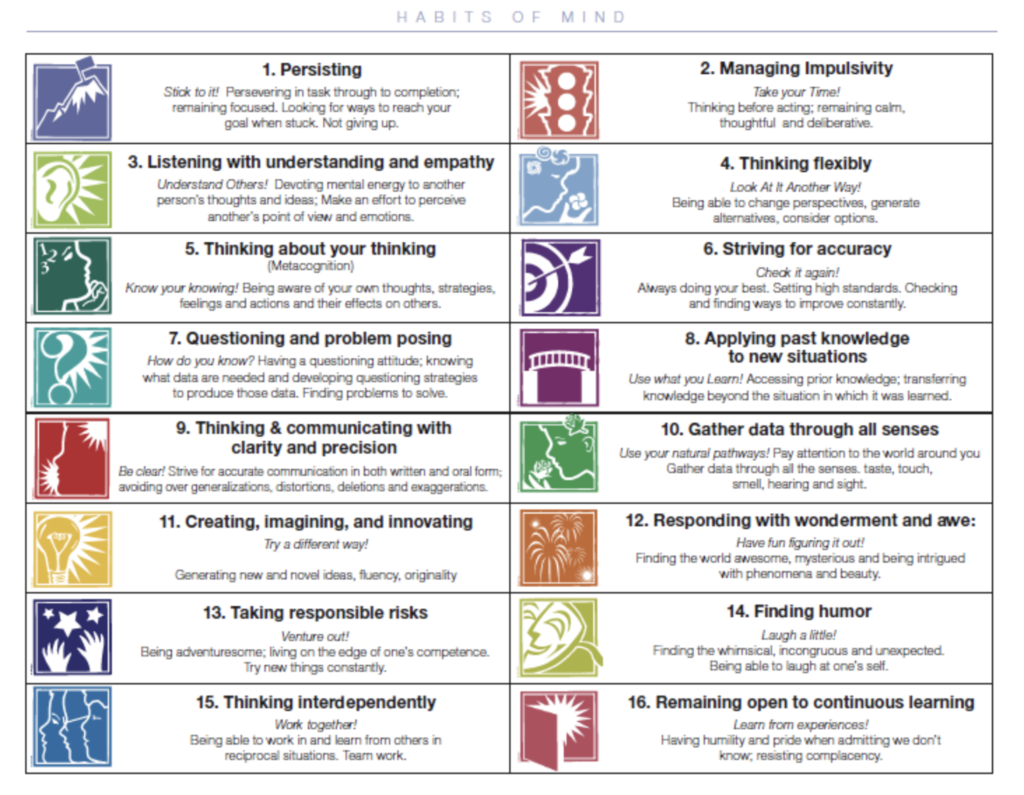
Source: Screengrab from teachthought.com

Habits of Mind are dispositions that are mindfully employed by characteristically intelligent, successful people when they are confronted with problems. When we draw upon these mental resources, the results are more powerful, of higher quality, and of greater significance than if we fail to employ those habits. ‘Finding humour’ will help you to relax and take on stresses with some ease. Metacognition or ‘Thinking about your Thinking’ will aid you and your child to be more aware of the way you think and the reasons for why you arrive at a certain conclusion. Try some of them out yourself before introducing them to your child!

Give Your Child a Head Start

Photo by RDNE Stock project on Pexels

Ensure that both you and your child have a nice, relaxing break after PSLE. If you are nervous about some of the new subjects and demands that will arise in Secondary 1 however, find some fun, engaging holiday classes with preparatory lessons for the year ahead. This might assuage some anxiety, so long as it does not involve the stress of ‘mugging’ or a tutor who is obsessed with piling on holiday homework. Check out the classes offered at Curio: https://curio.sg/programmes/

Life in Secondary 1 will be daunting at first, and then the year will fly by and you will both settle into a new phase in your lives. Enjoy the journey!

The Importance of Talking to Your Kids About Social Media

Nadya Sharfina · April 8, 2023 · 3 Comments

"As parents, it is important for us to understand social media and how it works. We need to be aware of the dangers associated with using social media, as well as the benefits."

As parents, we want our kids to be smart. We want them to make good decisions, get good grades in school, and stay out of trouble. But sometimes it can be challenging to know how to support our kids to succeed. One area where parents often need help is teaching kids how to use social media safely and responsibly.

Kids today are growing up in a world where social media is an integral part of their lives. They use it to communicate with friends, share information, and stay connected. As parents, it is important for us to understand social media and how it works. We need to be aware of the dangers associated with using social media, as well as the benefits.

Thankfully, there are some things parents can do to help their kids be smart while using social media.

Introduce Kids to Social Media at a Young Age

Photo by visuals on Unsplash

Parents should introduce kids to social media at a young age. This will help kids learn about it early on, and it will also help them be more aware of the dangers of using social media. Many parents don’t talk to their kids about the dangers of social media until it is too late. 

Warn Kids About the Dangers of Social Media

Photo by RODNAE Productions on Pexels

Social media can be a great tool for kids, but if they are not properly informed of its dangers, it can also be a source of risk. Parents need to be aware of the dangers that come with using social media, such as cyberbullying, sexting, online predators, exposure to inappropriate content, and data privacy issues.  Parents should take the time to explain these issues and emphasize why kids need to be careful when using social media.

In addition, kids need to be aware of the potential for online scams and fraud. They should never click on links from unknown sources, and not purchase anything online without parental permission.

Set Expectations and Boundaries

Photo by George Pagan III on Unsplash

Parents should set clear expectations and boundaries for kids when it comes to social media. They should talk about the consequences of inappropriate behavior and explain why posting certain types of content is dangerous. Kids should be made aware that there are limits to what they can post, and that once something is online, it can be hard to take back.

The conversation between kids and parents should also include a discussion about respect, both on social media and in real life. Kids should know that it is not okay to say hurtful things about someone else through bullying or gossip.

In turn, parents agree to respect their kids’ privacy while making an effort to be part of the conversation and have them share their social media experiences.

Show Kids How to Use Privacy Settings Correctly

Photo by firmbee.com on Unsplash

Parents should also ensure that kids are using their privacy settings correctly. Many social media sites have options to keep certain information private and kids need to be aware of these settings. Parents should remind kids that not everything needs to be shared online and they should take the time to explain why it is important to keep some things private.

Encourage Kids to Think Before They Post

Photo by Azamat E on Unsplash

Kids need to understand that anything they post online can be seen by others. Parents should make sure kids know not to post anything they would not want their parents or teachers to see. Kids need to be aware of the fact that what they post now can have serious consequences in the future.

It is important for kids to understand that they should think carefully before they post anything online. Parents should remind kids that if something seems too good to be true, it probably is, and they should never share personal information with strangers. They should also know that it is okay to block or ignore people who are harassing them online.

Set Rules for Using Technology and Enforce Them

Photo by Merakist on Unsplash

Parents should also set clear boundaries and expectations when it comes to kids using technology, including social media. Doing so will help kids understand the limits that are in place and why they are important. Parents should talk with kids about how much time is appropriate for them to spend on social media and make sure kids stick to these rules.

It is also important for kids to understand the consequences of breaking these rules. Parents should make sure kids know that there will be repercussions if they don’t follow the guidelines set by their parents, such as having their devices taken away or other disciplinary measures.

By setting clear expectations and enforcing them, kids can learn how to use social media responsibly and understand the consequences of their actions. It will also help kids stay safe when using social media, as well as instill a sense of responsibility in kids.

Why Is It Important for Parents?

Photo by Grant S on Unsplash

It can be difficult to talk to kids about social media and the dangers that come with it, but it is important to step in to keep them safe. Parents should take the time to discuss the risks associated with social media and they should also explain the importance of using it responsibly. By having these important conversations early on, parents can help kids to make smart choices online and ultimately keep them safe from potential harm. It is not always easy, but it is worth it in the end.

7 Ways for Students to Increase Their Focus

Santhi Rebecca · April 7, 2023 · Leave a Comment

"We often struggle to pay attention, but when presented with a task that we perceive to be difficult, we are more prone to giving up before truly attempting it."

Everyone struggles with their attention span at some point. External factors such as exhaustion from a packed schedule, lack of exercise or a disagreement with a loved one can be the cause of a loss of focus. Conversely, even oversleeping and too much Netflix or screen time can contribute to a wandering mind.

1. Have ‘Focus Breaks’

Photo by Pixabay on Pexels

You can use a timer or an app on your phone that reminds you to take breaks, or even have someone in your house pop by at a preset time with a drink (or cookies). 15 to 20 minutes is an ideal length of time for a break, but make sure you walk away from the screen or your study area and take a real break. What you do during your break is entirely up to you, but I would recommend having a stretch, looking out at some greenery, getting a hot drink or even lying down and closing your eyes. Some apps that might help: TomatoTimer, Time Out and Eyecare 20 20 20.

2. Adjust Your Study Time Frame

Photo by Enikő Tóth on Pexels

We are all unique individuals with our own ideal timings built for focus. You can try the famous Pomodoro Technique, which encourages people to work with the time they have rather than work against it. In the Pomodoro Technique, you will choose a task and allocate the total time you need for it. Set your timer to 25 minutes, work furiously and then take a 5 minute break. That’s it, you will have completed ‘1 Pomodoro’. After completing 4 sets of Pomodoros, you can give yourself a 20 to 30 minute break. Adjust this method as you see fit for yourself, and you will start to see improvements in your focus!

3. Include Exercise in Your Day

Photo by Pavel Danilyuk on Pexels

A lack of movement does generally contribute to lethargy, especially if you are on HBL. Even an activity as simple as stretching first thing in the morning will get your blood flowing and freshen up your mind for tasks in the day. If you are not a morning person, try some night cycling or an evening walk (with permission of course) and you will find your sleep greatly improved and your mind ready and set to concentrate the next morning.

4. Play Memory Games

Photo by Jonathan Kemper on Unsplash

That’s right! You are actually encouraged to play games in this instance. Memory games have been proven to build focus and to force you to concentrate. Some simple games only take 5 minutes to play and the increased attention you are forced to give in order to jog your memory will help you when you need to memorise dates or formulas. There are plenty of apps available but if you want to try a simple web-based site, you can go to: Memozor.

5. Reflect and Alternate Tasks

Reflect on a timetable after you have gone through the day or week. Were you more distracted on a Monday after the weekend and would prefer to focus on revising Math that day? Were you energized after a workout on a Thursday and felt like concentrating on History and Chemistry? Does writing out an English essay on a Friday feel like a drag? Alternate and move your timetable around as you see fit. There is no need to stick to or force yourself to a set schedule if it is not working out for you. Try writing down how you feel after each day e.g. ‘Today I took 2 hours to try just one sum, and I felt drained as I couldn’t get the answer’ or ‘Doing Biology revision on a Wednesday afternoon is great as it is just after Biology lessons in the morning’.

6. Remove Distractions

Photo by Howard Bouchevereau on Unsplash

People on a diet often remove all snacks and unhealthy foods from their fridges and cupboards, so that they aren’t tempted to eat them. Similarly, your study area should be distraction free. Place your phone outside your room if it is a source of distraction (and make sure you don’t have any apps on your laptop with friends messaging). Remove any clutter such as a gaming laptop or anything else that is a usual source of distraction.

7. Break Down Your Task

A lack of focus often stems from a task being perceived as too difficult or impossible at the beginning. Try breaking the task down into small steps and bite sized chunks, and then concentrate on finishing only that little chunk for the day. Make a checklist of the little chunks and then tick them off when you’re done. You will find a deep sense of satisfaction from being able to tick off the little bits and when the entire task is finally done, you can give yourself a clap on the back for being both organised and for a job well done!

School Breaks: 5 Ways for Students to Thrive

Santhi Rebecca · April 7, 2023 · Leave a Comment

"When you think about it, vacation is a great time to get those tasks completed and set yourself ahead of the game once the break is over."

The holiday season is a time for relaxation and enjoyment, but it can also be a great opportunity for students to get ahead and prepare for the upcoming school year. Here are some ways that students can spend their holidays productively:

1. Catch Up on Classwork and Homework

Photo by Annushka Ahuja on Pexels

The holiday break provides a great opportunity for students to catch up on any assignments that they may have fallen behind on during the semester. This will help them start the new year on a strong footing and avoid the stress of trying to catch up once classes resume.

2. Set Goals for the Upcoming Semester

Photo by Ann H on Pexels

The holidays can also be a good time for students to reflect on their progress and set goals for the upcoming semester. This could include setting specific academic goals, such as improving grades in a particular subject, as well as personal goals, such as getting more involved in extracurricular activities or making new friends.

3. Get a Head Start on Next Semester’s Classes

Photo by Pavel Danilyuk on Pexels

Students can use the holiday break to preview the material that will be covered in their classes next semester. This could involve reviewing old notes and textbooks, or even doing some extra reading on topics that will be covered in the upcoming classes.

4. Take Care of Practical Matters

Photo by Towfiqu barbhuiya on Unsplash

The holidays can also be a good time for students to take care of practical matters, such as organising their schedules, buying textbooks, and making travel arrangements for the new semester. Getting these things out of the way early can help students start the new year off on the right foot.

5. Relax and Recharge

Photo by Aaron Burden on Unsplash

Finally, it’s important for students to take some time to relax and recharge during the holiday break. This could involve spending time with family and friends, engaging in hobbies and interests, or simply taking some time to unwind and de-stress.

Overall, the holiday break provides a great opportunity for students to catch up, set goals, and prepare for the upcoming semester. By using this time productively, students can start the new year off on the right foot and set themselves up for success.

IP, IB or ‘O’ Levels. Which is the Best Path?

Santhi Rebecca · April 7, 2023 · 12 Comments

"Which path will work out best in the long run, IP, IB or 'O' Levels?"

Today, Singapore is known for its world-class education system. During the 1950s and 60s however, Singapore banked on a ‘survival-driven’ education system in order to generate a skilled workforce for the nation’s industrialisation push. We have come a long way since then, and there are now multiple pathways to a promising future.

The Cambridge ‘O’ Level/SEC Programme

Statistics from MOE, Singapore

The ‘O’ Levels have been offered in Singapore since 1971. It is considered a traditional path with rigorous academic demand.

Indeed, the majority of Singaporeans have gone through this particular exam and gone on to obtain acceptance into higher education institutions with ease.

The Cambridge ‘O’ Levels are widely recognised by both universities and employers internationally as evidence of excellent academic achievement.

Students are allowed to take up to a maximum of 9 subjects, and a minimum of 6.

From 2027, students will sit for the Singapore-Cambridge Secondary Education Certificate (SEC) examinations. There will be no change to the existing syllabus and examination format, beyond the regular updates that occur for each subject. The SEC exams will still be examined and awarded by Cambridge, as well as MOE and the Singapore Examinations and Assessment Board. The difference between the current format and SEC is that students will be taking subjects based on their strengths in each subject, and not based on a stream as is the case today.

Grading is carried out as follows.

‘O’ Level Grading System

What Type of Student Would Enjoy the ‘O’ Level/SEC Programme?

The ‘O’ levels are considered the ‘traditional’ or ‘safe’ route by many, and in terms of opening up opportunities for higher education, it certainly is.

Many consider the programme to be content heavy with a focus on grades and academia, but schools and educators today have a variety of tools and resources in order to bring out the best in every student.

Students will have to take ownership of their education, learn how to take notes, condense and summarise their own learning.

Students who enjoy the ‘O’ level programme are driven by their interests, are determined to succeed and are willing to take risks, fail and learn from their mistakes.

The Integrated Programme (IP)

The Integrated Programme (IP) was introduced in 2004 in only 8 schools. It caters for high-ability students in Singapore at the secondary school level.  Instead of taking the GCE Ordinary Level (O-level) exam in Sec 4 or Sec 5, they will take the GCE Advanced Level (A-level) exam or the International Baccalaureate (IB) after six years of secondary education.

The IP is offered in the following 17 schools at the time of writing:

Nanyang Girls’ High SchoolCatholic High SchoolSingapore Chinese Girls’ School
National Junior CollegeCedar Girls’ Secondary SchoolTemasek Junior College
Raffles Girls’ School (Secondary)CHIJ St Nicholas Girls’ School Victoria School
Raffles Institution (Secondary)Dunman High SchoolHwa Chong Institution
River Valley High School
Schools offering the IP in Singapore

What type of student would enjoy the IP programme?

Academically, the IP is targeted at the top 10% of scorers in each PSLE cohort. The programme provides students with space to learn beyond textbooks and explore their interests in depth. Not having to spend 4 years in preparation for the ‘O’ levels allows for the time needed for students to delve deep in both academic and non-academic areas.

Schools offering the IP have the freedom to implement curriculum that imparts critical and analytical thinking skills, character building and leadership development.

Students who do well in the IP tend to be disciplined, motivated learners who are capable of keeping track of their own goals and progress. They truly enjoy school, learning and new challenges.

The International Baccalaureate (IB) Diploma Programme

The International Baccalaureate (IB) was founded in 1968. It offers a rigorous educational programme which is internationally lauded and renowned for its propensity to cultivate global citizens.

Creativity and the imagination are at the heart of the curriculum and students explore global issues with compassion as well as intellectual curiosity. Students don’t just learn, they also learn how to learn and are encouraged to excel both in their personal and academic lives.

Data from The Straits Times

6 subject groups form the IBDP: studies in language and literature; language acquisition; individuals and societies; the arts; mathematics; and the sciences. Students choose courses from these six groups, although choosing a subject from ‘The Arts’ is not always compulsory, depending on the school. Other subjects include Theory of Knowledge and Extended Essay.

The IBDP is offered at the secondary level in the following 5 schools (local) at the time of writing:

Anglo Chinese School (ACS) IndependentSJI International
Hwa Chong International SchoolSchool of the Arts (SOTA)
Anglo Chinese School (ACS) International
Local schools offering the IB in Singapore

A total of 28 schools (both local and international) currently offer the IBDP in Singapore.

What type of student would enjoy the IB programme?

Any student would benefit from the breadth and unique approaches to teaching which are available in the IBDP programme.

Perhaps one way to consider if you would thrive in the IB programme is to compare exam conditions. ‘O’ and ‘A’ level exams can be content heavy and grade focused, whilst IB students are graded on other assignments as well prior to the final exam.

About 70 to 80% of the final grade is determined by the final IB exams, giving some breathing space for students to work more gradually on achieving a desired grade.

The IB programme is thus suitable for students who are adept at time management, enjoy learning independently and conducting research.

Looking for Help with Some Subjects?

Photo by Annushka Ahuja on Pexels

Curio offers English Language, English Literature and General Paper group tuition in online classes. We cover the ‘O’ level, ‘A’ level and the new Singapore-Cambridge Secondary Education Certificate (SEC) which is to be offered in 2027. We also teach students in the Integrated Programme (IP) be it English, Literature or Language Arts. 

Beyond online group sessions, Curio also offers a unique Marking and Feedback programme for individual, independent learners. Students receive personalised worksheets on a weekly basis. Upon completion, Curio teachers will mark and provide personalised feedback. Curio teachers are also available via whatsapp and email for questions on anything related to the subject. Many of our students thrive from not having to block out time to attend weekly lessons, but still have the benefit of a Curio coach’s nurturing and experience.

To find out more, call or get in touch with us on whatsapp at 8892 2948. We are also available on email: [email protected].


  • « Go to Previous Page
  • Page 1
  • Page 2
  • Page 3
  • Page 4
  • Page 5
  • Go to Next Page »

CURIO

Copyright © 2026 Curio Singapore · Log in

  • Home
  • Journal
  • Contact
  • Terms and Conditions
  • Free Resources