• Skip to primary navigation
  • Skip to main content
CURIO SG

CURIO SG

Holistic Education

  • Home
  • Programmes
    • Secondary School Programmes
      • English Language ‘O’ Level Programme
      • English Literature ‘O’ Level Programme
    • Junior College Programmes
      • English Literature ‘A’ Level Programme
      • GCE ‘A’ Levels: General Paper
    • IP
      • IP Programme: English Language
      • IP Programme: English Literature
    • Crash Courses
      • O Levels English Language
  • Free Resources
  • About
  • Journal
  • Shop Assessment Books & Exam Papers
  • Show Search
Hide Search
You are here: Home / Archives for Nadya Sharfina

Nadya Sharfina

Top 10 Career Podcasts for Students Figuring Out Their Future

Nadya Sharfina · September 22, 2025 · Leave a Comment

"Career podcasts bring real-world stories and practical tips into a format you can listen to anytime."


Planning a future career starts with understanding your own strengths, interests, and values. Once you know what drives you, exploring different career paths and the skills they require becomes much easier. Guidance from career counselors, mentors, and university resources can make this process smoother, but today’s students also have another option right at their fingertips, career podcasts. These shows bring advice, real-world stories, and practical tips into an easy format you can listen to anytime.

Career podcasts can help you think through your chosen path, set personal goals, and gain perspectives from people working in different fields so you can imagine what that future might look like. They’re accessible on popular platforms like Spotify and Apple Podcasts, making it simple to learn and stay inspired on the go. 

1. Kids Learn Careers

Hosted by Kyle Northcutt, the podcast brings fresh conversations every week with professionals across a wide range of fields. Each episode focuses on one person’s job, giving students the chance to understand what different careers are really like and what paths are available in the world of work. The format makes it easy to explore options without pressure—just honest, engaging insights into what people actually do every day.

Listeners get to hear what it’s like to be a nonprofit CEO, a screenwriting teacher, a business development consultant, a tour guide, a civil engineer, or even a lifestyle fitness coach. By painting a clear picture of these roles, the series helps students imagine themselves in different careers and consider possibilities they might not have thought about before. It’s a simple but powerful way to start building a vision of what the future could look like.

2. Happen To Your Career 

Happen To Your Career explores the questions many students face: how do you find work that feels meaningful and also pays well? And how do high achievers manage to build careers that bring both purpose and happiness? The podcast helps listeners dig into their own interests and strengths, showing how those personal insights can guide them toward a more fulfilling path. 

The episodes also reveal how top performers figure out the kind of work that actually fits them best. Through real stories, listeners get to hear how people have shifted into careers that align with their values and lifestyles. Topics like Making A Midlife Career Change, How To Achieve Career Clarity When You Feel Stuck, Bored & Unfulfilled, and Climbing Down The Corporate Ladder To Discover Career Happiness share honest examples of what those transitions look like. 

3. Career Ready Podcast

This podcast, hosted by the College of DuPage, is designed to help students build the skills they need to feel confident about entering the workforce. It covers practical topics like crafting strong resumes, making the most of LinkedIn, and preparing for interviews, skills that can make a real difference when starting a career. The episodes focus on giving clear, actionable advice that students can apply right away, making the sometimes overwhelming process of career preparation feel a lot more manageable.

Listeners can explore a wide range of topics that go beyond the basics. Episodes like Studying Speech to Create a Career Path and What Every Job Seeker Should Know give insight into how academic choices and job search strategies connect to real opportunities. Other episodes highlight broader themes such as Job Trends and Advice and The AI Workforce Revolution, offering students a look at what’s shaping the future of work.

4. Get Work Savvy

Focused on helping you search for your ideal career, the podcast hosted by Liam Gardner speaks directly to anyone tired of the daily grind and looking for something more inspiring. It highlights what it takes to do work you genuinely enjoy while guiding you toward finding ways to get paid for your passion. The conversations also explore different paths, whether that means building a career within a company or creating your own business, offering advice that feels both practical and motivating.

Each episode features stories of people who truly love their jobs. Listeners get an inside look at what it’s like to work in different industries, how these individuals discovered their ideal roles, and the lessons they’ve learned along the way. With new episodes released every Monday, the series delivers fresh ideas, strategies, and perspectives across a wide range of careers, giving students inspiration and actionable advice for shaping their own path forward.

5. College Central Podcasts

College Central Podcasts offer clear, straightforward advice designed to help students navigate entry-level job searches and common career challenges. Listeners can expect insights on resumes, interviews, internships, and professional etiquette, all explained in a way that’s easy to understand and apply. The guidance is practical, making it easier to prepare for those first steps into the workforce with more confidence and direction.

The episodes also explore specific topics like virtual job fairs and building a strong career portfolio, giving students tools to stand out in a competitive market. There are tips to help you sound as good as you look during interviews and strategies for asking the right questions to show you’re engaged and a strong fit for the role.

6. Worklife with Adam Grant

Organizational psychologist Adam Grant brings a fresh perspective on what it means to build a better work life. Each episode takes you inside the minds of some of the world’s most unusual professionals, exploring new ways of thinking about work and success. The conversations touch on themes like learning how to love your rivals and even using frustration as fuel, offering insights that can completely shift how you view challenges and opportunities in your own career journey. By the end, you’ll never see your job—or your approach to work—the same way again.

The series also introduces a wide range of fascinating voices and stories. You’ll meet 10-year-old Sean the Science Kid, who shares his passion for discovery, hear cliff diver Molly Carlson talk about facing fears, and learn from former Prime Minister of New Zealand Jacinda Ardern as she opens up about leading with empathy and overcoming self-doubt. These conversations blend inspiration with real-world lessons, showing students how diverse experiences can shape meaningful approaches to work and life.

7. SolveItforKids Science Podcast

If you’ve ever dreamed of becoming a scientist, this podcast makes the world of science feel exciting and within reach. Aimed at curious and creative kids along with their families, it opens the door to what real-life scientists, engineers, and experts actually do. Each episode lets listeners peek into how these professionals solve problems in their everyday work, sparking new ideas about what’s possible in science and beyond.

Hosted by Jennifer Swanson and Jeff Gonyea, the conversations are filled with energy and fun. They ask big questions, tackle challenges, and invite listeners to think more deeply while stretching their creativity. The result is a mix of problem-solving, imagination, and discovery that helps students see science not just as a subject in school, but as an exciting way of exploring the world.

8. College and Career Ready

Empowering students for the careers of tomorrow, this podcast takes listeners on a transformative journey that prepares high school and college students for real-world opportunities. Hosted by Sonia Cacique, the focus is on equipping students with practical skills, professional experiences, and career guidance that can make a real difference when stepping into the workforce. Each episode is designed to help students connect what they’re learning now with the skills and mindset they’ll need later.

As a career guidance counselor, career coach, and education leader, Sonia has dedicated her life to supporting the next generation. She uses her expertise to help students build self-awareness, find motivation, and gain the kind of career direction that feels personal and achievable. Along the way, listeners learn how to strengthen the essential skills needed not just for their studies, but for future professional success as well.

9. Biology Career Insights

Your source for inspiration and guidance in biology careers, this show helps students see the many opportunities waiting in the field. It shares practical and inspiring perspectives on how to succeed in biology, no matter where you are on your journey, starting as a student, stepping out as a recent graduate, or even looking to grow mid-career. The conversations highlight the wide range of paths in biology while making the subject feel dynamic and full of possibility.

Hosted by Dr. Manish Kumar, the series also dives into the latest technology trends shaping the future of biology. Listeners get a clearer picture of how the field is evolving and what kinds of roles might be waiting for them. By exploring these topics, students gain both motivation and insight, helping them prepare for a career that blends science, innovation, and personal growth.

10. College and Career Champion

Offering up-to-date advice on all things related to college and career, this show speaks to students, parents, and professionals looking for clear direction. Host Tiffany Phu, owner of College and Career Consulting, brings her experience as a Career Service Provider and College Consultant along with over eight years in recruitment at top tech companies. Her background gives listeners a strong inside view of what it takes to succeed in both education and the job market.

With a career-focused approach, Tiffany provides practical guidance on how to use post-secondary education as a stepping stone toward a purposeful career. She shares strategies for finding the right path while also weaving in life advice that she has seen work for high-earning Silicon Valley professionals. The mix of real-world insight and approachable guidance makes the content relatable, while giving students a clearer picture of how to move forward and build the future they want.

Check out more: Teen Internships: Benefits and Where to Find Them, Top 10 Unusual University Degrees That Actually Lead to Real Careers and 15 Jobs That Might Be Taken Over by AI in the Future


How to Talk to Children About Loss and Tragedy

Nadya Sharfina · September 12, 2025 · Leave a Comment

"When children hear about tragedy or loss, starting the conversation with honesty and reassurance can ease their fears and give them a stronger sense of safety."

Children often hear about heartbreaking events on the news, and the young people in your life may come to you with questions about such tremendous loss and senseless tragedies. Sometimes these events feel far away, but other times they may hit closer to home, like the loss of a family member, something frightening that happened at your child’s school, or an incident in your neighbourhood. 

Waiting for them to bring it up can leave room for confusion or fear, so it helps to start the conversation early, offering them clear information and reassurance in a way they can understand. These talks also provide an opportunity to review safety procedures together, giving children not only answers but also a sense of security in knowing what steps they can take if they ever feel uncertain or unsafe.

Calm Yourself First

Photo by cottonbro studio on Pexels

Before starting a difficult conversation with your child, it helps to pause and check in with yourself first. Tragedies can stir up a lot of feelings, and children often take their emotional cues from watching how the adults around them respond. Give yourself the space to process what you’re feeling, and reach out to friends, family, or another trusted support system so you don’t carry the weight alone. This will make it easier to show calm and steadiness when you sit down to talk.

Once you feel more grounded, take a little time to think about what your child might want to know. Children often come to these conversations with big and sometimes unexpected questions, and anticipating a few of them can help you feel more prepared. You don’t need every answer, but knowing what might come up can ease the pressure in the moment.

Some common questions children may ask include what exactly happened, how it might affect them or the people they love, and if there’s anything they can do to help. Thinking through these ahead of time gives you a chance to consider how you want to explain things in a way they can understand, while also offering comfort and reassurance when they need it most.

Start with What Your Child Already Knows

Photo by Thắng Lê on Pexels

Once you’ve had a chance to calm yourself, you can begin the conversation with your child. Starting gently opens the door for them to share what’s already on their mind instead of leaving them to piece things together on their own. This helps create a space where they feel safe asking questions and expressing feelings without judgment.

Ask your child what they’ve heard or noticed so far. Children often pick up bits of information from friends, social media, or overheard conversations, and those pieces don’t always add up to the full picture. Talking about what they already know gives you the chance to uncover any misunderstandings and ease fears before they grow bigger.

As you respond, aim to give clear and accurate information that matches their age and level of understanding. A younger child may only need a simple, brief explanation, while older children and teens may ask for more detail and want to discuss it at length.

Keep the Conversation Age-Appropriate

When talking with children about difficult events, keeping your words age-appropriate helps them understand without feeling overwhelmed. Using simple, direct, and factual language gives clarity and avoids adding confusion. Children often sense when adults are avoiding the truth, so being honest in a gentle way can make them feel safer.

For younger children, brief and simple explanations usually work best. For example, if someone has died, you might say, “Grandpa’s body stopped working, and he can’t be with us anymore.” This kind of clear language helps them understand what happened without too much detail. Older children, on the other hand, may want more information, so you might explain, “Grandpa died because he was very sick, and the doctors couldn’t make his body better.”

Teens may be ready for an even deeper discussion. They often want to know more about the circumstances and may ask questions about illness, accidents, or even fairness. In this case, you could say, “Grandpa had a serious illness, and even with treatment, his body couldn’t recover. I feel sad about it too, and it’s okay for us to talk about how we’re feeling.” Shaping your words to match your child’s developmental level allows them to process the truth in a way that feels safe and supportive.

Explain Without Adding Fear

Photo by Ron Lach on Pexels

When talking with your child about a tragedy, honesty builds trust, but too many details can cause more fear or worry than comfort. Focus on sharing the basic facts in a calm, clear way and leave out graphic descriptions that may be too much for them to handle. Children don’t need every detail to understand what happened—they mainly need to know they’re safe and that they can count on you to explain things honestly.

For example, if your child asks about a car accident in the neighbourhood, you might say, “There was a crash, and someone was hurt, but the helpers came quickly to take care of them.” This gives your child enough information to know what happened without exposing them to distressing details. Keeping your words simple and reassuring helps them process the event while protecting them from unnecessary fear.

Limit Media Exposure

Photo by cottonbro studio on Pexels

The ease of access to media today means news is everywhere, and while that can help adults stay informed, it can be overwhelming for children. Young people don’t always know how to filter what they see or hear, and repeated coverage of tragic events can make situations feel even scarier than they are.

That’s why it helps to limit how much your child is exposed to graphic details or constant news updates. While they’ll learn the general information through your conversations, hearing the same tragic story on TV or online over and over again may add to their worries. Creating boundaries around media use gives children space to process events more calmly and rely on you for the guidance and reassurance they truly need. Check out: The Importance of Talking to Your Kids About Social Media.

Watch for Signs They’re Struggling

little girl in coat, t-shirt, jeans holding hands on ears and looking fatigued , front view.

When a tragedy touches someone close to your child, paying attention to their feelings becomes especially important. Even if they don’t say much, the experience can leave a lasting impact, and dismissing their emotions may cause them to carry that hurt silently. Help them see that feelings like sadness, nervousness, or even anger are natural responses to something terrible. Sharing a bit about how you feel, too, can show them that talking about emotions is normal and safe, which may encourage them to open up about their own.

It’s also helpful to watch for signs that your child might be struggling more than they’re able to say out loud. Changes in behaviour, such as becoming unusually clingy, having frequent nightmares, or complaining about headaches or changes in appetite, can all be signals that they’re carrying more stress than they can manage on their own. Staying aware of these shifts gives you the chance to step in with comfort, support, or even professional help if needed.

Check out more articles: What Can You Do If Your Child Has No Friends? and What to Do If You Don’t Like Your Child’s Friends

Exciting September 2025 Events You Can’t Miss

Nadya Sharfina · September 11, 2025 · Leave a Comment

"Give your kids a refreshing break from classes and homework with fun-filled outings this September."

September is already here, and it’s a great time to explore the many events happening across Singapore with your family. These outings can be a refreshing break for your kids, giving them something exciting to look forward to between classes and homework. From lively festivals to interactive activities, the month offers plenty of opportunities to recharge, have fun, and enjoy time as a family.

Wiggle Wiggle in the Sky at Singapore Flyer

Photo by singaporeflyer.com

High above Singapore’s spectacular skyline, the iconic Singapore Flyer takes on a new personality with Wiggle Wiggle in the Sky. Running between 23 May and 28 September 2025, Asia’s largest giant observation wheel will be transformed into a vibrant wonderland of whimsy. Five uniquely decorated capsules set the stage for an uplifting experience that blends panoramic city views with imaginative design. 

Visitors can choose between two ticket types to enjoy the fun. A Single Experience Ticket (SGD 50) brings you one 30-minute rotation in a shared capsule, with your theme revealed only when you board. For those who want to extend the magic, the Double Experience Ticket (SGD 90) lets you enjoy two rotations in different capsules, each with its own vibrant Wiggle Wiggle theme. The element of surprise keeps everyone guessing until the moment you step inside. The Flyer operates daily and on public holidays between 10am and 8pm, with last admission at 7:30pm. Just remember to arrive at the VIP Lounge on Level 1 before your flight time so you don’t miss your chance to ride.

Find Your Folks @ Jalan Besar 

Photo by sdw.designsingapore.org

Find Your Folks @ Jalan Besar runs from 11 – 21 September 2025 and brings the Jalan Besar precinct to life with a mix of culture, design, and community spirit. The festival highlights a neighbourhood shaped by hyperlocal makers, with streets lined by family-run shops, independent cafés, and long-standing hardware stores. Admission is free, making it easy for families to explore together. Activities run all day from 11 – 19 September, while the final weekend (20 – 21 September) transforms Hamilton Road into a vibrant hub between 3pm and 10pm.

The programme is packed with experiences that showcase both creativity and local flavour. Music lovers can join BREW by Darker Than Wax on 20 September, where DJs like Dean Chew, Dexter Colt, Daryl Knows, Halia, Kaye, and Ray Kong will turn the street into a block party. Families can walk the Makers’ Trail to see furniture installations created by local businesses with hyperlocal materials, each paired with QR codes so you can recreate the designs at home. To round off the festival, The Urban Picnic brings a skate jam filled with custom-built obstacles, themed installations, and competitions for skaters and creatives capturing the best tricks on camera. 

BUBBLING & BOILING Music and Arts Festival

Photo by rwsentosa.com

On 13 and 14 September 2025, Resorts World Sentosa will host the BUBBLING & BOILING Music and Arts Festival at the Resorts World Ballroom. This two-day event combines music, art, and immersive experiences in one exciting setting. Families can look forward to interactive art installations, dazzling bubble shows, and exclusive B&B collections. The choice of Resorts World Sentosa as the venue reflects the festival’s vision, bringing together cultures, ideas, and imagination in a place that connects Asia with the rest of the world.

The music lineup is set to be a major highlight, with global stars i-dle, KUN, Xiumin, Joey Yung, and more taking the stage in high-energy performances across both days. Alongside the shows, guests can enhance their visit with a stay at the official festival hotel, located just steps away from the action. Staying onsite comes with special perks, making it easy to extend the experience beyond the performances and installations.

Singapore River Festival 2025

Photo by sdw.designsingapore.org

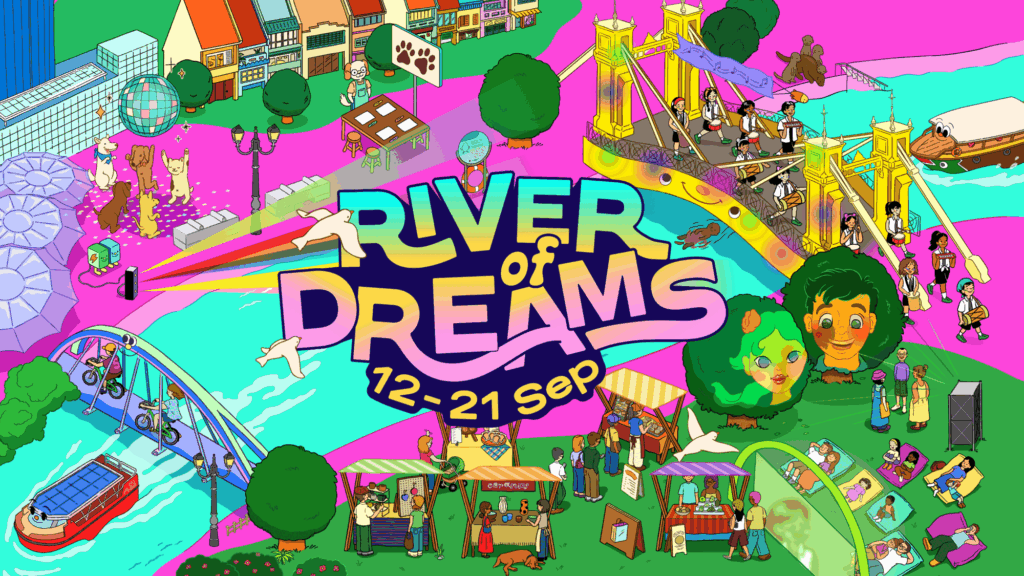
Organised by Singapore River One, the Singapore River Festival 2025 returns for its 9th edition with a special Design Edition, held in conjunction with Singapore Design Week. Running from 12 – 21 September, the festival stretches along Boat Quay, Clarke Quay, and Robertson Quay, with programmes running daily from 10.30am to 11.00pm. This year’s edition also celebrates Singapore’s 60th birthday through design-focused experiences such as Symphony of Lights by Light Collab, Singapore River Passport by Studio Grain and Singapura Otter, Singapore River Odyssey by The Urbanist Singapore, and Illuminating the Past, Heritage Reimagined by Fujifilm and photographer Joseph Goh. Together, these installations and stories bring out the enduring spirit of the river as a connector of communities and cultures. Admission varies by programme, making it easy to pick activities that suit your family’s schedule.

Each quay offers a different highlight to enjoy. At Boat Quay, River of Dreams takes the spotlight with an immersive projection mapping show, while Clarke Quay livens up with a pet-friendly event and an engaging community walk. Over at Robertson Quay, families can explore an artisanal and sustainable market, take part in workshops, or wind down with an open-air silent movie night. This year, selected programmes will also be powered by GoRental clean energy, showing the festival’s commitment to a greener and more inclusive future. 

MINT Museum of Toys

Photo by emint.com

As SG60 celebrations continue into September, the MINT Museum of Toys is rounding off the milestone year with a Grand Prix-themed weekend on 27 and 28 September 2025. Running from 9:30am to 6:30pm, the programme invites families to relive Singapore’s racing past while enjoying hands-on fun. Begin at the Racing Toys Cars: Self-Exploratory Track to uncover the history of the Orient Year Grand Prix and view racing car models spanning the 1930s to 1970s. Then head to the Sustainable Wood Racing Car Workshop, where kids and parents assemble and paint their own eco-friendly toy cars while learning the basics of automotive parts and mechanics.

At HEAT: Pedal to the Metal Board Game History & Competition combines a short presentation on the evolution of racing games with a thrilling, strategy-filled vintage car race. Families can also join the F1 Racing Grand Prix Track Set Competition, racing through qualifying rounds before battling it out in the final showdown. A $55 all-access ticket covers both days, giving families the chance to take part in every workshop, game, and race.

Thrills of the Track 

Photo by rwsentosa.com

Get ready to dive into high-octane fun with Thrills of the Track at Resorts World Sentosa, running from 26 September to 5 October 2025. Adventure Cove Waterpark sets the stage with thrilling water-slide races and live DJ performances. Beyond the slides and music, families can explore race-inspired activities across the resort, each designed to bring a burst of excitement to the racing season.

Foodies can join the ride too with menus that bring the thrill to the table. Resorts World Sentosa’s Signature Restaurants are serving up four exclusive menus crafted by star chefs, alongside a trio of limited-time desserts that capture the spirit of the season. 

Fun and Learning Combined: Educational TikToks for Kids to Follow

Nadya Sharfina · September 5, 2025 · Leave a Comment

“When education is woven into the same feed that entertains, kids begin to see curiosity not as a chore, but as part of everyday life.”


TikTok has become one of the most popular social media platforms among kids today, often known for its endless stream of funny clips, dance trends, and quick entertainment. But beyond that, there’s also a growing world of educational content that makes learning feel fresh and approachable. Creators across math, history, art, biology, science, and English are using short videos to explain big ideas, share tips, and spark curiosity in ways that feel natural to kids who already spend time scrolling.

For some children, watching these videos can actually make tricky subjects easier to understand, offering bite-sized lessons that stick better than a long lecture. For others, it’s simply an enjoyable way to pick up new knowledge in their free time or during a quick break. No matter how your child approaches it, these educational TikToks blend fun with learning, helping kids see that gaining knowledge can fit right into their everyday routines.

1. @discovery 

You’re probably already familiar with this account, which has gathered over 7 million followers by turning science and nature into quick, fascinating lessons. It acts like a pocket-sized encyclopedia where kids can discover everything from surprising animal behaviors to groundbreaking advances in technology, all presented in a way that’s both informative and entertaining.

2. @instituteofhumananatomy 

@instituteofhumananatomy makes learning about the human body both fascinating and approachable, breaking down complex topics into fun, easy-to-follow videos. The creators dive deep into the different body systems, offering clear explanations and detailed insights that bring anatomy to life. For kids who are curious about how their bodies work, or for students starting to explore biology or medicine, this account can be a truly valuable resource that sparks curiosity and builds knowledge in an engaging way.

3. @birdoftheweek

This TikTok account is run by Tom, an elementary school teacher and avid birder in Oregon who shares his love of wildlife in a fun and educational way. Each week he introduces a new bird, highlighting its unique traits, habitat, and behavior, while showing photos and footage that bring each species to life. Kids can meet fascinating creatures like the green heron, northern harrier, downy woodpecker, mandarin duck, and plenty more, making this account a great way to spark curiosity about the birds in their own neighborhood while also learning about species around the world.

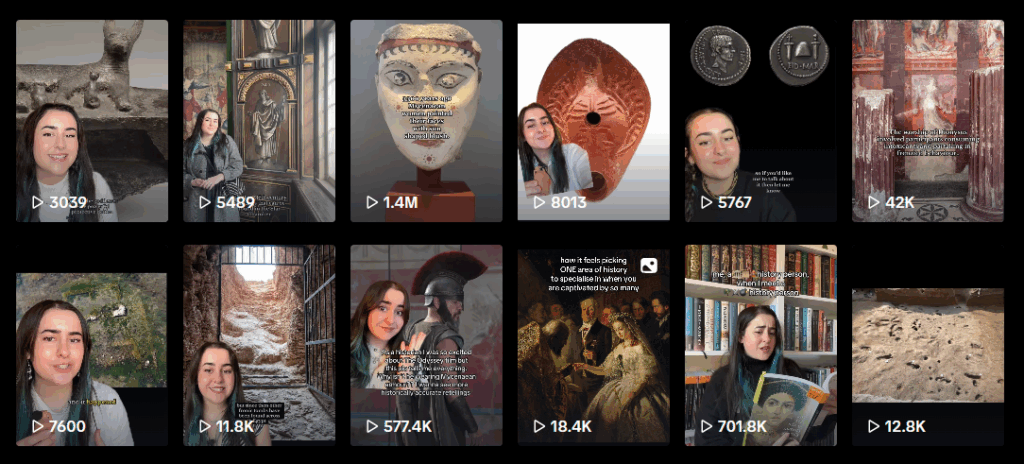
4. @annelisethearchaeologist 

Archaeologist Annelise Baer brings history to life with short videos that explore fascinating mysteries of the past. Kids and teens can discover unusual objects, learn why Cleopatra’s burial site still puzzles researchers, compare what’s known about Alexander the Great, or even hear about the people who returned to Pompeii after the eruption. Her content is both captivating and educational, making it a great pick for high school students who are curious about ancient civilizations and the stories they continue to reveal.

5. @jayprehistoricpets

Jay Brewer, founder of The Reptile Zoo in Fountain Valley, California, brings reptile education to life with daily posts that showcase incredible exotic animals. Kids can watch snakes and turtles hatch, discover unusual lizards, and encounter species they may never have seen before. Alongside the excitement of meeting these creatures, the videos also highlight why protecting wildlife and their habitats matters, making his content both fun and educational for young animal enthusiasts.

6. @chemteacherphil

This creator shares eye-catching experiments that make chemistry exciting while breaking down tricky concepts with a touch of humor. Kids can watch black fire appear with table salt, see what happens when burning magnesium meets dry ice, or marvel as spinach turns white and then red. His videos have attracted 3.8 million followers by showing how fun and approachable science can be, and the person behind them all is high school chemistry teacher Phillip Cook.

7. @iamshaneburke

Kids who love being creative can learn how to draw with Shane Burke, who shares clear and simple tutorials that make art feel approachable. His videos walk through different subjects step by step, giving beginners an easy way to practice their skills while building confidence along the way. It’s a fun introduction to drawing that encourages kids to explore their artistic side.

8. @theblackfoodscientist

Food scientist Brittany Towers makes science bite-sized and fun with her “Food Science in Sixty Seconds” videos. She answers all those random questions kids (and parents) might have, like whether you really need to wash prepackaged salad, the truth about cheese and health, or how to whip up DIY ice cream without a machine. Her quick, clever explanations turn everyday foods into fascinating lessons that spark curiosity around the kitchen and beyond.

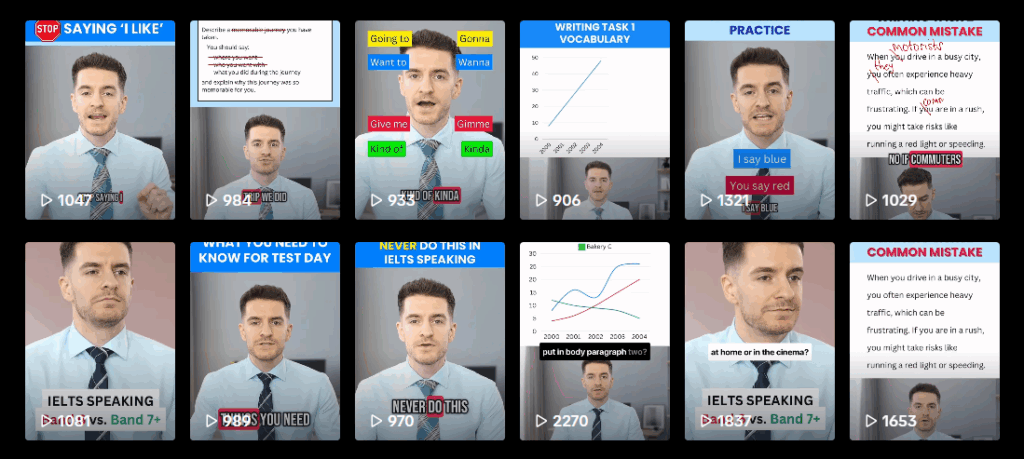
9. @englishunderstood

An IELTS expert shares tips and strategies that help students aim for a Band 7+ while making English feel more approachable. The videos focus on practical conversations and clear pronunciation, giving kids and teens useful tools they can apply right away. With plenty of guidance tailored to IELTS Speaking practice, the content is especially helpful for those preparing to use English confidently in both exams and everyday life.

10. @hashem.alghaili

This science and tech creator sparks curiosity with videos that answer some of the most fascinating questions about our world and beyond. Kids can learn why ballerinas don’t get dizzy, what really happens inside a black hole, how deep the Titanic wreck lies, or even imagine what Earth would look like with rings like Saturn. He also explores surprising topics like disappearing wisdom teeth and the intelligence of octopuses. Already well known on YouTube and Instagram, he brings that same love of discovery to TikTok with content that keeps curious minds hooked.

11. @ludus

Do your kids hate math? This creator sets out to change that with quick tricks and hacks that make numbers a lot less scary. Kids can learn how to multiply complex numbers, use diagonal methods to solve problems, and even practice multiplying in their heads with ease. By tackling the biggest challenges students often face in math, the videos turn tough concepts like algebra into simple, manageable steps that build confidence along the way.

12. @idea.soup

Michael McBride shares quick lessons that make big ideas in history and science easier to understand while sparking curiosity along the way. Kids can explore questions like what a leap second actually is, why people often misunderstand earthquakes, or whether dandelions are waterproof. They’ll also come across fascinating stories such as the mystery behind Australia’s name and even how much an Olympic gold medal is really worth. His videos mix fun facts with clear explanations, making learning feel fresh and exciting.

13. @astro_alexandra

This space-focused account dives into the wonders of astronomy and science with content that makes the universe feel both mysterious and exciting. Kids can explore mind-bending ideas like rogue planets drifting with their moons, strange rock formations spotted on Mars, or the lost photos of Mercury. There are also fascinating looks at Jupiter’s must-see features and even wild theories like the Devon Island conspiracy, which compares a remote spot on Earth to Mars. It’s a fun way to spark curiosity about what lies beyond our planet.

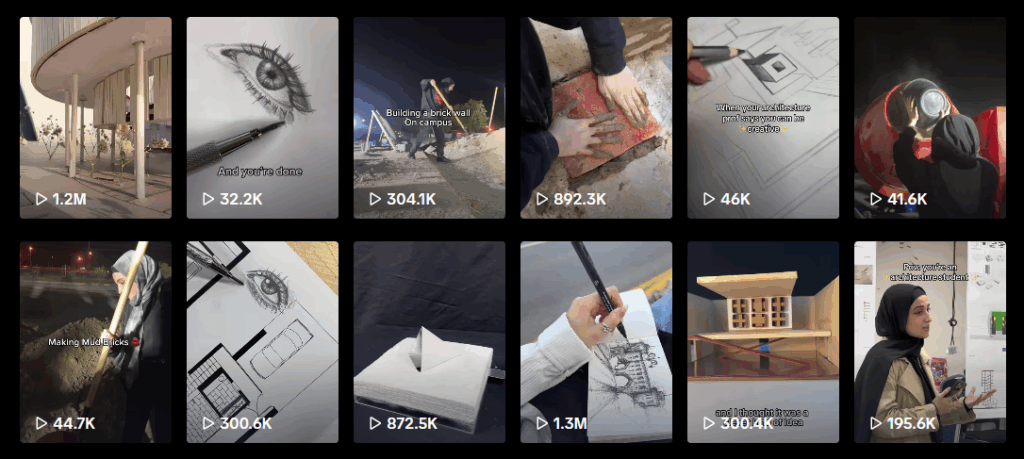
14. @artbyjoudy

An architecture student shares creative tutorials that make drawing more approachable, even for beginners. Her videos cover everything from sketching realistic eyes to capturing detailed landscape buildings, giving kids simple steps to follow as they build their artistic skills. For those who want to dive deeper, she also offers longer, more detailed tutorials on her YouTube channel.

15. @thephysicsgirl

Dianna Cowern, an MIT-trained physicist, makes science exciting with videos that mix fun experiments, surprising facts, and even life hacks grounded in physics. Her content often features “impossible” tricks that spark curiosity while showing the science behind how they work. By blending creativity with clear explanations, she makes complex ideas feel approachable and inspires kids to see the world through a scientific lens.

16. @speakenglishwithmish

Mish makes learning English feel approachable with short lessons that cover everyday conversations, idioms, and pronunciation. Kids can pick up tips on how to be polite in English, practice common phrases, and build confidence in speaking naturally. The friendly teaching style helps learners feel more comfortable using English in real-life situations while making the process enjoyable and easy to follow.

17. @historical_han_

This creator blends archaeology, art, and history into fascinating stories that bring the past to life. Her videos dive into topics like why Lady Jane Grey deserves more recognition, the depth of Roman history, and how traditions such as hair oiling or wearing blush have been around for thousands of years. She also takes viewers along as she spends days exploring castles, abbeys, and ancient ruins, offering a glimpse into the places where history still lingers today.

18. @roxythezoologist

A wildlife filmmaker shares breathtaking moments from the natural world, capturing everything from a jaguar hunting a capybara to the powerful wild cats of Africa. She also posts mini trip vlogs, like a night safari in Sri Lanka, that give viewers a chance to experience the thrill of exploring nature up close. Her content inspires curiosity about animals and their habitats while showing just how incredible the wild can be.

19. @mathswithmisschang

A math teacher based in London makes tackling numbers a lot easier by sharing simple tricks and straightforward explanations for common problems. Her videos break concepts down into manageable steps, helping students gain confidence while showing that math doesn’t have to feel overwhelming.

20. @encyclopaediabritannica

Encyclopedia Britannica brings its huge collection of knowledge to TikTok, offering students quick and reliable answers to all sorts of questions. Curious minds can learn how a pope is elected, why food tastes different after brushing their teeth, or even how the “mind’s eye” can vary from person to person. The short videos make big ideas easier to grasp, turning everyday curiosity into moments of learning.

Hungry Ghost Festival and Other Festivals of the Dead

Nadya Sharfina · September 4, 2025 · Leave a Comment

“Festivals of the dead are never about endings, they’re about connections that endure.”


It’s Hungry Ghost Festival season in Singapore, observed this year from 23 August to 21 September. During this time, families prepare offerings, enjoy lively performances, and gather to honour ancestors and wandering spirits. The occasion blends reverence with festivity, reminding us to care for those who came before us while cherishing moments with loved ones.

What might surprise you is that this practice isn’t unique to Singapore. Across the world, many cultures hold their own “festivals of the dead,” with prayers, rituals, food, and music that celebrate memory and family ties. Each one is distinct, but they all share the belief that honouring the departed helps keep their presence alive.

The Hungry Ghost Festival

Also known as the Zhongyuan Festival in Taoism and the Yulanpen Festival in Buddhism, it is a traditional event celebrated in several East and Southeast Asian countries. According to the lunar calendar, it takes place on the fifteenth night of the seventh month, a time often referred to as “ghost month.” During this period, people believe that the gates of the underworld open and spirits wander freely. These wandering ghosts may be looking for food, entertainment, or even a chance to reconnect with the living.

To honor these spirits and bring peace to both the departed and the living, families and communities make offerings in different ways. Special metal cages are placed outside housing estates and temples, where people burn paper money, incense, and even detailed paper creations that resemble houses, cars, clothing, or mobile phones, items meant to provide comfort in the afterlife. Food is also set out on sidewalks or in temples, both to appease unknown spirits and to pay respects to deceased relatives. These practices are not only acts of remembrance but are also believed to bring blessings and good fortune to those who take part. Check out: Hungry Ghost Festival Singapore 2024

Japanese Obon

In Japan, Obon is one of the most cherished Buddhist traditions, a multi-day event often referred to as the Lantern Festival. Celebrated for more than 500 years, it is a time dedicated to honouring ancestors, as many believe the spirits of loved ones return to the physical world each year to visit their families. Obon was later introduced to Hawaiʻi in the late 19th century by Japanese immigrants working on plantations, and today it continues to be a meaningful tradition both in Japan and within Japanese communities abroad.

The dates of Obon vary depending on the region. Japan once followed a lunar calendar, but after adopting the Gregorian calendar during the Meiji era, communities began observing the festival at different times. As a result, some areas celebrate in mid-July, while others hold it in August. Regardless of the month, the spirit of Obon is the same: showing respect to ancestors, welcoming spirits into homes, and sending them off again with offerings and rituals. Alongside these customs, there are a variety of traditions and festivities that differ from place to place and even from family to family. Many people visit and clean ancestral graves, while others take part in local dances, festivals, and community gatherings.

The origins of Obon can be traced to a Buddhist story about the disciple Maha Maudgalyayana, who discovered that his mother was suffering in the Realm of Hungry Ghosts. Guided by the Buddha, he made offerings to monks on the fifteenth day of the seventh month, which freed her spirit. Filled with joy, he danced in celebration, inspiring the Bon Odori dances still performed during the festival today. Bon Odori is now one of the most recognisable aspects of Obon, with participants in yukata dancing to the rhythm of taiko drums in parks, temples, shrines, and other public spaces. Another moving custom is Toro Nagashi, the floating of paper lanterns down rivers that flow to the sea. Each lantern, softly glowing with a small candle, represents the spirit of an ancestor, gently lighting the night as it drifts downstream. These traditions bring families together in remembrance while also celebrating connection and community in the present.

Mexican Día de los Muertos

Popularly known as the Festival of the Dead, Día de los Muertos is a vibrant Mexican tradition celebrated each year on November 1 and 2. In some communities, the festivities begin as early as October 31 or extend to November 6, making it a season of remembrance. Families and friends come together during this time to honour loved ones who have passed away. Instead of being a solemn occasion, the holiday is filled with joy, laughter, and storytelling, as people share humorous anecdotes and cherished memories that bring the spirits of the departed close again.

A central part of the celebration is the creation of ofrendas, or home altars, decorated with photos, candles, and favourite foods and drinks of those being remembered. Bright orange marigolds, called cempazúchitl, are used to guide spirits back to the world of the living, while colourful calaveras (skulls) appear in artwork, masks, and sweet sugar candies. Families also visit cemeteries with offerings of flowers, food, and gifts, transforming gravesites into lively spaces filled with light, music, and togetherness.

The holiday is just as much about celebrating life as it is about remembering the dead. Friends often exchange sugar skulls, share pan de muerto, and write playful poems called calaveras literarias, which humorously imagine epitaphs for friends or public figures. Though deeply rooted in Mexican culture, Día de los Muertos is embraced in other countries such as Bolivia, Guatemala, and Peru, each adding its own traditions, like offering coca leaves or cigarettes in Bolivia. Today, the spirit of the holiday has spread far beyond Latin America, with celebrations in U.S. cities such as Cleveland featuring parades, music, dancing, and community workshops.

Gai Jatra

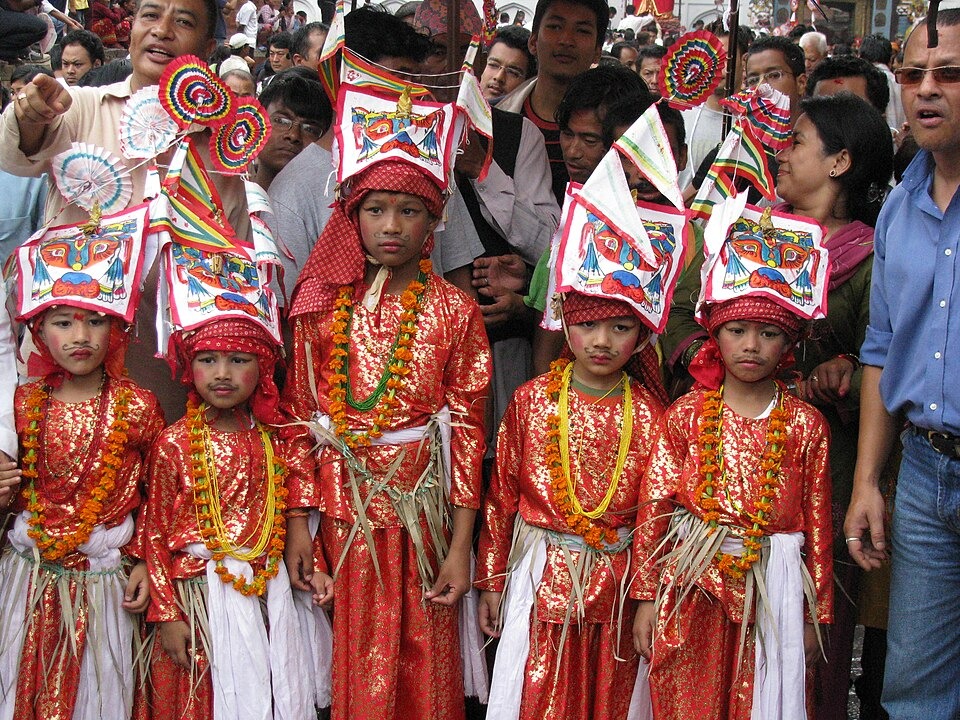
One unique festival of the dead is Gai Jatra, also called Sa Paru, which is celebrated in Nepal mainly in the Kathmandu Valley by the Newar people. Taking place in the month of Bhadra (August/September), the exact date is determined by the lunar Nepal Samabat calendar and falls on the first day of the dark fortnight of Gunla. The festival is dedicated to remembering relatives who have passed away during the previous year, blending deep cultural traditions with a lively atmosphere that brings the community together.

The origins of Gai Jatra go back to the 17th century, during the reign of King Pratap Malla. After the death of his teenage son, the king created this tradition both to honour his son’s journey to the afterlife and to comfort his grieving queen. Since then, the festival has been a way for families to cope with loss, while also celebrating life with music, parades, and humour. The name itself means “cow procession,” as cows are considered sacred and believed to guide departed souls to heaven.

During the festival, children dress up in costumes, often with cow headdresses and even moustaches painted on their faces. They wear special skirts and belts that drag on the ground, symbolising the connection between Earth and heaven, helping their loved ones ascend. Processions fill the streets in the morning, while the evenings are full of laughter, with comedic performances and satire meant to ease grief and remind families that joy can exist alongside remembrance. Gai Jatra continues to be a moving blend of ritual, storytelling, and celebration for the Newar community.

Famadihana

In Madagascar, many Malagasy people believe that the spirit of a person does not immediately leave this world after death. As long as the body remains, the spirit is thought to stay connected to the living. Families feel a responsibility to care for their loved ones and ancestors until the body has fully returned to the earth, allowing the spirit to continue its journey into the afterlife. This care can last for many years, sometimes even generations, and one of the most meaningful ways to show it is through a large celebration called Famadihana.

Famadihana, often called the “turning of the bones,” is a major death ritual that brings families and communities together. Relatives may travel long distances, sometimes for days, to gather at ancestral crypts where the ceremony takes place. During this event, the remains of ancestors are carefully exhumed, rewrapped in fine silk shrouds, and carried in a joyful procession back to the village. The bodies are then laid out, side by side, to be cleaned, redressed, and celebrated. Families often speak directly to their ancestors during the ritual, sharing news, asking for blessings, and remembering their lives through storytelling.

Once the ancestors are honoured, the event turns into a lively reunion. Music, dancing, and a great feast follow, with the belief that the spirits enjoy a good celebration just as much as the living. In some families, people will even dance with the wrapped bodies of their ancestors, not as a sombre gesture, but as an expression of joy, respect, and closeness. 

All Souls’ Day

Observed on November 2, All Souls’ Day is a Christian tradition dedicated to remembering those who have passed away, especially souls believed to be in Purgatory. For believers, it is a time to honour loved ones and support their spiritual journey toward heaven through prayer and Mass. The day is part of the larger Allhallowtide season, which also includes Halloween and All Saints’ Day, tying together themes of remembrance, faith, and the connection between the living and the departed.

The heart of All Souls’ Day is prayer. Catholics believe that souls in Purgatory are being purified before entering heaven, and that prayers offered on their behalf can help in that process. Many parishes hold special Masses for the dead, giving families an opportunity to gather and remember relatives and friends. Along with attending services, people often visit cemeteries to decorate graves with flowers and candles, creating a space of reflection and connection.

Traditions have grown around the observance, some of which carry echoes into modern customs. One example is “souling,” a practice in which people once went door-to-door, offering prayers for the dead in exchange for small cakes, food, or coins, an early version of what later evolved into trick-or-treating. While practices vary across cultures and communities, the focus of All Souls’ Day remains the same: affirming the bond between the living and the departed, and reminding families that love and prayer reach beyond death.

15 Famous Short Stories That Will Help You Master Narrative Writing

Nadya Sharfina · August 29, 2025 · Leave a Comment

“Learning English takes practice, and one of the best ways to build that skill is through plenty of reading.”

Learning English takes practice, and one of the best ways to build that skill is through plenty of reading. Instead of jumping straight into long, 500-page novels, short stories can be a much easier and more enjoyable place to begin. Their length makes them approachable, and they can be finished in one sitting, which gives a real sense of progress and accomplishment.

For English language learners, short stories provide an engaging way to grow vocabulary, strengthen grammar, and sharpen reading comprehension. Even if you don’t consider yourself much of a reader, they can spark an excitement for stories that may eventually lead you to pick up novels on your own. To get started, here are 15 popular and effective choices that will not only make reading enjoyable but also help you master narrative writing.

1. The Happy Prince by Oscar Wilde

Oscar Wilde’s The Happy Prince, first published in 1888, may have been written as a children’s story, but it has a way of touching readers of all ages. It follows a grand statue of a Prince who overlooks the city. In life, this Prince enjoyed luxury and comfort, never really noticing what went on beyond the castle walls. Now, as a glittering statue covered in gold and jewels, he finally sees the suffering around him. Yet he’s stuck in place, unable to move, only able to feel compassion for the people below.

Wilde, known for his sharp wit and flair, gave his fairytales more than just charm. In The Happy Prince, he mixed in deeper ideas about kindness, sacrifice, and the flaws that often trip people up, like vanity, greed, and pride. The mix of sparkling imagery with these bigger themes makes the story both moving and memorable, showing how even a simple fairytale can carry powerful lessons about life and humanity.

2. The Landlady by Roald Dahl

Originally published in 1959, The Landlady is a short horror story by Roald Dahl that manages to be both unsettling and unforgettable. It follows 17-year-old Billy Weaver, a young man new to town who is looking for a place to stay. After asking a porter for advice, he notices a welcoming little boarding house and decides to check in. The landlady seems kind, almost motherly, and the house feels cozy and safe at first glance. But as the night unfolds, Billy’s stay takes a sinister turn, and the reader slowly realizes that the landlady is hiding a chilling secret.

What makes the story so effective is how Dahl weaves themes of deception, irony, and naivete into such a simple setup. The landlady’s gentle manner masks something far more disturbing, and Billy’s willingness to trust appearances becomes his downfall. Readers are drawn in by the ordinary setting, only to be left with the creeping realization that danger can hide in the most unexpected places.

3. Araby by James Joyce

James Joyce, an Irish novelist, poet, and literary critic, is often remembered as one of the most influential writers of the twentieth century and a central figure in the modernist movement. His short story Araby, originally published in 1914, offers a glimpse into both the everyday life of Dublin and the deeper emotional struggles of growing up. The story follows a young boy who becomes infatuated with the girl living across the street, a quiet but powerful first crush that consumes his thoughts.

When the girl mentions how much she wishes she could visit a local bazaar, the boy seizes on the idea as a way to impress her. He dreams of going there, buying her a gift, and winning her affection. Through this simple plan, Joyce beautifully captures an adolescent’s first stirrings of desire, along with the intensity and obsession that can come with it. The tale resonates because it reflects that universal moment of awakening. When childhood innocence gives way to the powerful, and sometimes overwhelming, feelings of young love.

4. The Pedestrian by Ray Bradbury

The Pedestrian tells the story of Leonard Mead, a man who quietly resists a world obsessed with television screens. While his neighbors remain inside each night, absorbed by their sets, Leonard chooses instead to walk outdoors, enjoying the silence of the empty streets. One evening, his solitary stroll is interrupted by a police car operated not by a human officer but by a computer. Suspicious of his unusual behavior and unsatisfied with his answers, the machine arrests him and sends him off to a psychiatric hospital, treating his nightly walks as a threat to the social order.

Although it was written back in 1951, the world it describes feels strikingly close to our own. A society consumed by technology, where human connection and individuality are fading, is something many readers today will recognize instantly. The story creates a clear path into broader discussions of dystopian literature, tying naturally into classics like Fahrenheit 451, Anthem, and 1984. By showing how something as ordinary as a walk can be viewed as dangerous, it challenges readers to think about conformity, freedom, and the role of technology in everyday life.

5. The Midnight Zone by Lauren Groff

The Midnight Zone begins as the story of a family vacation in a remote hunting camp, but it quickly slips into something far more unsettling. When the mother suffers a concussion and loses her memory, what should have been a peaceful trip turns into a frightening ordeal. Stranded in the Florida wilderness, she and her family are forced to confront both the dangers of their surroundings and the fragility of their own safety. Through this lens, the story explores motherhood, vulnerability, and the uneasy balance of responsibility that comes with caring for children in moments of crisis.

What makes this piece so powerful is the way Lauren Groff draws readers into its world. Her language is richly evocative, the atmosphere thick with suspense, and every detail seems to heighten the sense of unease. Beneath the surface of a simple family outing lies a meditation on fear, love, and the darker edges of the human experience. The story was published in 2016.

6. The Lottery by Shirley Jackson

A short story by Shirley Jackson that was first published in 1948, and it continues to spark conversation decades later. Set in a seemingly ordinary small American town, the story draws readers in with its simple descriptions of villagers gathering for an annual ritual. At first, the event feels almost festive, with families chatting and children playing, but the atmosphere grows darker as the details of the tradition begin to emerge. The lottery, it turns out, is no celebration at all but a brutal ritual meant to guarantee a good harvest and rid the town of bad omens.

What makes this story so striking is how it examines tradition and the way people conform to practices without questioning them. Jackson uses the lottery to show how communities can accept cruelty as normal when it is tied to custom. Beneath the plain setting lies a powerful look at human nature, exploring how fear, obedience, and blind acceptance can lead to unsettling outcomes. The contrast between the ordinary surface of village life and the horror beneath is what makes the story unforgettable.

7. Thank You, M’am by Langston Hughes

Originally published in 1958, Thank You, M’am by Langston Hughes is a short story that captures both the struggles of poverty and the power of compassion. It begins with a young boy named Roger, who tries to steal the purse of Mrs. Luella Bates Washington Jones, hoping to get enough money to buy a pair of stylish shoes. Instead of letting him escape or handing him over to the police, Mrs. Jones grabs him by the collar and takes him home. Roger expects punishment, but what he finds instead is kindness that leaves him stunned and speechless.

The story explores themes of second chances, trust, dignity, and the bond that can form between generations when empathy comes first. Mrs. Jones doesn’t excuse Roger’s actions, but she shows him respect and humanity in a way he has likely never experienced before. By choosing compassion over anger, she leaves a lasting impression that reshapes Roger’s understanding of right and wrong. Through this brief but powerful encounter, Hughes reminds readers that even small acts of generosity can change the course of someone’s life.

8. Lob’s Girl by Joan Aiken

Lob’s Girl is a short story by Joan Aiken that tells the touching tale of Sandy Pengelly and her remarkable friendship with a dog named Lob. When Sandy is just five years old, she meets Lob while playing on the beach with her family. What begins as a chance encounter quickly grows into a deep bond that shapes both of their lives. Aiken draws readers into their connection with warmth and detail, showing how the loyalty of a dog can become just as meaningful as any human relationship.

Published in 1981, the story highlights the enduring love and devotion shared between a girl and her dog. At its heart, it is about the extraordinary bond between humans and animals, a relationship built on trust, loyalty, and unconditional affection. Through Sandy and Lob’s connection, Aiken captures the way pets can become family, offering both comfort and companionship in a way that feels timeless and universal.

9. The Janitor in Space by Amber Sparks

In The Janitor in Space, readers are introduced to a female janitor whose job is to keep a space station running smoothly. Her days are filled with routine tasks, yet the story turns those ordinary duties into something extraordinary. Instead of feeling crushed by solitude, she discovers a quiet kind of joy in her work and her surroundings, offering a fresh perspective on what happiness can look like in an unconventional setting. Her life in orbit gently challenges the assumption that being alone must always equal loneliness.

Told through a third-person point of view, the story also examines ideas of good and evil through the unlikely role of a janitor in space. The contrast between her humble job and the vastness of the universe creates a striking backdrop for reflection. With its creative plot and unusual premise, the story encourages meaningful discussion long after it ends. First published in 2014, it continues to stand out as a thought-provoking piece of modern fiction.

10. Ruthless by William de Mille

Telling the chilling tale of Judson Webb, Ruthless follows a man at his vacation cabin who decides to take matters into his own hands after a series of thefts. Convinced that burglars will return, he poisons the whiskey he keeps there, thinking it will serve as a deterrent. But his plan takes a grim twist when, after being dazed by a fall, he forgets what he has done and accidentally drinks the poisoned liquor himself.

First published in 1945, the story explores themes of revenge, ruthlessness, and the inevitable consequences of one’s own actions. What lingers most is the irony of Judson’s downfall: the very scheme meant to protect him becomes the cause of his demise. In just a few pages, the story shows how cruelty and suspicion can spiral into self-destruction, leaving readers with a powerful reminder of how choices rooted in bitterness often come back in unexpected ways.

11. The Metamorphosis by Franz Kafka

One of the most famous examples of absurdist and fantasy fiction, The Metamorphosis tells the unforgettable story of Gregor Samsa, a traveling salesman who wakes up one morning to find he has turned into a giant insect. As Gregor struggles to adjust to his bizarre new condition, his family must also come to terms with the shocking change. What begins as a surreal premise quickly unfolds into a deeply human story, showing not only Gregor’s physical challenges but also the shifting dynamics within his household.

Originally published in 1915, this short story delves into the complexities of identity and self-perception in a way that still resonates today. Gregor clings desperately to his sense of humanity, even as his body betrays him, and readers can’t help but feel empathy for his plight. Kafka uses this strange and unsettling transformation to explore universal questions about how we see ourselves, how others see us, and what it means to be truly human.

12. The Scarlet Ibis by James Hurst 

First published in The Atlantic Monthly in July 1960, The Scarlet Ibis by James Hurst quickly became a classic of American literature, even winning the “Atlantic First” award. Since then, it has been reprinted countless times in high school anthologies and story collections, introducing generations of readers to its moving and haunting narrative. At its heart, the story follows two brothers—the narrator, known as Brother, and his younger sibling, Doodle. Brother’s pride motivates him to teach Doodle to walk and strive for a more “normal” life, but that same pride also pushes Doodle beyond his limits, with devastating consequences.

What makes this story so powerful is the way it blends emotion with literary craft. Filled with vivid imagery, rich symbolism, and subtle foreshadowing, the narrative explores themes such as pride, guilt, death, family, and the forces of nature. Readers are drawn into the brothers’ complex relationship, where love and cruelty often sit side by side. By the end, the story leaves a lasting impression about the fragile line between helping someone out of care and harming them out of pride.

13. The Test by Theodore Thomas

Science fiction takes center stage in The Test by Theodore Thomas, first published in 1962. Set in a future where driving exams go far beyond measuring basic skill, the story imagines a psychological test designed to predict dangerous behavior before it ever happens. The protagonist, Robert Proctor, undergoes his exam under hypnosis and experiences the horror of a deadly accident. Even though he acts responsibly, the authorities decide he is unfit to drive, stripping him of his license and his freedom based on a scenario that never truly occurred.

What makes this story so striking is the way it blends tension with bigger questions about justice, personal responsibility, and the reach of authority. Readers are pulled into Robert’s experience, only to be stunned by an ending that feels both shocking and unsettling. The story lingers because of its clever use of suspense and irony, prompting reflection on how society might misuse power in the name of safety. The final twist is one you simply won’t see coming.

14. Hills Like White Elephants by Ernest Hemingway

Hills Like White Elephants centers on a brief yet loaded conversation between an American man and a young woman waiting at a train station in Spain. As they pass the time, the girl observes that the nearby hills look like white elephants, a remark that introduces the story’s rich symbolism. Beneath their small talk lies a heavier subject. The man is urging her to undergo an “operation,” implied to be an abortion, a topic rarely discussed openly during that era. What appears to be an ordinary exchange becomes a window into the strain of their relationship and the difficult choices before them.

Themes of control, communication, and choice flow through the story, making it a subtle but powerful exploration of how much weight a single conversation can carry. Hemingway masterfully uses pared-down dialogue and layered imagery to show the push and pull between the characters, revealing how silence and implication can say more than direct words ever could. This timeless exploration of human interaction was originally published in 1927.

15. The Standard of Living by Dorothy Parker

Tells the story of two young women, Annabel and Midge, The Standard of Living follows their lives as stenographers who dream of something grander than their day-to-day reality. To entertain themselves, they play a game where they imagine winning a million dollars and spend hours planning how they would use it all for their own enjoyment. These playful fantasies reveal their desire for a lavish lifestyle and the excitement that comes with imagining a life far removed from their ordinary routines.

The charm of the story lies in how it contrasts those big dreams with the reality they live in. When the women come across a pearl necklace and learn its price, they realize just how far their fantasies are from the world they actually inhabit. Their reactions highlight both the humor and the hollowness in chasing after material wealth. First published in 1941, the story continues to shine as a witty reflection on aspiration, daydreaming, and the distance between imagination and reality.

After exploring these stories, the real growth comes in what you do next. Try taking a few minutes to summarize the plot in your own words, describe the main characters, and think about the themes the author wanted to convey. This reflection helps not only with understanding the story but also with building the skills needed to tell your own.

As you read, keep a small notebook or digital note handy where you can jot down interesting words or phrases. See if you can figure out the meaning of unfamiliar words from the context, and pay attention to how sentences are built or how dialogue moves the story forward. And when a word leaves you guessing, take a moment to look it up in a dictionary. Every new word you collect becomes part of your own toolbox as both a reader and a writer.

Check out: Timeless Storytellers: 20 Notable Writers of All Time and 10 Essential Books for Teens: Boosting English Skills & Building Character

15 Jobs That Might Be Taken Over by AI in the Future

Nadya Sharfina · August 28, 2025 · Leave a Comment

“Artificial intelligence is no longer just an idea in science fiction. It is a reality unfolding right now.”


Artificial intelligence is no longer just an idea in science fiction. It is a reality that is unfolding right now. In many developed countries, AI is already being used in a variety of work settings, changing the way tasks are completed. Even in everyday life, it’s closer than most people think; simply asking Siri a question on your phone is an example of interacting with an AI assistant. These technologies are becoming more capable, affecting industries in ways that would have seemed unlikely only a decade ago.

AI is transforming traditional careers, with some roles expected to disappear completely while others will change significantly. It is helping industries become more efficient and cost-effective, but it is also replacing certain human jobs at a pace never seen before. In this article, we explore 15 different jobs that may be taken over by AI in the future, looking at how each one could be affected and what that might mean for the people working in those fields.

1. Parking Enforcement

Photo by Tom Fisk on Pexels

Parking enforcement might be one of those jobs we see vanish by the year 2050. Many car parks and garages are already making the switch to fully automated systems, using barriers, sensors, and advanced CCTV cameras. These systems can track licence plates, time your stay, and check if a car is parked legally without a human officer walking around with a ticket book. It’s becoming a smooth, efficient process that works around the clock.

In the future, this tech won’t just be in big city garages. It could be rolled out to smaller car parks and even side streets. That means traffic officers on patrol may no longer be needed, as cameras and software handle everything automatically. The change might feel strange at first, but for drivers, it could mean faster enforcement, fewer disputes, and less waiting around.

2. Customer Service

Photo by Mikhail Nilov on Pexels

Customer service is already changing fast, and AI is playing a big part in it. More and more companies are letting chatbots and virtual assistants handle questions, complaints, and requests. These systems can “chat” just like a person and they keep improving through machine learning. That means they’re not only able to answer simple questions, but they can also deal with trickier problems that used to require a human representative.

Looking ahead, many customer service teams might rely heavily on AI chatbots, leaving fewer roles for human agents. Businesses like the idea because it’s faster, available 24/7, and often more cost-effective. For customers, it could mean getting instant help at any time of day, without waiting in a queue. Still, it’s a big shift, one that could make the job landscape look very different in just a few decades.

3. Cashier

Photo by Anna Tarazevich on Pexels

Cashier roles are already starting to disappear in some places, as big retailers experiment with completely automated shopping experiences. Companies like Amazon and Tesco are testing stores where you can simply walk in, pick up what you need, and leave. No checkout line in sight. In Central London, Tesco has even opened a store that works exactly this way, while some Uniqlo branches already let you pay using self-service machines.

These shops use advanced technology, combining cameras and sensors to track what you pick up and automatically charge you as you leave. It’s quick, efficient, and removes the need for a cashier behind the counter.

4. Truck and Taxi Drivers

Photo by gdtography on Pexels

Self-driving technology is advancing rapidly, with companies like Tesla and Waymo developing vehicles that can operate without human input. These systems are designed to navigate roads, follow traffic rules, and respond to changing conditions. In long-haul trucking, autonomous vehicles are seen as a way to handle the challenges of driver fatigue and extended travel times, while in taxis, they could manage routine trips without the need for a person at the wheel.

If these developments continue, a significant portion of trucking and taxi work could be carried out by autonomous vehicles in the future. Long-distance freight routes and common passenger journeys may be handled entirely by machines. 

5. Financial Analyst

Photo by Yan Krukau on Pexels

AI algorithms are becoming more capable in the world of finance, with the ability to process large amounts of data, forecast market movements, and generate investment suggestions. These systems can perform repetitive, rule-based tasks quickly and with a high degree of accuracy, making them useful tools for portfolio management and trading decisions. As the technology develops, many financial processes that once required extensive human analysis may be handled directly by AI systems.

This could lead to a reduced demand for human financial analysts in certain areas of the industry. While AI might take on much of the routine analysis, human roles could shift toward overseeing systems, interpreting results, or focusing on areas that still require personal judgment. 

6. Proofreaders

Photo by Ron Lach on Pexels

AI tools such as Grammarly and other language-processing programs are becoming highly skilled at detecting spelling mistakes, grammar issues, and even style inconsistencies. These systems are trained on vast collections of text, allowing them to spot errors quickly and offer suggestions that can improve clarity and flow. Over time, they continue to refine their abilities, making them capable of handling a wide range of proofreading tasks that once required a careful human eye.

As these technologies advance, the demand for human proofreaders may decline in certain areas, especially for routine or high-volume work. However, some contexts may still rely on human expertise, particularly when tone, nuance, or specialised knowledge is involved. This shift highlights a broader change in how written content is reviewed and edited, with AI increasingly becoming a standard part of the process.

7. Data Entry

Photo by Pixabay on Pexels

AI is increasingly able to automate the process of entering information into computer systems. Using advanced recognition technologies, it can extract data from forms, emails, and even scanned documents with speed and accuracy. This reduces the need for manual typing and checking, allowing large amounts of information to be processed in a shorter time.

As these systems become more widely used, the role of human data entry clerks may decline in many industries. Tasks that once required careful, repetitive input can now be completed automatically, with humans stepping in mainly for oversight or handling exceptions. 

8. Translators and Interpreters

Photo by Kevin Malik on Pexe;s

AI-based real-time translation has developed to the point where it can assist in both spoken and written communication almost instantly. Apps like Google Translate can use a microphone to listen to what someone is saying and translate it into the language you select. They can also take a photo of text, such as a sign, menu, or document, and provide a translation automatically. These features are already helping solo travellers manage in places where they don’t speak the local language.

As these tools continue to improve, they may influence how often human translators and interpreters are needed in everyday situations. While AI can offer quick and convenient translations, certain tasks, such as handling complex discussions, cultural nuances, or specialised topics, may still benefit from human expertise.

9. Delivery Drivers

Photo by Artem Podrez on Pexels

Drones and AI-powered logistics systems are being tested in more places as a way to handle deliveries. Companies such as Amazon and UPS are investing in technology that can transport packages through the air, navigating directly to a customer’s address. These systems are designed to work quickly and efficiently, particularly for short-distance routes where speed is a priority.

If the technology continues to advance, it could take over many delivery tasks that are currently handled by human drivers. Short trips, small parcels, and time-sensitive orders may increasingly be managed by automated systems, while humans might focus on longer routes or more complex deliveries. This shift would bring changes to how goods are transported and the roles available within the delivery industry.

10. Receptionists

Photo by Cedric Fauntleroy on Pexels

In places like hotels and corporate offices, automated check-in systems are becoming more common, taking on tasks that were once handled by receptionists. These systems can log visitors, schedule appointments, and provide answers to basic questions, often through touchscreens or AI-powered kiosks. Some locations are experimenting with more advanced solutions, such as humanoid robots, which can interact with guests in a way that feels more personal than a standard machine.

One example is the Henna Hotel in Tokyo, Japan, which uses robots as receptionists, bag checkers, and even concierges. As these technologies develop, they could become a regular part of front desk operations in different industries. 

11. Graphic Designers

Photo by Antoni Shkraba Studio on Pexels

AI-enhanced design and editing tools are opening up new possibilities in how images and visuals are created. With just a single photo, these systems can generate highly realistic effects, such as showing what you might look like decades in the future or turning you into an anime-style character in minutes. Similar technology is already being used in producing creative content like music videos and short films for social media, showing how AI can quickly transform ideas into finished visuals.

As this technology advances, it may take on tasks that were once the responsibility of human graphic designers, particularly for quick or experimental projects. At the same time, designers may continue to play a role in shaping concepts, refining aesthetics, and ensuring that the final result aligns with a specific vision or brand. 

12. Coders

Photo by Christina Morillo on Pexels

AI tools like ChatGPT are now able to write fluent, syntactically correct code at a speed that often surpasses human capabilities. This means that tasks involving large volumes of basic or repetitive coding can be completed quickly by AI. For coders whose work mainly focuses on producing simple code in high quantities, this development could raise concerns about future job opportunities.

On the other hand, coders who focus on producing high-quality, well-structured software may find AI to be a helpful addition to their toolkit. By using AI to handle routine parts of the job, they can spend more time on complex problem-solving, creative solutions, and fine-tuning their projects. 

13. Contractors

Photo by Canva Studio on Pexels

In April 2025, the CEO of Duolingo shared that the company would be taking an AI-first approach in the future. Part of this shift involves using AI in areas where contractors might have previously been hired, potentially changing how certain tasks are handled within the company. By integrating AI into these processes, some work that was once outsourced could be managed internally through automated systems.

Duolingo also announced plans to incorporate AI into their hiring process, joining the growing number of companies expected to use similar tools by the end of 2025. This move reflects a wider trend where AI is playing a larger role in recruitment, project management, and other operational areas. 

14. Travel and Tourism

Photo by veerasak Piyawatanakul on Pexels

AI is becoming a useful tool in the travel and tourism industry, helping people plan trips and explore new destinations. AI assistants and chatbots can guide users through booking flights, renting vehicles, and finding accommodations, often tailoring suggestions to individual preferences. Some systems also perform flight forecasting, using historical price data to recommend the best times to book for cheaper fares. These tools can make trip planning more streamlined and accessible for a wide range of travellers.

For travel companies, AI offers ways to process and interpret the large amount of data generated by customers. It can compile feedback, reviews, and survey responses to assess performance and identify areas for improvement. This type of analysis can inform business strategies, marketing campaigns, and service enhancements.

15. Content Writers

Photo by Vlada Karpovich on Pexels

Generative AI tools like ChatGPT and Gemini can create text that closely resembles human writing, producing articles, blog posts, and marketing copy in a short amount of time. This capability can be particularly impactful in areas where the writing does not require a high level of nuance, originality, or detailed research. As these systems become more widely used, certain types of content creation may be handled more by AI than by human writers.

At the same time, writing that is highly original, specialised, or deeply rooted in personal experience may become more valuable. As the internet fills with AI-generated material, genuine human perspectives could stand out as something unique. This shift may influence the kinds of writing opportunities available, with demand potentially moving toward work that AI struggles to replicate.

AI has the potential to make many processes faster, more efficient, and more accurate, changing the way tasks are handled across different industries. At the same time, human authenticity plays a vital role in maintaining creativity, empathy, and personal connection, qualities that machines cannot fully replicate. For individuals, learning AI-related technologies, automation tools, and the basics of machine learning can be a way to stay valuable in a workforce that is evolving alongside these advancements.

Rather than seeing AI solely as a replacement for human work, it can also be viewed as a tool to enhance industries. Businesses can use it to take over repetitive tasks, freeing people to focus on higher-value projects and problem-solving. By understanding AI’s role, adapting to its capabilities, and finding ways to collaborate with it, both individuals and organisations can position themselves to not only remain relevant but also grow in this new technological landscape.

Check out: How ChatGPT and AI Affect Education and The Best AI Prompts to Use for Your Studies

How Singaporeans Celebrate National Day Overseas

Nadya Sharfina · August 12, 2025 · 4 Comments

"Independence Day unites us. From neighbourhoods at home to cities abroad."

Every year on 9 August, Singaporeans across the island and around the world come together to mark a meaningful milestone in our nation’s journey. This year is especially significant as we celebrate 60 years of independence and rally behind the National Day Parade (NDP) 2025 theme: “Majulah Singapura.”

It’s a time when the familiar red and white flag flies high, not just across neighbourhoods in Singapore, but in cities overseas where Singaporeans live, work, or study. Wherever it’s seen, the flag becomes more than just a symbol; it represents our shared values, collective hopes, and the deep sense of belonging that unites us.

Bringing Flavours of Singapore to Your Overseas Table

Photo by Su La Pyae on Pexels

No National Day celebration abroad feels complete without familiar flavours on the table. For many Singaporean families, the kitchen is where the festivities begin,serving up favourites like chicken rice, laksa, and mee goreng.

Local Asian grocers often carry just what you need, including chilli crab sauce, chicken rice mixes, and nostalgic treats like muruku, Milo, and pandan cake.

Dining out can be just as comforting. In Sydney, Killiney Kopitiam offers kaya toast and laksa, London’s Old Chang Kee is known for its curry puffs and spring rolls, while Toronto’s Kiss My Pans serves up crowd-pleasers like Chinese rojak, ice kachang, and savoury carrot cake.

Tuning In from Afar: Watching the NDP Online

Photo by Annushka Ahuja on Pexels

Thanks to technology, many overseas families still gather around their screens to catch the National Day Parade, often waking up early or staying up late just to be part of the moment. 

This year’s NDP 2025 Show promises to be an emotional and vibrant tribute to Singapore’s journey. Featuring over 3,000 performers and 39 artists, the performance will include intergenerational stories, inclusive acts, and songs we all know and love. Hosted by Joakim Gomez, Sonia Chew, Ebi Shankara, and Siti Khalijah, with William Xavier returning as the iconic “Voice of NDP”. The show is designed to reflect how far we’ve come in the last 60 years of independence.

Catch the live broadcast on 9 August, from 5:25 pm to 8:25 pm (SGT), across Mediacorp’s platforms: Channel 5, Channel 8, Channel U, Suria, Vasantham, okto, radio, online, and out-of-home screens.

Organising Gatherings and Events

Photo by Lim Yaohui

Across the globe, Singaporean communities mark National Day with potlucks, barbecues, themed parties, cultural performances, local music, and Singaporean film screenings. These events are great for families, also offering children a chance to play traditional games like Five Stones, Chapteh, Gasing, Kuti Kuti, and Pick-up Sticks.

One inspiring example comes from the United States, where 19-year-old Joy Chee, a computer animation student at Ringling College of Art and Design in Florida, is part of a team organising a large-scale event for Singaporeans in the San Francisco Bay Area. The celebration, themed A Legacy of 60 Years, will be held on 21 September and is led by SingaporeConnect, a non-profit group that hosts social and cultural events for Singaporeans living in the region. With a core team of 11 volunteers, a projected turnout of 3,000 guests, and over 100 volunteers involved, this marks SingaporeConnect’s most ambitious event yet. It’s a thoughtful way to highlight Singapore’s culture and connect overseas Singaporeans across generations.
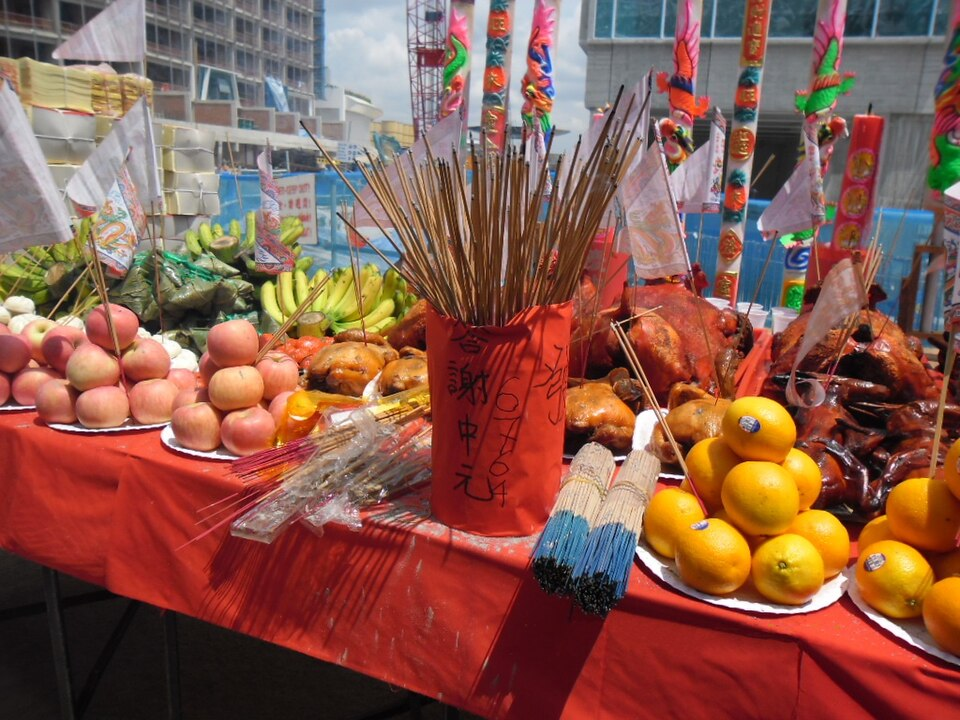
These community-led gatherings not only bring festive cheer but also offer a meaningful space for families to connect, celebrate shared heritage, and build lasting friendships abroad.

Sharing Greetings and Wishes

Photo by Ketut Subiyanto on Pexels

Social media and messaging platforms come alive with greetings, photos, and patriotic messages as Singaporeans everywhere celebrate together. From a cheerful “Happy National Day!” to snapshots of red-and-white outfits.

This year, SGWish offers an easy and heartfelt way to join in the celebrations. Add your message to a growing wall of hopes for Singapore’s future. For something a little more fun, try SGMoji, a playful avatar builder that lets you create your Singapore-inspired character. Choose from local outfits, familiar backdrops, and quirky accessories to design one that’s uniquely you. 

Cosy Up with Local Films

Photo by Ron Lach on Pexels

For many living abroad who are spending National Day cosied up at home, streaming a local film is an easy and enjoyable way to get into the spirit of the celebrations. Whether watching alone or with company, there’s plenty of Singapore-made content to choose from.

Platforms like meWATCH, Netflix, and Disney+ offer a wide range of genres, from drama and adventure to comedy, horror, and action. There’s also a strong selection of documentaries and entertainment specials that showcase local culture and stories. For younger viewers, there’s a lot to explore, too. Preschool animations, pre-teen series, and edutainment shows are great options for keeping kids engaged.

Check out: Where to Eat This SG60: Great Dining Promotions Around Town and Best Places to be at on Singapore’s National Day 2024

7 Spots to Keep the National Day Spirit Alive with the Family

Nadya Sharfina · August 12, 2025 · Leave a Comment

"August 9th may be over, but the birthday buzz is far from done. Check out these 7 places to keep the celebration going!"


August 9th may be over, but with Singapore marking its 60th birthday this year, the celebrations are still going strong. Across the island, you’ll find a great mix of family-friendly activities, exhibitions, and performances to help you soak in the National Day spirit together. Here are 7 places to check out!

1. Once Upon A Tide

Photo by nhb.gov.sg

One of the highlights during this year’s National Day celebrations is Once Upon A Tide, a special exhibition at the National Museum of Singapore. Running until 9 October 2026, this showcase dives into Singapore’s deep connection with the sea, a timely tribute as the nation marks 60 years of independence. With over 350 artefacts on display, the exhibition explores how maritime trade shaped Singapore’s early days, while also offering a peek into what lies ahead for the island nation. 

Entry to the exhibition is free, but you’ll need an admission ticket to the museum itself. Good news for Singaporeans and PRs, free tickets can be booked directly through the NMS website. For international visitors, tickets start at just $7 per person, making this a worthwhile stop for families, history lovers, and curious travellers alike.

2. Singapore Odyssea: A Journey Through Time

Photo by nhb.gov.sg

Also at the National Museum of Singapore, a new experience launches just in time for the National Day festivities. Opening on 8 August 2025, Singapore Odyssea: A Journey Through Time is a permanent exhibition that takes visitors through 700 years of the nation’s rich and evolving history. 

This interactive, multi-sensory journey brings stories to life through light, sound, and art installations. Admission is free, with additional paid activities for those who want to explore further. Open daily from 10am to 7pm.

3.  SingaPop! 60 Years of Singapore Pop Culture

This colourful, multimedia exhibition is a joyful celebration of everything that makes Singapore uniquely Singapore. From the tunes we grew up with to the fashion, food, and everyday moments that shaped the nation’s identity.

Curated through the creative lens of Dick Lee, SingaPop! 60 Years of Singapore Pop Culture at the ArtScience Museum takes visitors through five immersive chapters exploring music, film, fashion, and food. Expect to see familiar faces like Kumar and Rahimah Rahim, alongside playful nods to kopi breaks, Singlish expressions, and iconic pop culture moments that span generations.

The exhibition is held at the ArtScience Museum, with opening hours running from 10am to 7pm on Sundays through Thursdays, and extended hours until 9pm on Fridays and Saturdays. Tickets are priced from $25 for Singapore residents and from $30 for tourists.

4. The Projector

Photo by Philipp Aldrup

The Projector offers a refreshing change of pace for families. Known as Singapore’s go-to indie cinema, it features an offbeat mix of arthouse films, cult favourites, foreign-language gems, and titles you won’t find at mainstream cinemas. It also hosts themed events, comedy nights, and live music.

Since opening in 2014 on the top floor of Golden Mile Tower, The Projector has transformed a forgotten corner of the building into a creative haven. What began with just two cosy cinema halls has grown into a buzzing venue that now screens over 250 films a year, many of them indie releases, auteur retrospectives, and selections from international festivals.

This August and September, The Projector celebrates Singapore’s 60th birthday with Majulah Cinema!, a month-long tribute to local films and filmmakers. The programme features ten standout titles, handpicked and created by five acclaimed directors: Calleen Koh, He Shuming, Kirsten Tan, K. Rajagopal, and Quen Wong. Many screenings will also include director intros and intimate post-show Q&As.

The Projector is located at Golden Mile Tower. Opening hours are Monday to Thursday, 4pm to 10.30pm, and Friday to Sunday and public holidays, 1pm to 10.30pm.

5. Changi Airport and Jewel

Photo by Jewel Changi Airport

There’s plenty to see at Changi Airport and Jewel this National Day season. As part of the SG60 celebrations, the iconic Rain Vortex at Jewel will be the centrepiece of a nightly Light & Music Showcase. Watch as watercolour-style projections of Singapore’s landmarks come to life on the cascading waterfall, all set to a special SG60 edition of the beloved song Home. Shows happen at 8pm, 9pm, and 10pm daily between 2 and 31 August 2025.

The experience continues through the terminals with vibrant floral displays that bring a touch of nature into the travel hub. In Terminal 3, there’s a sprawling 270 sqm floral garden featuring rare orchid varieties. Over at Terminal 2, keep an eye out for a striking 6-metre-tall floral Merlion, carefully crafted using 60 different plant species. Right back at Jewel, more than 1,200 red and white orchids will be in bloom, including the exclusive hybrid Dendrobium Changi Airport.

Everything is free to enjoy, and the floral displays are open all day throughout August. So even if you’re not catching a flight, there’s more than enough reason to explore the airport with the family and snap a few memorable photos while you’re at it.

6. An Ode to Singapore

Photo by singaporeflyer.com

Enjoy sweeping views of the city skyline as you dine in the sky with An Ode to Singapore at the Singapore Flyer. This National Day, the iconic observation wheel sets the stage for a 90-minute five-course dinner that puts a creative twist on familiar local flavours.

Happening on 9 August from 7pm to 8.30pm, the menu features dishes like Bak Kut Teh tortellini and Wagyu steak with Har Cheong butter, served alongside a glass of premium champagne. It’s a thoughtful blend of local flair and fine dining, all set against one of the best views in town.

Priced at $600 per couple, this one-night-only experience offers parents a chance to enjoy some well-deserved time together while soaking in the SG60 spirit from above the city.

7. Singapore Symphony Orchestra National Concert

Photo by Singapore Symphony Orchestra

Held at the iconic Esplanade Concert Hall on 16 August 2025 at 7.30pm, this annual event has been delighting audiences since 2018. Honouring the pioneers of Singapore’s music scene while showcasing fresh works by today’s homegrown composers.

The evening promises a rich blend of familiar tunes, inspiring performances, and meaningful moments that highlight how far we’ve come as a nation told through music. Tickets start from just $15, making it an affordable and memorable cultural treat for the whole family.

That brings our round-up of exciting things to do with the family this National Day 2025 to a close. Pull out the red and white outfits, gather the kids, and head out to your favourite spots around the island. Whether it’s catching a dazzling light show, joining the festivities, or simply enjoying time together, it’s a wonderful way to celebrate everything we love about home. Happy National Day!

Check out: Where to Eat This SG60: Great Dining Promotions Around Town and Best Places to be at on Singapore’s National Day 2024

Timeless Storytellers: 20 Notable Writers of All Time

Nadya Sharfina · August 4, 2025 · Leave a Comment

"Some stories stay with us long after we’ve turned the last page—igniting curiosity, stirring the imagination, and reshaping how we see the world."

Some stories stay with us long after we’ve turned the last page, they spark curiosity, stir the imagination, and sometimes even shape how we understand the world. Behind those stories are the writers, and sometimes playwrights, who bring unforgettable characters to life and explore the many layers of human experience.

This article highlights 20 notable writers of all time, individuals whose work continues to resonate across generations and cultures, leaving a lasting impact on readers young and old.

1. William Shakespeare

William Shakespeare, born in 1564, was an English playwright, poet, and actor whose influence still echoes through the world of literature and theatre today. Often called the greatest writer in the English language, he created a remarkable body of work, around 39 plays, 154 sonnets, and several poems, some of which may have had other hands involved. His writing not only entertained audiences in his own time, but also set the stage (quite literally) for how modern stories are told. Shakespeare’s works have reached every corner of the globe, translated into nearly every spoken language and performed more than any other playwright’s.

What makes Shakespeare stand out isn’t just how much he wrote, but how deeply he understood human nature. He stretched the possibilities of storytelling by bringing complexity to characters, experimenting with plot structure, and blending genres in new ways. His tragedies, like Hamlet, Othello, Macbeth, and King Lear are often praised as some of the finest ever written. But his comedies and romances, such as Romeo and Juliet, A Midsummer Night’s Dream, Julius Caesar, and The Tempest, continue to captivate audiences young and old. Shakespeare shaped the very way we think about stories, emotion, and the power of language.

Check out: Book Review: Romeo & Juliet and Book Review: Macbeth.

2. George Orwell 

Best known for his allegorical novella Animal Farm and the dystopian novel Nineteen Eighty-Four, George Orwell is one of the most widely read and discussed writers of the 20th century. Do you know he was actually born Eric Arthur Blair? He later chose the pen name George Orwell, which he felt had a strong, traditional English ring to it. As a novelist, poet, essayist, journalist, and critic, Orwell used his writing to explore the political and social issues of his time with remarkable clarity and conviction.

Orwell’s style is known for being direct and thoughtful, with a deep concern for justice, fairness, and the dangers of unchecked power. His work ranged across genres: fiction, poetry, literary criticism, and polemical journalism. In non-fiction books like The Road to Wigan Pier, where he documented the harsh realities of working-class life, and Homage to Catalonia, based on his personal experience in the Spanish Civil War, Orwell brought attention to voices often ignored. His sharp social critiques and commitment to democratic values continue to make his work relevant today, especially in conversations about truth, freedom, and the role of government.

3. Albert Camus

Albert Camus was a French philosopher, author, dramatist, playwright, journalist, and political activist who left a lasting impression on both literature and modern thought. He wasn’t just a writer, he was deeply involved in the political issues of his time. Camus took a clear stance against totalitarianism, especially in opposition to Joseph Stalin and the Soviet Union. He was drawn to moral questions and aligned himself with anarcho-syndicalist ideas, often participating in groups that supported European unity and cooperation.

His major works include The Stranger, The Plague, The Myth of Sisyphus, The Fall, and The Rebel. Camus is often linked with existentialism, though he personally rejected the label. Instead, his writing helped shape the idea of absurdism, the belief that life can be without clear meaning, but still worth engaging with. In 1957, at just 44 years old, he was awarded the Nobel Prize in Literature, making him the second-youngest person to ever receive it.

4. Mark Twain

Praised as the “greatest humorist the United States has produced,” Mark Twain holds a special place in American literature. William Faulkner even referred to him as “the father of American literature,” while Ernest Hemingway famously said that “all modern American literature comes from one book called Huckleberry Finn.” Born Samuel Langhorne Clemens, he adopted the pen name Mark Twain and became known not just for his writing, but for his sharp wit and unforgettable characters.

Twain was a master of both fiction and non-fiction. His best-known novels include The Adventures of Tom Sawyer, A Connecticut Yankee in King Arthur’s Court, and Pudd’nhead Wilson. As his popularity grew, so did his presence on the public stage. He became a widely admired speaker whose humor and insight captivated audiences. Twain’s storytelling and satire won over critics and readers alike, and his circle of friends included presidents, artists, and even European royalty. His voice helped shape the tone of American writing for generations to come.

5. Ernest Hemingway

Known for his crisp, understated writing style, Ernest Miller Hemingway left a strong impression on literature and shaped the way many 20th-century writers approached storytelling. He was an adventurous figure with a blunt and outspoken personality that often made headlines. Over his career, he published seven novels, six short-story collections, and two works of non-fiction. Several of these are now considered American classics.

In 1937, Hemingway traveled to Spain to report on the Spanish Civil War, an experience that inspired his novel For Whom the Bell Tolls, which he wrote in Havana. A few years later, he reported on World War II, witnessing major events like the Normandy landings and the liberation of Paris. In 1952, he published The Old Man and the Sea, a short novel that earned widespread praise and won the Pulitzer Prize for Fiction. Two years after that, he was honored with the Nobel Prize in Literature, recognizing a body of work that continues to resonate with readers around the world.

6. Jane Austen

Her stories often explore how women navigated a world where marriage was closely tied to social standing and economic security. With a blend of wit, realism, and subtle irony, she offered thoughtful commentary on the lives of the English landed gentry at the end of the 18th century. Her writing style, marked by sharp observation and quiet humor, continues to be admired by readers and scholars alike.

Jane Austen wrote most of her major novels before the age of 22, although they weren’t published until she was 35. Sense and Sensibility, Pride and Prejudice, Mansfield Park, and Emma were all released anonymously and gained modest attention during her lifetime. After her passing, Northanger Abbey and Persuasion were published in 1817. She also began writing Sanditon, a novel that remained unfinished due to her declining health. Despite limited recognition during her life, her work has gone on to shape English literature in lasting ways.

7. Roald Dahl

Popular for his imaginative children’s literature and memorable short stories, this British author was also a poet, screenwriter, and a decorated wartime fighter ace. Roald Dahl served in the Royal Air Force during the Second World War, flying combat missions as a fighter pilot before becoming an intelligence officer and rising to the rank of acting wing commander. His writing career took off in the 1940s with works for both children and adults, and his books have gone on to sell more than 300 million copies worldwide.

Often described as one of the greatest storytellers for children of the 20th century, he created timeless classics like James and the Giant Peach, Charlie and the Chocolate Factory, Matilda, The BFG, The Witches, and Fantastic Mr Fox. For older readers, he wrote collections such as Tales of the Unexpected and The Wonderful Story of Henry Sugar and Six More. His contributions to literature earned him major recognition, including the World Fantasy Award for Life Achievement in 1983 and the British Book Awards’ Children’s Author of the Year in 1990. In 2008, The Times placed him 16th on its list of “The 50 Greatest British Writers Since 1945.

8. Franz Kafka

Born into a middle-class Jewish family in Prague—then part of the Austro-Hungarian Empire—Kafka grew up speaking both German and Yiddish. Though he trained as a lawyer and worked in legal and insurance offices, he often felt torn between his daily responsibilities and his deep desire to write. That tension between personal purpose and external expectation would later become a powerful theme in his stories.

His best-known works include The Metamorphosis, The Trial, and The Castle. These writings blend realism with the surreal, often featuring isolated characters trapped in strange, confusing systems of power. Kafka portrayal of bizarre and often frustrating bureaucracies gave rise to the term “Kafkaesque”, now used to describe situations that feel absurdly complex or nightmarishly impersonal. In his stories, the spiritual and symbolic collide with the mundane, capturing the unsettling feeling of trying to find meaning in a world that doesn’t always seem to offer clear answers.

9. Agatha Christie

Often referred to as the “Queen of Crime” or the “Queen of Mystery,” she remains one of the most celebrated writers in the mystery genre. Dame Agatha Mary Clarissa Christie, also known as Lady Mallowan, DBE, created stories that continue to intrigue readers across generations. With 66 detective novels and 14 short story collections, she introduced the world to two unforgettable fictional detectives, Hercule Poirot and Miss Marple, both of whom have become iconic figures in crime fiction.

She also wrote The Mousetrap, a murder mystery play that holds the record as the world’s longest-running theatre production. Under the pseudonym Mary Westmacott, she penned six novels that explored themes beyond mystery. In recognition of her literary achievements, she was made a Dame by Queen Elizabeth II in 1971. To this day, she remains the best-selling fiction writer of all time, with over two billion copies of her books sold worldwide. 

10. J. R. R. Tolkien

John Ronald Reuel Tolkien was an English writer and philologist who brought a deep love of language and storytelling to everything he created. He spent much of his academic life as the Merton Professor of English Language and Literature and a Fellow of Merton College, holding those roles from 1945 until his retirement in 1959. Beyond his academic career, he became best known as the author of The Hobbit and The Lord of the Rings, two high fantasy novels that introduced readers to the richly imagined world of Middle-earth.

Using his expertise in philology, Tolkien invented entire languages for the peoples of Middle-earth, including Quenya and Sindarin, drawing inspiration from real-world languages he admired. His detailed world-building and deep mythology earned him the title of the “father” of modern fantasy literature. In 1972, Tolkien was appointed a Commander of the Order of the British Empire by Queen Elizabeth II. He also shared a close friendship with fellow writer C. S. Lewis, and the two often exchanged ideas about storytelling and faith. 

11. Oscar Wilde

Regarded by many as the greatest playwright of the Victorian era, he made a lasting mark with his clever dialogue and sharp social observations. He’s best remembered for The Picture of Dorian Gray, a Gothic novel that explores beauty, morality, and consequence, as well as for his witty epigrams, popular plays, and even gentle bedtime stories for children. His writing blended charm and depth in a way that continues to resonate with readers and audiences today.

Oscar Fingal O’Fflahertie Wills Wilde was an Irish author, poet, and playwright with a remarkable gift for language. He spoke fluent French and German, and his biting wit, bold fashion, and brilliant conversation made him one of the most recognizable public figures of his time. Throughout his career, he explored many creative paths, writing plays, publishing poetry, and touring the United States and Canada to lecture on topics like art and interior design. 

12. Leo Tolstoy

Count Lev Nikolayevich Tolstoy, better known as Leo Tolstoy, was a Russian writer born into an aristocratic family. He first gained attention in his twenties with a trilogy based on his early life: Childhood, Boyhood, and Youth. His Sevastopol Sketches, drawn from his own experiences during the Crimean War, also helped establish his reputation as a serious literary voice.

Tolstoy went on to write some of the most celebrated novels in world literature, including War and Peace, Anna Karenina, and Resurrection. His talent extended to short stories like “Alyosha the Pot” and “After the Ball,” and novellas such as Family Happiness, The Death of Ivan Ilyich, and The Kreutzer Sonata. He also explored philosophical, moral, and religious questions in his plays and essays. Though he was nominated multiple times for both the Nobel Prize in Literature and the Nobel Peace Prize, he never received either, something that continues to be one of the most talked-about omissions in Nobel history.

13. Virginia Woolf

A groundbreaking voice in modern literature, Virginia Woolf helped pioneer the use of stream of consciousness narration, a style that gives readers direct access to a character’s thoughts and feelings. Her novels, including Mrs Dalloway, To the Lighthouse, and Orlando, explore time, memory, identity, and society in fresh and creative ways. She also made a lasting contribution to feminist thought with her well-known essay A Room of One’s Own, which argues for women’s independence and creative freedom.

Her work became central to feminist criticism in the 1970s and continues to resonate around the world, with translations in over 50 languages. Today, her legacy is kept alive through academic study, cultural portrayals, and numerous tributes, including societies, memorials, and buildings at universities named in her honor.

14. Arthur Conan Doyle

Often referred to as “Sir Arthur Conan Doyle” or simply “Conan Doyle,” he is best known for bringing the legendary detective Sherlock Holmes to life. He studied medicine at the University of Edinburgh Medical School between 1876 and 1881, and also took practical botany classes at the Royal Botanic Garden in Edinburgh. While still a student, he began writing fiction. One of his earliest known stories, The Haunted Grange of Goresthorpe, was submitted to Blackwood’s Magazine but was not accepted for publication.

In 1887, he introduced Sherlock Holmes and Dr. Watson in A Study in Scarlet, the beginning of a series that would shape crime fiction for generations. Over time, he wrote four Holmes novels and fifty-six short stories featuring the famous detective. Doyle was a prolific author whose works included science fiction adventures starring Professor Challenger, humorous tales about Brigadier Gerard, as well as plays, romances, poetry, non-fiction, and historical novels. 

15. Fyodor Dostoevsky 

Fyodor Dostoevsky was a Russian novelist, short story writer, essayist, and journalist whose work continues to resonate with readers around the world. His most widely read novels, Crime and Punishment, The Idiot, Demons, and The Brothers Karamazov offer powerful portraits of characters grappling with guilt, faith, justice, and the search for meaning. These emotionally layered stories are just as compelling for their psychological depth as they are for their unforgettable narratives.

His writing delves into the complexities of human behavior, often set against the backdrop of 19th-century Russia’s shifting political, social, and spiritual landscape. Dostoevsky explored themes like morality, free will, and existential doubt in ways that still strike a chord today. His stories continue to invite reflection, offering readers a chance to look inward while also navigating the rich, often turbulent worlds he created.

16. Charles Dickens

His works like A Tale of Two Cities, Great Expectations, and Oliver Twist introduced some of the most memorable fictional characters in literature and continue to be loved by readers of all ages. Charles Dickens, an English novelist, journalist, short story writer, and social critic, had a remarkable ability to blend gripping storytelling with a deep look at the social issues of Victorian England.

Regarded by many as the greatest novelist of the Victorian era, Dickens’s writing enjoyed massive popularity during his lifetime and has only grown in stature since. By the 20th century, critics and scholars recognized him as a literary genius, and today his novels and stories are still widely read, taught, and adapted around the world.

17. Edgar Allan Poe

Famous for his eerie tales and haunting poetry, he was the first well-recognized American writer to earn a living solely through writing, a path that led to a financially difficult life. Edgar Allan Poe worked as a writer, poet, editor, and literary critic. He gained lasting attention for his short stories and poems that explore themes of mystery, death, and the macabre, drawing readers into deeply atmospheric and emotionally intense worlds.

As one of the central figures of Romanticism and Gothic fiction in early American literature, Poe played a major role in shaping the genre. His stories include The Black Cat, Berenice, The Balloon Hoax, The Angel of the Odd, The Assignation (The Visionary), and The Narrative of Arthur Gordon Pym of Nantucket. Since his death, his influence has lived on through countless references in art, music, literature, film, and television. 

18. Gabriel García Márquez

Celebrated Colombian novelist Gabriel García Márquez, affectionately known as Gabo or Gabito throughout Latin America, was also a short-story writer, screenwriter, and journalist. His storytelling wove together the magical and the real, creating unforgettable narratives that touched on love, memory, and the complexities of human nature. Readers around the world have been drawn to his distinctive voice and imaginative style, which brought new life to Latin American literature.

Widely regarded as one of the most significant authors of the 20th century, Márquez was awarded the Nobel Prize in Literature in 1982. His most famous books include One Hundred Years of Solitude, Love in the Time of Cholera, In Evil Hour, and The Autumn of the Patriarch. 

19. F. Scott Fitzgerald

He’s best known for The Great Gatsby, a novel that explores themes like decadence, idealism, and social change during the Roaring Twenties. Through his writing, Fitzgerald painted a vibrant portrait of an era filled with jazz, glamour, and the pursuit of dreams.

In addition to The Great Gatsby, his other novels like Tender Is the Night and The Beautiful and Damned reflect similar themes with beautifully crafted prose. He also wrote many short stories for widely read magazines such as The Saturday Evening Post, Collier’s Weekly, and Esquire. Known for his sharp wit, quick intelligence, and the ability to make language shimmer with feeling, Fitzgerald is widely regarded as one of the greatest American writers of the 20th century.

20. C.S. Lewis

C.S. Lewis, whose full name was Clive Staples Lewis, was a British writer, literary scholar, and Anglican lay theologian with an incredible range. Many families know him as the beloved author of The Chronicles of Narnia, a magical series that has delighted readers of all ages for decades. He also wrote The Screwtape Letters and The Space Trilogy, blending fiction with deep ideas about faith, humanity, and morality in unique and thought-provoking ways.

In total, Lewis wrote over 30 books that have reached millions of readers in more than 30 languages. His works, especially The Chronicles of Narnia, have become household favorites and have been adapted into plays, TV series, and films. Outside of his fiction, Lewis’s Christian writings like Mere Christianity, Miracles, and The Problem of Pain continue to be widely read and quoted by scholars across many Christian traditions. His ability to explore complex ideas in such an accessible and imaginative way has made his writing last through generations.

Check out: 10 Essential Books for Teens: Boosting English Skills & Building Character

Top 10 Unusual University Degrees That Actually Lead to Real Careers

Nadya Sharfina · July 31, 2025 · Leave a Comment

"Top universities are offering degrees you’ve never heard of, for industries that are just beginning to take shape."

As parents explore higher education options, it’s natural to focus on familiar subjects like engineering, medicine, law, or business. These fields have long been seen as dependable choices and for good reason. Beyond these traditional paths, there’s a whole world of unusual and fascinating degrees offered by top universities around the globe.

Some of these programs might sound surprising at first—perhaps even a little unconventional. You may find yourself wondering, Can someone really build a career with that? The answer is yes. These degrees are carefully designed, academically rigorous, and connected to growing industries and cultural sectors.

1. Manga Studies

Photo by Samuel Regan-Asante on Unsplash

If your teen spends hours immersed in One Piece, gets emotional over Attack on Titan, or knows every scene from One Punch Man and Death Note by heart, they might be thrilled to discover that there’s an actual university degree tailored to their passion. Welcome to the fascinating world of Manga Studies.

Offered at Kyoto Seika University in Japan, the only university with a dedicated Faculty of Manga, this program allows students to explore manga not just as entertainment, but as a serious art form and cultural force. The curriculum includes five distinct areas of focus: Cartoon Art, Comic Art, New Generation Manga, Character Design, and Animation. It’s more than drawing and storytelling; students also dive into the cultural, historical, and artistic roots of manga as a major part of Japanese and global pop culture. Courses are taught by experienced professionals, including renowned manga artists, illustrators, and animation directors.

Graduates of the program go on to pursue careers in manga creation, publishing, animation, and even academia, contributing to cultural studies and research related to manga and visual storytelling. For students with a deep love for manga and a creative spark, this could be a truly fulfilling path.

2. Bicycle Design and Fabrication

Photo by cottonbro studio on Pexels

For students who love working with their hands, enjoy biking, or have an eye for design and mechanics, the Bicycle Design and Fabrication program at Minnesota State College Southeast offers a refreshingly hands-on alternative to a traditional classroom path.

This two-year associate of applied science degree gives students the opportunity to actually design and build a fully customized bicycle. Along the way, they gain practical experience in metal fabrication, 3D printing, and mechanical design. Lab-based courses include welding, prototyping, computer-aided drawing and design (CAD), and computer-aided manufacturing and machining (CAM). The program blends creativity, technical skills, and problem-solving into a highly specialized craft.

Graduates often pursue careers in the bicycle industry, but the skills they develop open doors in other areas as well, including fabrication, mechanical design, manufacturing, and engineering technology. 

3. Bakery Science

Photo by Flo Maderebner on Pexels

At Kansas State University, students can pursue a unique path that blends science, creativity, and hands-on experience. As the only university in the U.S. offering a four-year bachelor’s degree in Bakery Science and Management, it provides a rare opportunity to turn a passion for baking into a professional career.

The program begins with a strong foundation in baking principles, then allows students to choose one of two specialized tracks by their second year: cereal chemistry, which explores the science behind ingredients and formulations, or production management, which focuses on running large-scale baking operations efficiently and safely.

State-of-the-art labs support learning in real-world environments. These include a pilot-scale bakery, a fully operational flour mill, and a food extrusion lab, all designed to prepare students with practical skills and industry-level experience.

Graduates are equipped to step into roles in commercial bakeries, product development, quality testing labs, and food service operations. This degree offers a direct route into a field that combines food science, manufacturing, and innovation.

4. Egyptology and Assyriology

Photo by Rachel Claire on Pexels

Some young people dream of unearthing lost civilizations, studying ancient scripts, or working on archaeological digs. If that sounds familiar, Brown University offers a unique academic path through its Department of Egyptology and Assyriology, one of the few in the country with this level of specialization.

The program offers two distinct tracks: Egyptology, which focuses on the history, language, and culture of ancient Egypt, and Assyriology, which centers on ancient Mesopotamia, including regions like Assyria and Babylonia. Both tracks offer a deep dive into civilizations that laid the foundations for law, literature, architecture, and religion as we know them today.

Each student in the program completes at least ten courses that explore the complexities of these ancient societies. Egyptology classes cover topics such as ancient Egyptian history, archaeology, temples, and tombs. The Assyriology track includes courses in the history and culture of Mesopotamia, ancient scholarly traditions, and the archaeology of surrounding regions.This field can lead to careers in archaeology, anthropology, museums, academia, and cultural preservation.

5. Viking and Medieval Norse Studies

Photo by Pixabay on Pexels

For those drawn to stories of longships, ancient sagas, and the dramatic landscapes of Scandinavia, Viking and Medieval Norse Studies opens the door to a truly immersive academic experience. Graduates of this program often pursue careers as museum curators, cultural historians, or tour guides, sharing their knowledge of the Viking Age and medieval Scandinavia with the wider world.

At the University of Oslo in Norway, students explore this rich and adventurous past through a unique program that combines historical research with cultural studies. Coursework focuses on early Norse literature, mythology, medieval texts, and the societal structures of the time. It’s a chance to engage with primary sources and examine how this distinct culture shaped European history.

6. Theme Park Engineering

Photo by Min An on Pexels

Behind every thrilling roller coaster and immersive attraction is a team of engineers who bring creativity and precision together. At California State University, Long Beach (CSULB), students can explore this world through a Bachelor of Science in Amusement Park Engineering, a program that focuses on designing and building the rides that define the theme park experience.

The curriculum blends technical knowledge with imaginative thinking. Courses cover topics like ride dynamics, safety systems, physics, and mechanical design, along with hands-on projects where students can prototype and test their own ideas. 

Graduates of the program often go on to work as ride design engineers, safety inspectors, or project managers within the amusement park industry. 

7. Foresight

Photo by Ann H on Pexels

Ever wondered who helps businesses or governments prepare for what’s coming next? The ability to anticipate change and plan ahead isn’t just a skill, it’s a field of study. At the University of Houston, students can earn a Master of Science in Foresight, learning how to analyze trends, explore possibilities, and help organizations prepare for an uncertain world.

This graduate program focuses on future thinking, training students to look ahead and recognize what might be needed five, ten, or even fifty years down the road. Courses cover a wide range of topics, including futures research, world futures, systems thinking, social change, and advanced strategy for planning. The curriculum offers both a theoretical and applied understanding of how change happens and how to respond to it.

The program is offered entirely online and can be completed in one year full-time or three to five years part-time. Graduates often move into careers in strategic planning, innovation consulting, policy development, and forecasting roles across public, private, and nonprofit sectors.

8. Bagpiping 

Photo by Wender Junior Souza Vieira on Pexels

Known for its powerful, unmistakable sound, the bagpipe is a traditional Scottish instrument with a deep cultural legacy. At Carnegie Mellon University, students can pursue a unique degree in Bagpiping that combines musical instruction with an appreciation of the instrument’s heritage.

The program includes training in performance techniques, music theory, and ensemble participation. Practice takes place in specially designed soundproof studios, allowing students to focus fully on their craft without impacting others on campus.

Outside the classroom, students take part in public performances and competitions, some attracting large audiences. These opportunities help sharpen technical skills while also building stage presence and confidence.

Graduates often go on to perform professionally or teach music, carrying forward the tradition of bagpiping in meaningful and modern ways.

9. Adventure Education

Photo by Davyd Bortnik on Pexels

At Plymouth State University (PSU) in New Hampshire, the Bachelor of Science in Adventure Education program offers a unique opportunity to turn a passion for the outdoors into a purposeful degree. This hands-on program combines physical challenge, experiential learning, and leadership development.

Courses include a wide range of outdoor skills such as rock climbing, wilderness survival, canoeing, backpacking, and mountaineering. The experience is immersive, designed to foster confidence, adaptability, and strong teamwork in dynamic natural settings.

Ideal for those who enjoy being in nature and sharing that experience with others, the program helps students develop leadership abilities, guide groups through challenges, and gain practical knowledge that can be applied in many professional settings.


Graduates are well prepared for careers in outdoor education, adventure tourism, recreational therapy, and environmental education.

10. Puppet Arts

Photo by Bengi Su on Pexels

Graduates of puppet arts programs often find careers in theater companies, television and film, or education, where they use creativity and craftsmanship to tell engaging stories. Some go on to design and build puppets for stage productions or work on well-known entertainment projects, blending performance with visual artistry.

Since 1964, the University of Connecticut (UConn) has been at the forefront of puppetry education, offering one of the most comprehensive programs in the country. As one of only three U.S. universities to offer a Bachelor of Fine Arts (BFA) in Puppet Arts, UConn also provides master’s degree options for students looking to advance even further.

The program gives students hands-on experience in puppetry techniques, design, and production, with classes beginning as early as their first semester. About two-thirds of their coursework is focused on puppet arts, including theater production, puppet construction, and performance skills.

For parents looking to explore educational options for passionate kids, be sure to check out ‘5 Educational Courses for Kids in the Holidays’ and ‘6 Fun Holiday Camps for Teens in Singapore’

Where to Eat This SG60: Great Dining Promotions Around Town

Nadya Sharfina · July 28, 2025 · Leave a Comment

"Celebrate SG60 with a feast—Singapore’s vibrant food scene is serving up something special!"

This SG60 season is a great opportunity to enjoy the island’s vibrant food scene. With restaurants offering special menus and promotions to celebrate Singapore’s 60th birthday, it’s the perfect time to plan a family meal out and enjoy the variety of flavours that reflect our rich food heritage.

To mark the occasion, many places are adding thoughtful twists to their menus, and we’ve rounded up the ones that are especially great for families. Here’s our list of SG60 dining promotions to keep on your radar.

1. Yakiniku-GO x LG Han Collab

Photo by hougangmall.com.sg

If you’re a fan of delicious grilled meats without the smoke and hassle, Yakiniku-GO has something special lined up! They’ve joined forces with acclaimed chef LG Han to bring a local twist to their menu in celebration of SG60. This exclusive collaboration includes a range of mouthwatering sets like the satay beef kushi, satay chicken kushi, and satay pork kushi. You’ll also find sambal onigiri and a comforting Hainanese pork curry set that’s great for sharing with the family. 

The limited-time menu is available at all Yakiniku-GO outlets, including easy-to-access locations like Suntec City and Jem. Be sure to catch the promotion before it ends on 10 August 2025.

2. Keyaki 

Photo by Keyaki

Keyaki is a top pick for families looking to enjoy authentic Japanese cuisine this SG60 season. Located at 7 Raffles Boulevard, level 4 of Marina Square, this refined restaurant offers a wide selection of favourites, including fresh sashimi, sizzling teppanyaki, comforting sukiyaki, and more. Its peaceful setting, complete with a Japanese garden and koi pond, creates a calm and elegant dining experience that feels a world away from the city bustle.

Open daily for lunch (11:30 am–2:30 pm) and dinner (6:00 pm–10:30 pm), Keyaki is a great choice for a relaxed midday meal or a leisurely evening with family.

3. Yum Cha

Photo by Yum Cha

Yum Cha has been a go-to spot for dim sum lovers since it first opened in the heart of Chinatown, and this SG60 season, they’re adding a fun local twist to their offerings. Their special menu includes creative bites like otak-otak siew mai, prata pork pancake, and kaya bolo bao.

You’ll find Yum Cha at several locations, including the original Chinatown branch and Changi Business Park. Opening hours vary by outlet, so a quick check before your visit is a good idea. The SG60 promotion runs until 31 August 2025, giving families plenty of time to drop by and enjoy these locally inspired treats.

4. Marrybrown

Photo by klook.com

If your family’s headed to Sentosa this SG60 season, make a stop at Marrybrown for a satisfying and fuss-free meal. This halal fast food chain from Malaysia has just one outlet in Singapore, located at 43 Siloso Beach Walk #01-03, iFly. From June 1 to August 31, 2025, they’re serving up familiar comfort food that’s great for a casual family outing by the beach.

On the menu, you’ll find crispy fried chicken burgers, chicken meals paired with creamy coleslaw and mashed potatoes, and hearty nasi bowls topped with rich kari sauce. It’s a simple, flavourful selection that works well for both adults and little ones. 

5. Summer Pavillion

Photo by Summer Pavilion

Known for its modern Cantonese cuisine, this Michelin-starred restaurant, now in its eighth consecutive year of recognition, is hosting a limited-time celebration menu from 4 to 10 August 2025. Tucked away on Level 3 of the hotel, the setting is elegant yet welcoming, ideal for marking a special occasion with loved ones.

Chef Cheung Siu Kong has crafted a six-course National Day set lunch and dinner menu that blends traditional Cantonese techniques with familiar local touches. Highlights include dishes like pan-fried oyster with shrimp paste sauce, baked Canadian lobster in Singapore chilli sauce, and a refreshing chilled glutinous rice cake to round off the meal with service available daily for lunch (11:30 a.m. to 2:30 p.m.) and dinner (6:30 pm to 10:30 pm).

6. White Rose Café

Photo by White Rose Café

White Rose Café at York Hotel Singapore is offering a delicious SG60 treat that families won’t want to miss. Available from June 1 to July 31, 2025, this special promotion features a thoughtfully curated menu celebrating iconic local flavours. Highlights include Crispy Oyster Omelette and Braised Hokkien Mee, along with comforting dishes like Braised Pork Cartilage, Har Cheong Gai, and Sago Gula Melaka.

Tucked away at 21 Mount Elizabeth, White Rose Café is a cosy spot for all-occasion dining, whether you’re planning a family lunch or a relaxed dinner. Open daily from 11 am to 11 pm, it’s a convenient and welcoming option for parents looking to enjoy familiar flavours in a calm and comfortable setting.

7. Edge

Photo by Edge

If you’re looking for a buffet experience that offers something for everyone this SG60 season, this spot at 7 Raffles Boulevard in Marina Square is well worth a visit. Known for its generous spread, the buffet showcases authentic local dishes alongside favourites from around the region and the Pacific Rim. There’s a wide variety of comforting classics and seasonal highlights to try, and if you’d like a preview, the full menu is available on their website.

What makes it especially family-friendly is the thoughtful setup for kids. A dedicated play area filled with toys and games gives children a space to have fun, while the kids’ buffet offers a variety of tasty and nutritious options tailored to younger palates. Parents can enjoy their meal knowing the little ones are happily entertained nearby.

8. Quenino

Photo by Quenino

There’s something exciting happening at Artyzen Singapore as part of the SG60 celebrations. The Heart of SG60 is a culinary series running through October 2025, featuring collaborations with well-known chefs to explore local tastes in a fresh way. The menu includes creative dishes like taro pork belly buns, kaya mille-feuille, and uniquely crafted cocktails that draw inspiration from Singapore’s heritage neighbourhoods.

Available Tuesday to Saturday, the menu is served during lunch (12:00 pm to 3:00 pm, last seating 2:00 pm) and dinner (6:00 pm to 11:00 pm, last seating 8:15 pm). It’s a great option for families looking to try something new while still enjoying the comfort of familiar flavours in a warm and stylish space.

9. Bedrock Bar & Grill

Photo by Bedrock Bar & Grill

If you’re planning a family outing or a relaxed get-together with friends this SG60, Bedrock Bar & Grill at Oasia Resort Sentosa has just the thing.

On National Day weekend (9 and 10 August), head over for The Harvest Table brunch, running from 12pm to 3.30pm. Priced at $60++ per adult (U.P. $78++), this hearty spread features unlimited servings of Kombu Cured Tomahawk, the Chef’s Seafood Selection, and a variety of satisfying brunch classics. It’s a great pick for families too—children aged 7 to 12 dine for just $28++, while those 6 and under eat free.

If you’re hosting at home or planning a special dinner, Bedrock’s large-format cuts make the perfect centrepiece. From 1 to 30 August, enjoy $60 off your choice of premium sharing steak: the Double Cut Dry-Aged Porterhouse (1kg, U.P. $228) or the Woodfire Grilled Kombu Cured OP Ribeye (1kg, U.P. $238). 

10. SARAI

Photo by SARAI

Take a midweek break from the usual lunch spots and head to SARAI at Tanglin Mall, where you and a dining buddy can enjoy a Thai buffet for two at just $60++ (U.P. $78++). Their SG60 Special features a curated menu of unlimited à la carte dishes, from aromatic curries to refreshing Thai salads and signature stir-fries.

The promotion runs every Monday to Wednesday until 15 August and is available with the purchase of any bottled drink (excludes still/sparkling water and free-flow options). Just be sure to reserve ahead, tables can accommodate between 2 and 10 diners.

11. New Ubin Seafood

Photo by New Ubin Seafood

From 21 July to 17 August 2025, New Ubin Seafood at CHIJMES is serving up a special heritage menu that pays tribute to the bold, comforting flavours that generations of Singaporeans have grown up with.

Expect a nostalgic spread of local favourites. Think smoky BBQ Sambal Stingray, the ever-popular Singapore Signature Chilli Crab, rich and satisfying Hokkien Mee Special, and crispy Har Cheong Kai (Prawn Paste Chicken). Even better, Citibank cardmembers enjoy extra perks during the promotion period: 20% off weekday lunches (Monday–Thursday) and 10% off dinner on Thursdays and all day Friday to Sunday. Plus, cardholders can unlock up to three exclusive flash deal items per table.

12. Peach Garden

Photo by Peach Garden

Sometimes SG60 calls for more than hawker fare and that’s where Peach Garden comes in. Their 10-course Dinner Tasting Menu at OCBC Centre is a beautifully crafted experience, featuring individual portions of beloved Chinese classics served with a modern touch.

The tasting menu features favourites like Crispy Eggplant with Pork Floss, Roasted Crispy Pork Cube, Steamed Sea Perch with Preserved Cabbage, and Sauteed Asparagus with Mushroom and Garlic, rounded off with a classic Chinese Pancake and more. Each guest also enjoys a complimentary glass of Moutai, wine, beer, or juice to toast the occasion. 

Do take note: the price is $60++ per person (minimum two diners), but will be $70++ on 14 and 15 June 2025. 

13. Tempura Ensei

Photo by Tempura Ensei

Tempura Ensei at Palais Renaissance is offering a refined Japanese dining experience this SG60 season. From 1 to 22 August 2025, enjoy the Lunch En Menu at a special rate of S$88 (U.P. S$128). This elegant set includes eight pieces of expertly prepared tempura, your choice of tendon or tencha, and a delicate dessert.

Come evening, the indulgence continues. Order two Omakase menus (S$288 each) and enjoy 50% off selected wine and sake bottles, including exclusive labels curated by the restaurant’s certified sake sommelier. 

14. GU:UM

Photo by GU:UM

At 29 Keong Saik Road, this modern Korean steakhouse, is putting a creative spin on local favourites with a limited-time menu available from 8 July to 31 August 2025. This special lineup brings together well-loved Singaporean dishes and bold Korean flavours.

Highlights include the Gochujang Soft Shell Chili Crab, a fiery twist on the national classic; Dalkochi Satay, charcoal-grilled chicken skewers with that familiar smoky finish; and Mandu Wings, crisp chicken wings stuffed with dumplings and paired with a punchy mala tomato dip. Each dish is thoughtfully crafted to offer something new while keeping those comforting local roots.

15. SOUP Restaurant

Photo by Soup Restaurant

Soup Restaurant is bringing classic comfort food to the table with a deal that’s perfect for families. From now until 10 August 2025, diners enjoy 60% off on a selection of crowd favourites, including the Samsui Ginger Chicken, Traditional Boiled Soup of the Day, Honey Truffle Pork Chop, and Tofu Prawn. To unlock the promotion, there’s a minimum spend of S$30 on weekdays, and S$60–S$80 on weekends, depending on the outlet. It’s valid for dine-in only and not available at the Paragon location.

Looking for even more places to try? Don’t miss our other family-friendly restaurant picks: 10 Best Restaurants in Singapore to Celebrate Father’s Day, Best Restaurants with Play Areas in Singapore and 10 Public Libraries and Book Cafes in Singapore

Celebrating Racial Harmony Day: A Day of Unity and Culture

Nadya Sharfina · July 25, 2025 · Leave a Comment

"Every 21 July, students across Singapore honour the cultures that shape us, and the shared history that binds us."


Racial Harmony Day is more than just dressing up or joining in activities, it’s a reminder of how far we’ve come as a community, and how much we can continue to learn by appreciating the people around us. Every year on 21 July, students across Singapore take time to reflect on our shared history and celebrate the cultures that shape our lives.

Through conversations, games, performances, and traditional dress, this day creates a space where students can connect, express themselves, and better understand what makes each culture unique. Let’s take a closer look at how we celebrate.

Celebrating Culture Through Traditional Dress

Photo by RDNE Stock project on Pexels

One fun and meaningful part of Racial Harmony Day is dressing up in ethnic costumes. On this day, students get a chance to wear traditional outfits that represent different cultures. It’s a way to show appreciation for the people around us and the diverse backgrounds that make up our school community.

You’ll see students in Cheongsams, Baju Kurung or Baju Melayu, and Sarees, Kurtas or Dhotis. Some students also wear Japanese Yukatas or Peranakan Kebayas, proudly representing their heritage. These traditional outfits highlight Singapore’s cultural blend and give everyone a chance to learn more about one another.

Wearing these costumes brings people together. When students take the time to understand the meaning behind what their friends are wearing, it encourages respect and conversations that help build stronger connections.

The sight of students walking around in their colourful outfits makes the whole day feel special. With bright fabrics, unique patterns, and beautiful designs, the school becomes a vibrant display of culture and unity. It’s a moment where everyone shines in their own way, while still coming together as one community.

What We Talk About in Class

Photo by ABHIJITH TS on Pexels

Racial Harmony Day isn’t just about what we wear. What happens in the classroom also makes the day meaningful. During class, teachers often guide thoughtful conversations about why this day matters. It’s a chance for students to reflect, ask questions, and speak openly in a respectful space.

One of the topics students explore is what happened on 21 July 1964, a day marked by racial riots in Singapore. The violence resulted in the loss of lives and left many people hurt. Learning about this part of our history helps us understand why harmony is something we must actively care for and protect.

By looking back at how far we’ve come, students can see how peace, trust, and cooperation have been built over time. These classroom discussions help remind us that every act of understanding, no matter how small, can help strengthen the community we’re part of.

Let the Fun Begin!

Photo by RDNE Stock project on Pexels

What’s a celebration without some fun and games? On Racial Harmony Day, students take part in a variety of activities that are not only exciting, but also meaningful. These games are a great way to learn more about different cultures while having fun with friends.

Some of the traditional games include five stones, hopscotch, Chapteh, bola tins, and drawing kolams. These were commonly played in Singapore’s earlier days, often in shared spaces like void decks or playgrounds. Each one has a unique story and gives us a glimpse into how friendships were formed in the past.

Modern twists have also been added to keep things fresh, like Instagram challenges where students record ten-second messages to show appreciation for another culture. The ethnic costume competition is another favourite, where students proudly showcase their outfits and heritage with confidence and style. These games and activities are a fun way to connect, reflect, and celebrate the stories that shape who we are. 

Harmony Is Best Shared

Photo by Yan Krukau on Pexels

Living in Singapore means being part of a vibrant mix of cultures, races, and religions. Every day, we meet people who may have different traditions, speak different languages, or celebrate different holidays and that’s something to value.

Racial Harmony Day reminds us that understanding one another’s experiences brings us closer. As we learn more about the customs and beliefs of our classmates, we begin to notice how much we actually have in common. That builds respect and opens the door to real connection.

These moments of learning and acceptance help friendships grow. Over time, they shape the kind of environment we want in our schools and in our country, one where everyone feels safe, welcomed, and included. Harmony doesn’t grow on its own, it grows when we share it.

Upcoming Racial Harmony Day Events (2025)

Photo by Justin Lim on Pexels

Racial Harmony Day in 2025 will feature a variety of events designed to bring people together through shared experiences and cultural appreciation. These activities create opportunities for students to learn, participate, and celebrate the diversity that makes our community special. With performances, games, exhibitions, and more, this year’s line-up has something for everyone to enjoy.

Saturday, 26 July

Marymount Cultural and Dance Festival

  • Bishan Active Park, Bishan St 23
  • 6.30 pm to 9.30 pm
  • Free admission

Toa Payoh Central Racial Harmony Celebrations

  • Toa Payoh Central Community Centre, Level 2 Multipurpose Hall
  • 3 pm to 6 pm
  • SG$3 per person

Sunday, 27 July

Ang Mo Kio–Hougang–Jalan Kayu Harmony Walk

  • Ci Yuan Community Centre
  • 7.30 am to 9.30 am
  • SG$2 per person

A Youth Intercultural Showcase: Kaleidoscope Harmony In Motion

  • Singapore Chinese Cultural Centre
  • 5.30 pm to 10.15 pm
  • SG$20 per person

Youth Innovation in Action: Meet Singapore’s Young Changemakers

Nadya Sharfina · July 18, 2025 · Leave a Comment

"Some of the most meaningful innovations start with a school project and a big question: how can we make life better?"

Innovation isn’t just happening in labs or boardrooms, it’s taking shape in classrooms, school projects, and even after-school conversations. Across Singapore, children and teenagers have been coming up with creative ways to tackle real challenges.

Some have built tools to make daily life more inclusive, while others have designed tech that helps their peers better understand one another. These ideas may start small, but they’re thoughtful, practical, and often deeply rooted in personal experience.

1. Turning Bullying Into a Learning Game

Photo by STEMIE Advantages

When Joeson Toh was in Primary 3, he witnessed a moment that stayed with him: a smaller-sized student being pushed around by someone much bigger. He didn’t step in at the time, but the memory stayed. Having gone through bullying himself, Joeson understood how deeply it could affect someone. He didn’t just want to forget it. He wanted to act.

As he got older, he began to notice that bullying wasn’t always loud or obvious. Sometimes it happened with words, other times online, where it was harder to see but just as harmful. It could affect how they saw themselves. That idea led him to build something meaningful. 

He created a game called Kai Wins, an interactive experience designed to help students better understand the emotional impact of bullying. Through storytelling and gameplay, the game encourages players to think about what others may be going through. Joeson used Scratch, a free coding platform, to build it from the ground up. The process was tough, and at one point, he almost gave up. However, encouragement from teachers and mentors helped him push through the challenges.

He kept improving the prototype and testing different features and ideas. That persistence was recognised at the 2023 Pratt & Whitney Singapore Invention Convention (PWSIC), where Joeson received the Dare to Invent Award. The award recognises a student who takes on a tough issue with courage and thoughtful problem-solving.

Held over two days in November 2023, the convention brought together more than 240 student inventors from Singapore, Indonesia, and the Philippines, each presenting solutions to real-world problems. 

For more insight on bullying, check out this article: Steps to Take If Your Child Is the Bully. 

2. Smart Glasses That Help People Hear With Their Eyes

Photo by news.samsung.com

At the 2024 Samsung Solve for Tomorrow competition, a pair of students from Anglo-Chinese School came away as the grand winners with an idea that could make a real impact for people with hearing loss. Their invention, called SilentGuide, is a pair of smart glasses that transcribes spoken words into subtitles in real time.

Designed by Aiden Lim and Karan Gopu Pillai, the glasses were built to support individuals with hearing difficulties by helping them better follow conversations in everyday settings. With SilentGuide, users don’t need an internet connection. Spoken words are picked up through a tiny I2S microphone, which sends the audio to a Raspberry Pi 4 tucked into the device. The system processes everything on the spot and displays the subtitles on a small OLED screen built right into the glasses.

This practical and accessible approach means the device could be useful in a wide range of situations from chatting with friends to navigating public spaces. With around 500,000 people in Singapore living with some form of hearing loss, the potential reach of the invention is significant.

Their team, named RedBlueGold, received $7,000 in cash and $10,000 worth of Samsung products to continue developing the idea and bring it closer to real-world use. The judges were impressed not only by the technical skill behind the project but by the thought the team put into how it could meet a real social need.

The Samsung Solve for Tomorrow competition is designed to give secondary school students a platform to share ideas and use technology to improve everyday life. Aiden and Karan’s project stood out because it tackled a challenge that often goes unseen and they found a creative way to make communication a little easier for those who need support hearing.

3. Smarter Traffic Lights, Kinder Streets

Photo by Shintaro Tay

For many of us, crossing the road is a quick, automatic act, but for someone using a wheelchair or walking aid, even a green light might not feel like enough time. That’s exactly what caught the attention of three students from the Institute of Technical Education’s School of Electronics & Info-Comm Technology. After seeing how older pedestrians and people with mobility challenges often struggle to tap the Green Man+ reader or complete their crossings before the light changes, they decided to rethink how our traffic lights could better support everyone.

Calling themselves Team Mobility, the students came up with a thoughtful AI-powered upgrade to Singapore’s pedestrian crossing system. Their idea: use a smart camera installed on traffic lights to detect when someone is using a wheelchair, walking aid, or blind aid. When spotted, the system automatically extends the green man time, giving pedestrians more room to cross safely and calmly. For those with visual impairments, the light will also activate its audio signal. If someone is still mid-crossing when the timer runs out, it extends again.

What sets this apart is that the system works in real time. The camera recognises specific mobility aids using Huawei’s ModelArts AI platform, which has been trained to identify these objects and respond instantly. There’s no need to fumble with a card reader, the system is built to observe, understand, and respond quietly in the background.

In October 2023, this project won first prize and S$15,000 at the Tech4City competition organised by Huawei International, along with an extra S$3,000 for best innovation in mobility, sponsored by SBS Transit. More than the awards, the students hope their idea encourages people to show more patience and care. As they observed, reactions from drivers can sometimes be less than polite when delays happen, so their project also serves as a reminder that small delays can mean a great deal to someone who simply needs a little more time.

4. Hwa Chong Students Shine in Engineering Innovation Challenge

Photo by hci.edu.sg

On 26 August 2023, students from Hwa Chong Institution (HCI) swept the top three prizes at the Engineering Innovation Challenge (EIC), a national competition that drew 137 teams, including participants from overseas. The event, themed “Shaping a Circular Economy through Engineering,” challenged students to design prototypes that could help cities like Singapore become more resilient and sustainable.

The first prize went to Team J-17, whose project focused on rethinking pharmaceutical packaging. Their idea? Turn food waste into starch-based biodegradable plastic, an eco-friendly alternative to conventional packaging used in medicine. It was a clever blend of science and sustainability, showing how engineering can help reduce waste in ways that are both practical and meaningful.

Second place went to Team J-19, who studied how wave attenuation devices could be used to manage coastal erosion, an increasingly relevant concern for island nations like Singapore. Meanwhile, Team J-18 earned third place with BotaniCube, a prototype that explored urban farming systems for city spaces.

The awards were presented by Deputy Prime Minister Heng Swee Keat, who recognised the creativity and hands-on thinking demonstrated by the young teams. For the students, the experience went far beyond competition. One team shared that working with bioplastics taught them how even simple materials can be part of bigger solutions, a reminder that fresh thinking often starts with everyday things.

5. A Vending Machine That Makes Recycling Fun for Kids

Photo by newfortunetimes.com

Recycling might not sound like the most exciting activity to a five-year-old, unless it comes with a bunny-shaped vending machine and snacks. That’s exactly what Team MFL, a group of students from the Institute of Technical Education (ITE), brought to life at Sustainable Innovation Asia 2025.

Their invention, called BINNY, is an interactive vending machine shaped like a bunny that gives out treats when children deposit recyclable items. Designed with kindergarteners in mind, BINNY turns recycling into a hands-on and rewarding activity. It’s a clever way to introduce young kids to sustainability in a way they can understand and enjoy.

Team MFL’s idea stood out at the event, earning them the People’s Choice Award, thanks to its fun concept and practical impact. Parents, educators, and industry professionals at the event were drawn to how the project blends environmental education with something as simple and familiar as a snack machine.

BINNY was part of a larger platform encouraging students to explore real-world issues through creativity. Organised under the SDTA Youth Chapter, this initiative supports students from ITE, polytechnics, and universities in bringing their ideas to life. Backed by Enterprise Singapore’s SWITCH platform, Go Green SG, and the Ministry of Culture, Community and Youth’s SG Youth Plan, the programme reflects a growing effort to make innovation accessible and relevant to the next generation.

Check out more inspiring articles for kids and teens: George Goh Ching Wah: The Successful Journey from Factory Sweeper to Billionaire, and Greta Thunberg’s Influence on Today’s Teen Climate Activists.

7 Must-Read Magazines to Spark Kids’ Imagination and Learning

Nadya Sharfina · July 7, 2025 · Leave a Comment

"Magazines offer stories, facts, and activities that match kids’ interests and reading levels, helping them learn while having fun."

Finding ways to spark a child’s curiosity and keep them engaged with reading can feel challenging, but the right magazine can make all the difference. Magazines offer stories, facts, and activities that match kids’ interests and reading levels, helping them learn while having fun.

To make it easier for parents to choose, we’ve rounded up eight outstanding magazines that stand out for their quality content and ability to captivate young readers. These publications cover a wide range of topics, from science and art to stories and culture, so there’s something here to inspire every child.

Here are the top eight magazines for students that can turn reading time into an adventure and help kids explore the world around them in exciting new ways.

1. Time (TIME for Kids)

One of the best magazines you can share with your middle or high schooler is TIME for Kids. This publication keeps students interested in what’s happening in the world, with articles that spark curiosity and get them thinking. They’ll find exciting stories about space, like why Uranus and Neptune are called ice giants or the latest plans for Moon missions. There are also engaging pieces about life on Earth, including unique topics such as life in lava tubes, which explore some of the most extreme environments on our planet.

For kids who love animals or enjoy creative projects, the magazine offers plenty of articles to match those interests. Stories about rare creatures and inspiring art features give young readers something new to look forward to each issue. TIME for Kids also includes thoughtful pieces on helping others, encouraging students to think about kindness and ways to contribute to their communities. Articles such as helping others may be the secret to living a happier life, and ideas for acts of service during summer break help motivate kids to take positive action.

2. The Week Junior

Another fantastic option for students is The Week Junior, which calls itself “the magazine kids can’t wait to read.” This engaging weekly publication is designed to spark curiosity in 8- to 14-year-olds, encouraging them to talk about the news of the week with parents, teachers, and friends. It’s a wonderful way to turn everyday conversations into moments of learning and connection.

The Week Junior is helping hundreds of thousands of kids across the country discover the joy of reading, develop their own points of view, and express themselves with clarity. Each issue gives young readers the tools they need to think critically by presenting trusted, objective reporting that’s carefully checked for accuracy by editors who care about literacy.

Every week, kids receive a lively mix of news, fresh ideas, creative activities, challenging puzzles, and thought-provoking debates. These features keep students engaged while opening their eyes to what’s happening in the world, all in a format created just for them. 

3. Cricket Media Magazines

For more than 50 years, Cricket Media’s award-winning magazines have been opening children’s minds and sparking a lasting curiosity about the world. These publications are known for captivating stories, beautiful artwork, and topics that keep kids excited to learn. With age-appropriate magazines for every stage of childhood, Cricket helps children grow into lifelong readers by offering content that is both engaging and thoughtfully crafted.

The Cricket family of magazines is truly unique, with each title tailored to a specific age range. For babies and toddlers ages 0 to 3, Babybug introduces rich vocabulary and enchanting artwork, plus interactive fingerplays, games, and crafts that parents can share with their little ones. For preschoolers ages 3 to 6, Ladybug offers charming stories paired with stunning illustrations, perfect for reading together.

Kids ages 6 to 9 will love Spider, which features richly illustrated stories, poems, folk tales, comics, and activities covering everything from science and history to the arts. For older children ages 9 to 14, Cricket delivers a treasure trove of engaging fiction, nonfiction, and poetry, along with fascinating articles about science, technology, history, the arts, and cultures across the globe.

4. Teen Ink 

If you’re looking for a place where teens can express themselves and see what other young people are creating, Teen Ink is a wonderful choice. For over 33 years, Teen Ink has been a website and national magazine completely dedicated to teenage writing, art, photography, and open discussions. It’s a space made by teens, for teens. Every article, story, poem, or review comes straight from teenagers around the world, making it a truly unique platform.

Your child can dive into a wide range of topics on the Teen Ink website, with so much to explore that they could spend hours reading. They’ll find original fiction, heartfelt poetry, and reviews covering everything from TV shows, movies, and books to video games, art, photography, and videography. There are even sections where teens share their thoughts on summer programs.

Teen Ink also provides a helpful list of college and university websites, which can be a great starting point as your family begins thinking about the future. Plus, there’s an extensive collection of college essays written by teens themselves, perfect for students looking for inspiration or wondering how others approached their applications.

5. National Geographic Kids

Who doesn’t know National Geographic? For decades, this trusted name has inspired kids and adults alike with amazing stories and breathtaking photos of our world. National Geographic Kids brings that same sense of wonder straight to younger readers, making science, animals, history, and cultures exciting and easy to understand.

If your child loves asking questions or thinking about how the world works, they’ll have a blast with National Geographic Kids’ books and magazines. The How Things Work series answers fun and surprising questions, like what’s inside a lava lamp or how glow sticks light up the night. The WHY series explores all kinds of curious thoughts kids have, such as why zebras have stripes, why rainbows appear, why we have ten fingers, or why people speak different languages.

For those who love to imagine wild scenarios, the What Would Happen? tackle ideas like what life would be like if dinosaurs still roamed the Earth or what might happen if you were pulled into a black hole. And the Weird But True! series is full of amazing facts that will leave kids wide-eyed and eager to share what they’ve learned.

National Geographic Kids is a fantastic way to keep curiosity alive at home. With vibrant pictures and engaging explanations, it helps children learn about the wonders of our world in a way that’s both fun and memorable.

6. Stone Soup 

This literary project has been around since 1973 and is entirely written and illustrated by kids, making it a space where young voices truly shine. Stone Soup publishes poems, short stories, artwork, and memoirs, all crafted by children and teens who want to share their creativity with others.

For families interested in getting involved, submitting work is easy. Kids can send in their writing or art through Stone Soup’s website, where they’ll be asked to sign up for a free Submittable account before uploading their creations.

Stone Soup also welcomes donations to support its mission. Contributions help grow educational programs that nurture young talent and expand the community of kids inspired to explore their creativity through writing and art. By subscribing or donating, parents can help keep this unique platform thriving for the next generation of storytellers and artists.

7. Bayard Magazines 

Bayard Magazines offer a delightful way for children to explore stories, activities, and fascinating information created with care. Each issue is crafted by writers who work closely with experts like child psychiatrists, scientists, historians, botanists, paleontologists, and doctors. These specialists help make complex subjects easy for kids to understand, turning every magazine into a rich learning experience.

One standout feature of Bayard’s offerings is the Box Magazine collection, which is thoughtfully designed as a reading progression. The stories grow in complexity along with young readers, giving them a sense of achievement as they develop their reading skills.

For younger children, StoryBox is a wonderful introduction to reading. Aimed at preschoolers, each issue feels like a beautiful book-length story that’s perfect for reading aloud. These stories are written and illustrated by talented authors and artists from around the world, making every issue a joy to share.

Another great bonus for parents: all orders come with free delivery within Singapore for the entire subscription period. This makes it easy and convenient to bring these high-quality magazines into your home and nurture your child’s love of stories and discovery.

Check out more articles about our recommendations: 10 Essential Books for Teens: Boosting English Skills & Building Character, Movies to Master English: Curio’s Ultimate Guide to Language Learning Through Film, and The Best Biographical Films to Motivate and Inspire Your Teens

Celebrate Singapore’s Birthday at Science Centre: Special SG60 Promos Inside!

Nadya Sharfina · June 30, 2025 · 1 Comment

“Celebrate Singapore’s 60th birthday by discovering the wonders of science together at Science Centre Singapore.”

Singapore turns 60 this year, and Science Centre Singapore is marking the occasion with fun, hands-on STEM experiences for the whole family. Known for making science exciting and accessible, the Centre is the perfect place to spark curiosity in young minds. They’re offering some great SG60 ticket deals to make your visit even sweeter. These exclusive offers will be available from 1 June to 31 December 2025. Read on to find out more about these promos and how to make the most of your family day out!

New Immersive Films to Catch at the Omni-Theatre

If you haven’t visited the Omni-Theatre lately, now’s the perfect time. As Southeast Asia’s first 8K dome-screen theatre, it offers an unforgettable experience that blends stunning visuals, surround sound, and storytelling, all designed to spark wonder in kids and adults, too!

There are two new educational films now showing:

  • Animal Kingdom:
    This 40-minute film takes you on a journey through the natural world, following the lives of animal families across every corner of the planet. Soar with birds, buzz along with insects, swim through coral reefs with fish, and explore the world of reptiles and amphibians. Then, join the mammals as they roam the land in all their strength and variety. It’s a visually stunning and engaging introduction to the diversity of life on Earth.
  • Cities of the Future:
    Running for 45 minutes, this thought-provoking film invites viewers to imagine what our world could look like in 50 years. Through vivid storytelling and immersive visuals, it explores smart cities built for sustainability, featuring everything from renewable energy and space-based solar power to self-recycling systems and personal maglev pods. There’s even a glimpse of electric flying vehicles in action. It’s an inspiring peek into the possibilities ahead.

These films strike a great balance between inspiring ideas and engaging storytelling, perfect for sparking curiosity in kids. If you’re planning a visit, make time to catch them while they’re showing!

Enjoy Special Ticket Deals at the Omni-Theatre

The Omni-Theatre has you covered with some great promotions in celebration of Singapore’s 60th birthday. Whether it’s your first time or a return visit, now’s the perfect moment to experience this one-of-a-kind dome-screen theatre without breaking the bank.

  • Omni-Theatre Special:
    Catch a stunning 3D movie in Southeast Asia’s very first 8K dome theatre for just $6 (U.P. $14). With ultra-clear visuals and wraparound sound, it’s an unforgettable way to learn about the world in a whole new dimension.
  • Science Centre + Omni-Theatre Bundle:
    Why choose one when you can do both? For only $8 (U.P. from $16), this bundle deal gives you access to both the Science Centre and Omni-Theatre, all in one day. It’s a great way to explore science through hands-on exhibits and then sit back for an incredible cinematic journey.
  • Family Pack:
    The Family Pack includes entry for two adults and two children to both the Science Centre and Omni-Theatre for just $24 (U.P. $36). That’s a whole day of learning and fun, all for less than the cost of a regular movie night!

These limited-time promotions offer an easy way to spend meaningful, screen-free time as a family. You’ll get a full day of fun and learning as your children explore hands-on exhibits at the Science Centre and enjoy the immersive visuals at the Omni-Theatre. The experience is designed to spark curiosity and encourage a natural interest in how the world works. These special SG60 offers are open to Singapore Citizens and Permanent Residents only, so don’t miss the chance to enjoy them while they’re available.

Click here to book your ticket and start planning your family’s adventure today!

Let Your Child Step into the Shoes of a Young Scientist

If your child loves asking questions, exploring how things work, or getting hands-on with experiments, the Young Scientist Badge (YSB) Programme is the perfect way to nurture that curiosity. Launched in 1982 by the Science Centre Board, this long-running initiative is designed to spark an interest in STEM (Science, Technology, Engineering, and Mathematics) among primary school students through fun, self-directed learning.

To celebrate Singapore’s 60th birthday, the programme is introducing a special SG60 badge and it’s one your child will want to collect! Simply complete any two Young Scientist badges between January and December 2025, and they’ll earn the limited-edition SG60 badge for free. Bonus: if a badge is completed onsite at the Science Centre, your child will receive a stamp on their stamp card toward this reward.

There are plenty of ways to get involved. Kids can join online courses, attend holiday workshops, follow self-guided activity trails, or take part in guided sessions with instructors. Each completed badge comes with an e-certificate, and the platform offers 365-day access to online content, so learning can happen at their own pace.

The YSB programme encourages kids to explore science beyond the classroom, helping them develop initiative, creativity, and a stronger sense of curiosity about the world around them.

Click here for more details on how badges can be completed and how your child can start their journey toward earning the SG60 badge!

Check out more articles: A Playful Visit to the Museum of Ice Cream with Kids, and 10 Educational Places to Visit in the June School Holidays.

Thinking About Getting Your Child a Phone? Start Here!

Nadya Sharfina · June 26, 2025 · Leave a Comment

"Children may master apps quickly, but it’s up to parents to guide the meaning behind the screen."

Most kids are naturally drawn to smartphones. They’re curious, quick to figure things out, and already know how to dive into games, videos, selfies, and FaceTime. If your phone has ever disappeared into little hands during a quiet moment, you’ve seen just how eager they can be.

For parents, helping a child navigate their first experience with a device has become part of everyday life. It can feel like a lot, but it doesn’t have to be something you avoid. This stage offers a chance to talk about how to use technology thoughtfully and set some early expectations. After all, a smartphone isn’t a toy, it’s a tool that comes with responsibilities.

How Ready Is Your Kid for a Phone?

Photo by Katerina Holmes on Pexels

There’s no magic number when it comes to giving your child a smartphone, but many parents find that the sweet spot tends to be between 12 and 14. By this stage, kids are usually starting to become more independent, navigating school, social lives, and maybe even spending more time away from home.

Still, age alone isn’t the only thing to think about. Every child develops at their own pace, so it helps to look at the bigger picture. Are they generally good at following rules at home and school? Do they take care of their belongings? Can they handle limits on things like screen time without constant reminders? These are the kinds of questions that give you a better sense of their readiness.

You’ll also want to think about how they might handle tricky situations. If something unusual happened, like getting a strange message or seeing something upsetting online, would they come to you? Do they understand the basics of privacy, like not sharing passwords or personal info with others? Being able to manage these things matters just as much as knowing how to send a text or download an app.

How to Open the Tech Talk

Photo by RDNE Stock project on Pexels

Before handing over a phone, start with a simple conversation. Ask your child how they see technology being used by teachers at school, by friends, and even by you. Sharing your habits helps set the tone and makes the topic feel open and approachable.

Find out what your child enjoys about screens. Is there a game they love? A video they keep watching? Ask why. These questions show interest, and they also help you understand what draws them in.

Talk about how technology affects us, how it can be helpful, distracting, fun, or frustrating. These small discussions build awareness. 

Establishing Boundaries for Phone Use

Photo by Ron Lach on Pexels

Once you’ve decided your child is ready for a phone, it’s a good idea to agree on some simple ground rules together. This doesn’t have to be a strict list of dos and don’ts. Just clear expectations that help keep things on track. Phones can be great tools, but without some structure, they can easily start to take over.

You can talk about when, where, and how the phone should be used. Maybe phones stay off during school hours, or they get charged overnight in a shared space instead of the bedroom. Some families set “no phone zones” during meals or family time, so conversations don’t get interrupted by notifications.

It also helps to agree on a general amount of screen time for things like games and videos, maybe an hour or two after homework is finished, with a bit more wiggle room on weekends or holidays.

Don’t forget to talk about how the phone is used for communication. Set expectations around who they can talk to, how to be respectful in messages, and even small things, like putting the phone down when someone’s speaking to them. 

Make Use of Any Available Parental Controls

Photo by cottonbro studio on Pexels

When your child gets their first phone, you don’t have to hand over full access all at once. Parental controls are a simple way to shape their early tech experiences and give you some peace of mind while they learn to navigate things on their own.

Start by exploring the built-in tools already available. Screen Time on iPhones and Family Link for Android devices let you set time limits, approve apps, and even schedule “downtime” when the phone can’t be used. These tools are usually easy to set up and can be adjusted as your child grows and needs change.

It’s also a good idea to install filtering software on both your home internet and your child’s phone or tablet. This can help block inappropriate websites and give you more insight into how your child is using their device. Options like Qustodio, or Net Nanny can help with things like content filtering, app monitoring, and alerts for concerning activity.

Talking to Your Child About Internet Use

Photo by Annushka Ahuja on Pexels

Getting a phone usually means your child now has access to the internet: social media, messaging apps, videos, and more. It helps to have ongoing, low-pressure check-ins about what they’re doing online and what they might come across. 

Start with the basics: remind your child not to share personal information like their full name, school, or phone number with people they don’t know. Even a photo or casual post can reveal more than they realize, like where they are or who they’re with.

Talk about things like online scams, too. Some messages and links are designed to trick people into giving away information. Let your child know they can always come to you if something feels off or confusing. No judgment, no overreaction.

When it comes to social media, encourage them to take it slow. There’s no need to sign up for every platform. Choosing one or two that feel right for them and that you’re comfortable with can help make things more manageable.

Also, take time to talk about kindness and respect online. Messages can easily be misread or taken the wrong way. If something wouldn’t feel okay to say face-to-face, it’s probably best to pause before posting.

Cyberbullying and inappropriate content are also worth mentioning. Even if your child isn’t looking for trouble, sometimes it shows up anyway. Keep the door open for honest conversations so they know they can come to you.

Adjust Rules Over Time

Photo by Photo By: Kaboompics.com on Pexels

The rules you set when your child first gets a phone don’t have to stay the same forever. Younger kids usually need clear boundaries, but as they grow and show they can manage things well, those limits can start to shift.

If your child sticks to agreed screen time, checks with you before downloading apps, and talks openly when something comes up, that’s a good sign they’re ready for a bit more freedom. This might mean allowing more app choices, extending phone use during certain times, or stepping back from daily check-ins.

By the time they reach their mid-teens, the goal is to start handing over more responsibility. You’re not removing every rule at once, but you are gradually trusting them to make more decisions on their own. Instead of managing every detail, you’re there to talk through anything that comes up and offer support when needed.

Let your child know these rules are meant to guide, not control. As they grow and show they can handle more freedom, those rules will naturally fade. In time, the phone becomes fully theirs to manage, and the habits you’ve helped them build along the way will help them use it wisely.

Check out more articles about parenting in the digital world: Navigating Kids Securely Online: Tips and Suggestions, and The Importance of Talking to Your Kids About Social Media

Post-Holiday Blues: Helping Your Child Ease Back into Routine

Nadya Sharfina · June 23, 2025 · 1 Comment

"However you spent the break, there’s a moment we all know, that gentle drift from freedom back to routine."

June holidays are coming to an end, can you believe it? After weeks of late mornings, relaxed routines, and quality time together, it’s almost time to get back to school runs and weekday schedules. How did your family spend the break? Maybe it was road trips, beach days, movie marathons, or simply slowing down at home. However you spent it, there’s often a shared feeling when it all winds down: that quiet pause between “holiday mode” and “back to reality.”

What Are Post-Holiday Blues?

Photo by cottonbro studio on Pexels

After the holidays wind down and life returns to its usual pace, it’s not uncommon for adults or kids to feel a bit off. Post-holiday blues are those feelings of sadness, low energy, or lack of motivation that can show up once the celebrations are over. You’ve just spent weeks, maybe even months, looking forward to the break, the excitement, the family time… and then suddenly, it’s done. No more late mornings, festive treats, or cosy movie nights. That shift can feel a little like emotional whiplash.

Post-holiday blues can also overlap with other mood-related issues. The symptoms can be quite similar to seasonal affective disorder (SAD) and even some forms of depression, especially during the darker, colder months. While post-holiday blues are typically short-lived, it’s still important for parents to recognise the signs and respond with patience, empathy, and support.

Who Gets Post-Holiday Blues?

Photo by Mikhail Nilov on Pexels

Post-holiday blues can affect just about anyone, parents, caregivers, and even those who spent the holidays on their own. But did you know that kids and teens can experience them too?

They’re often just as affected, sometimes even more so. Children tend to ride the emotional highs and lows of the holiday season in a very real way. Many spend weeks eagerly counting down to the break, imagining gifts, special outings, and all the joyful moments that come with it.

So why the emotional dip afterwards? The holidays bring a whirlwind of stimulation, twinkling lights, sweet treats, family visits, fun activities, and a break from the usual rules. Bedtimes shift, routines soften, and there’s often more attention and togetherness than usual. Then, almost overnight, it all comes to an end. The return to school, structured days, and early mornings can feel like a hard reset for kids and teens alike.

As they prepare to start a new term, many young people may quietly dread the long stretch ahead, months of school without another major break in sight. That feeling of facing routine without relief can make the return feel even heavier. 

Signs Your Child May Have the Post-Holiday Blues

Photo by RDNE Stock project on Pexels

Post-holiday letdown effect is quite common and usually doesn’t last long, often just a week or two. Once your child begins to settle back into familiar routines, their mood tends to lift naturally. Still, knowing what to look out for can help you offer support during this in-between time.

Emotionally, your child may seem more sensitive than usual. You might notice they’re more irritable, clingy, or prone to mood swings. Some kids describe feeling “bored,” even when there are things to do, or seem harder to please than usual. Others might appear suddenly sad or just a little “off,” even if they can’t explain exactly why.

Changes in behaviour can also be a clue. Your child may have trouble focusing on schoolwork, resist going to bed or waking up on time, or struggle to follow routines they used to manage with ease. Younger children might have more tantrums or whining, while older kids may ask for extra screen time or zone out more than usual.

Most of the time, these signs pass as your child re-adjusts. If you notice that the low mood, irritability, or trouble with daily tasks continues for more than two weeks, it may be worth checking in more closely and speaking with a professional for guidance.

How to Prevent and Support Your Child Through Post-Holiday Blues

Photo by Derek Tsai on Pexels

Ease back into the routine: Instead of going full speed from the first day back, try taking things step by step. Reintroduce parts of your regular schedule gradually. Things like consistent bedtimes, meal routines, and quiet homework time. Focus on what needs to get done first, and try not to cram too much into the first week. 

Keep moving and get outside: Fresh air and movement do wonders for the mind and body. Even light physical activity, like a walk around the block or a casual game of basketball, tennis, or football. Encourage movement that feels fun. Something that gets them off screens and out of the house, even for a short while. Game nights, art projects, or weekend bike rides are great ways to keep their brain engaged, too.

Unplug from the scroll: For teens, especially, social media can add fuel to that post-holiday slump. Seeing everyone else’s “perfect” vacations, gifts, or parties can leave them feeling like their own break didn’t quite measure up. Gently encourage some screen-free time. A break from scrolling can help your child refocus on real-life connections and find contentment in the present.

Choose nourishing foods: Holiday meals often include a lot of sugar and starchy comfort foods, but easing back into more balanced meals can help your child’s mood stabilise. Try adding more fruits, vegetables, and fresh meals to their plate. 

Watch the sugar: After the holiday treats, cravings can linger. Try to gently return to your habits around sweets, offering them in moderation rather than letting the holiday-level snacking stretch too far into the school term.

Stay social (in a low-key way): Your child doesn’t need a packed social calendar, but making time to be around people they enjoy can help. Maybe that’s a cosy visit with grandparents, a playdate with a close friend, or a casual afternoon at the park. These moments of connection can be just the lift they need.

Plan something to look forward to: One of the hardest parts of the post-holiday period is looking ahead at what can feel like a long, uneventful stretch. You don’t need a major vacation to break things up. Something simple, like a family outing, trying a new hobby, or setting a mini goal together, can go a long way.

Looking Ahead Together

Photo by Ketut Subiyanto on Pexels

With July around the corner, it’s time to help your child shift back into school mode for Term 3. A good way to start is by talking about the things they enjoy at school. Friends, fun activities, or favourite subjects to help them feel more positive about going back.

Spending some quality time together can also go a long way in preparing your child emotionally. Something as simple as going shopping for school supplies can turn into a meaningful moment. Invite your child to pick out their notebooks, backpack, or stationery. Having items they genuinely like can boost their enthusiasm and help them feel more ready and comfortable as they return to class.

The holiday season may be over, but with the right support and shared moments, your child can enter this next chapter feeling more settled, more prepared, and even a little excited about what lies ahead.

Check out more articles: How to Get Kids Back into School Mode After the Holidays and Smart Packing Tips for Traveling with Kids

Mistakes You Don’t Realise You’re Making as a Parent

Nadya Sharfina · June 19, 2025 · 2 Comments

"It's not just the big moments in parenting that matter—it's how we handle the little ones, again and again."


Parenting is full of moments where we’re just trying to do our best with the time, energy, and knowledge we have. Some days go smoothly, while others feel like a constant balancing act. Most parents genuinely want to support their children, guide them well, and raise them with care. However, even with the best intentions, it’s easy to fall into habits that might not be as helpful as we think.

Many parenting missteps aren’t loud or obvious. They often appear in small, everyday moments: how we respond to a tantrum, how we discuss school, or how we manage arguments between siblings. These patterns can have more impact than we realise over time. 

Failing to Listen Truly

Photo by Ketut Subiyanto on Pexels

One of the most common parenting slip-ups is not really listening to our kids. It’s easy to jump into “fix-it” mode when they come to us with a problem, offering advice or corrections before they’ve even finished talking. When we rush to solve or dismiss what they’re saying however, we unintentionally send the message that their feelings or thoughts aren’t important. Over time, this can create emotional distance, making kids less likely to open up in the future.

Instead, try slowing down and practising active listening. This means giving your child your full attention, making eye contact, and showing real interest in what they’re saying, without immediately jumping in with advice. Even a few minutes of focused listening can go a long way. When children feel truly heard and understood, it strengthens their self-esteem and builds a deeper, more trusting connection between them and yourself. It’s not about having all the answers, it’s about being present.

Comparing Siblings or Other Children

Photo by Pavel Danilyuk on Pexels

It’s easy to fall into the habit of comparing your child to a sibling, a cousin, or even a classmate,sometimes without even realising it. Comments like “Why can’t you be more like your brother?” or “Your friend finished that faster” might seem harmless in the moment, but they can leave a lasting impression. When kids feel like they’re being measured against someone else, they may start to believe they’re not good enough just as they are. This can create tension between siblings and put distance between you and your child, even when that’s not your intention.

Comparisons can also set up a kind of invisible competition at home. Instead of working together or feeling proud of each other, kids might start to feel like they’re always trying to prove themselves, or worse, that they’ll never measure up. Every child has their own pace, interests, and strengths. Noticing and appreciating those differences without stacking them against each other helps everyone feel more seen and accepted for who they are.

Shaming Instead of Teaching

When kids act out or break the rules, it can be frustrating, especially after a long day. In those moments, it’s tempting to say things like “What’s wrong with you?” or “You never think before you act.” These kinds of comments don’t teach children how to behave differently. Instead, they make them feel like there’s something wrong about who they are, not just what they did. For example, if a child spills something after being told to be careful, saying “You’re so careless” doesn’t help them understand the mistake, it just leaves them feeling judged.

Discipline should guide, not shame. Kids need to know what behaviour is unacceptable, and why, without being made to feel like they’re the problem. A more helpful approach would be, “I asked you to put the juice away, spilling it makes a mess that we both have to clean up now.” It keeps the focus on the action, not the child. When consequences are fair, clear, and tied to what actually happened, children are more likely to learn and adjust. They also feel respected and that makes them more open to listening the next time around. Check out: Disciplining Kids: Punishment or Consequences?

Too Much Praise, Too Much Protection

Photo by Ron Lach on Pexels

Many parents naturally want to give their kids the best start in life, and that often means stepping in to help or offering constant encouragement.Sometimes, without realising it, this can go too far. When children are praised for everything they do, no matter how small or routine, it can make them dependent on approval instead of learning to value the effort itself. They might start doing things just to hear “good job,” instead of finding their motivation.

In a similar way, always jumping in to protect kids from frustration or discomfort can keep them from learning how to deal with everyday challenges. It might feel like you’re helping, but it can actually hold them back. Letting kids make small mistakes, solve their problems, and feel a little uncomfortable now and then helps them grow. They need space to try, stumble, and figure things out on their own, with you there to support, not shield every step.

Dismissing Their Feelings

Photo by Mikhail Nilov on Pexels

When a child is upset, it can be tempting to calm them down quickly with phrases like “You’re fine” or “It’s not a big deal.” While the intention might be to soothe, these responses can make kids feel like their emotions don’t matter. Over time, brushing off their feelings, especially the difficult ones, can make it harder for them to understand and handle what they’re going through. Instead of learning how to manage strong emotions, they may start to ignore or hide them, thinking they’re not allowed to feel that way.

Children don’t always have the words to explain what they’re feeling, which makes it even more helpful when parents take the time to name emotions with them “It sounds like you’re feeling frustrated”, or “That must have been disappointing.” This kind of support gives kids a better understanding of what’s happening inside and shows them that emotions aren’t something to be afraid of or ashamed of. When we acknowledge their feelings and guide them toward calming tools, like taking deep breaths or stepping away for a moment, they begin to build healthy ways of coping that will stay with them for years.

Putting Too Much Pressure on Performance

Photo by Annushka Ahuja on Pexels

Many parents care deeply about their child’s education and want to see them do well in school. That’s completely understandable. But when all the attention is placed on grades, test scores, or awards, kids can start to feel like their worth depends only on how they perform. This kind of pressure can take the joy out of learning and make them more anxious about making mistakes. Instead of exploring, asking questions, or enjoying the process, they may begin to chase only the outcome and fear falling short.

Children thrive when effort, curiosity, and growth are noticed and appreciated. Saying things like “I’m proud of how hard you worked on that project” or “You stuck with it even when it got tricky” can go a long way. These moments help kids feel seen for who they are, not just for what they achieve. When parents make room for both academic growth and emotional well-being, children are more likely to stay engaged and develop a healthy relationship with learning that lasts far beyond any report card.

Not Noticing When They Do Well

Photo by cottonbro studio on Pexels

It’s easy to get caught up in correcting things that go wrong, missed chores, talking back, and unfinished homework. When kids are doing well, following through, or making an effort, those moments deserve just as much attention. If a child cleans their room without being reminded, turns in homework on time, or stays focused on a task, noticing it helps reinforce those choices. A simple “I noticed you stuck with that even when it got tricky” or “Thanks for putting your things away without being asked” goes a long way.

These kinds of comments let children know that their efforts matter and that you’re paying attention, even when things are going smoothly. When kids hear that their positive behaviour is being seen, they feel encouraged to keep it up. It doesn’t have to be over-the-top praise, just honest, specific recognition. Over time, this kind of feedback helps create a home environment where good habits feel natural and appreciated.

Not Saying Sorry When You Should

Photo by Ann H on Pexels

Parents aren’t perfect, and children don’t expect them to be. Like anyone else, parents can lose their temper, misjudge a situation, or say something they regret. When those moments happen and no apology follows, it can quietly strain the relationship over time. Some parents, especially those raised in older generations, may have grown up with the idea that authority should never be questioned or softened. In that mindset, apologising might feel like losing ground, even though it’s really about building trust.

Apologising to your child doesn’t mean giving up your role. It means showing that everyone is still learning, even grown-ups. A good apology is clear and honest: “I’m sorry I raised my voice earlier. I was frustrated, but that wasn’t fair to you.” That kind of message shows your child you understand how your actions affected them. It also shows that you’re willing to reflect, make things right, and do better next time. Children notice that. When they see a parent take responsibility with calmness and sincerity, they learn how to do the same.

Check out more great articles on parenting here: Are You a Tiger Parent or an Elephant Parent? and Are You a Helicopter Parent or a Free-Range Parent?

Disciplining Kids: Punishment or Consequences?

Nadya Sharfina · June 17, 2025 · 1 Comment

"Punishment seeks control; consequence seeks to teach. The difference shapes how children grow."


When your child misbehaves, it’s normal to feel frustrated. You want them to listen, follow through, and behave in ways that make daily life smoother. In those moments, it’s easy to reach for discipline that feels immediate and firm.

That’s where the terms “punishment” and “consequence” often get mixed up. They’re commonly used as if they mean the same thing, but they don’t. One aims to teach, the other to control. How we respond can shape how our children learn to handle their own behavior.

What Are Consequences?

When we talk about consequences, we’re just talking about what happens as a result of something else. It’s the natural outcome that follows a specific action or behaviour. Think of it like this: if you touch a hot stove, your finger gets burned. If you stay up too late, you’re tired the next morning. If you forget your homework, you might get a zero. These are all examples of how actions naturally lead to outcomes. No one has to make it happen, it just does.

Natural consequences are often the best teachers. When kids experience the results of their choices on their own, they begin to understand how the world works. For example, if a child refuses to wear a jacket on a chilly day, they’ll feel cold. No lecture needed. Just a real-world lesson that sticks much better than a scolding.

That said, sometimes parents do need to step in. Not every situation allows for natural consequences to unfold safely or clearly. In those moments, consequences can be something a parent sets, like turning off the tablet after repeated warnings or having a child clean up a mess they made on purpose. The goal isn’t to punish or shame, but to guide. A well-thought-out consequence helps a child understand that their actions have outcomes and encourages them to think ahead next time.

Consequences work best when they’re connected, calm, and meant to teach, not just to get a child to do what you want in the moment. When used thoughtfully, they help build a child’s ability to make better choices, one experience at a time.

What Is Punishment?

Photo by Monstera Production on Pexels

Punishment is usually what comes to mind when we think about someone “getting in trouble.” It’s the idea that if a child does something wrong, they’ll face something unpleasant in return. Something that hurts, embarrasses, or scares them into not doing it again. The thinking behind it is: “If this feels bad enough, maybe they won’t do it next time.”

Punishment tends to focus on making a child suffer in some way, either physically, emotionally, or both. For example, a parent might yell at a child and send them to their room for hours after breaking something, or take away a favourite toy for a week without explaining why. These actions don’t really help the child understand their behaviour. Instead, they’re designed to bring discomfort or guilt, hoping that pain will bring change.

Punishment is often fueled by frustration or a need to regain control in the moment. When tempers are high, it’s easy to fall into the trap of reacting harshly, especially if a child has pushed boundaries repeatedly. However, when the focus is on making a child feel bad instead of helping them grow, it rarely leads to real learning. It just creates fear or resentment.

The Problem with Punishment

Photo by RDNE Stock project on Pexels

At first glance, punishment might seem effective. You might hear people say, “Timeout always shuts it down,” or “Yelling gets their attention, so it must be working.” Sure, those things might stop a behaviour in the moment. But that’s usually where the progress ends.

Punishment often comes across as payback, an emotional reaction to something a child did that upset or frustrated a parent. In some homes, it’s used when tensions are already high, which can create more stress and distance in the parent-child relationship. When kids are already feeling misunderstood or overwhelmed, adding punishment to the mix can push them even further away emotionally.

Some parents fall into a “my way or the highway” mindset. This strict, authoritarian approach may control behaviour in the short term, but it doesn’t help children grow. It doesn’t show them how to make better choices next time. Instead, they may feel ashamed or even confused, not just about what they did, but about who they are. Over time, this can chip away at a child’s sense of self-worth, which often leads to more misbehaviour, not less.

Another problem with punishment is that it doesn’t teach. It might stop a child because they’re afraid, not because they’ve learned a better way to handle the situation. They may avoid getting caught next time, rather than avoiding the behaviour itself. Children who are punished frequently may even learn to respond in kind by punishing others through yelling, blaming, or shutting down.

The goal shouldn’t just be about stopping a behaviour in the moment. It should be about helping kids understand their choices, take responsibility, and find better ways to manage their actions. 

Why Consequences Work Better

Photo by RDNE Stock project on Pexels

Unlike punishment, consequences tend to be more effective because they focus on teaching rather than controlling. They help children see how their actions lead to real outcomes, which encourages responsibility and more thoughtful choices.

Natural consequences—things that happen on their own—can be especially helpful. When safe and appropriate, allowing these to happen helps children understand cause and effect in a way that feels fair and logical.

Consequences aren’t just about correcting negative behavior. They can be positive too. Giving rewards or positive outcomes reinforces good behavior. For example, if a child helps clean up without being asked, they might earn extra playtime or a special activity with you. This shows them that positive actions are noticed and appreciated.

While punishment often comes from frustration, consequences are meant to guide. They help children learn what went wrong, what they can do instead, and how to make better choices moving forward. Both positive and negative consequences should give children the chance to learn and try again.

What Are You Really Teaching?

Photo by Timur Weber on Pexels

Before reacting to your child’s behaviour, take a moment to pause and reflect. Ask yourself: Am I doing this to teach them something useful? Or am I doing it because I’m angry, frustrated, or overwhelmed? That split second of self-awareness can make a world of difference in how you respond and how your child experiences it.

It’s also worth thinking about what message your reaction is sending. Does your response help your child understand what went wrong and what they can do differently next time? Or are they being held to a standard they couldn’t realistically meet in the first place? Kids are still learning, and part of our job as parents is to guide them in a way that’s fair and clear, not crushing.

Your tone, body language, and choice of words all carry weight. A sharp voice, an eye roll, or a cold stare can quietly deliver messages like, “You’re a disappointment,” or “You’re not good enough.” That may not be your intention, but kids often absorb far more than the words being said.

Another question to consider: Will this teach them to avoid mistakes out of fear or help them grow into someone who learns from their actions? Responses based on fear or shame can create emotional distance. Over time, that can lead to damage that’s hard to undo both to their self-image and your relationship with them.

Lastly, think about what they’re really learning in the moment. Are they seeing a natural outcome of their choice? Or are they just learning to avoid upsetting you? Discipline should help a child understand how their actions affect the world around them, not just how to dodge punishment.

Taking a step back before reacting isn’t always easy, but it helps us respond with purpose, not just emotion, and that’s what helps kids grow in a way that feels safe, respectful, and lasting.

Check out more articles: My Teenager Hates Me and Nurturing Emotional Maturity as a Teenager

  • « Go to Previous Page
  • Page 1
  • Page 2
  • Page 3
  • Page 4
  • Interim pages omitted …
  • Page 9
  • Go to Next Page »

CURIO SG

Copyright © 2026 Curio Singapore · Log in

  • Home
  • Journal
  • Frequently Asked Questions
  • Contact
  • Careers
  • Free Resources